
Sophos Details WantToCry Ransomware’s Remote SMB Encryption Attacks
Summary
SophosLabs says WantToCry operators brute-force exposed SMB services, exfiltrate files to attacker-controlled systems, encrypt them remotely, then write them back over SMB. The report details infrastructure, detection challenges and mitigations.
Key points
- SophosLabs observed operators scanning for internet-exposed SMB services on TCP ports 139 and 445, then using automated brute-force attempts against services with weak or compromised credentials.
- After gaining authenticated SMB access, attackers exfiltrated files to attacker-controlled systems, encrypted them remotely, and wrote the encrypted files back to victims over SMB, without executing malware locally.
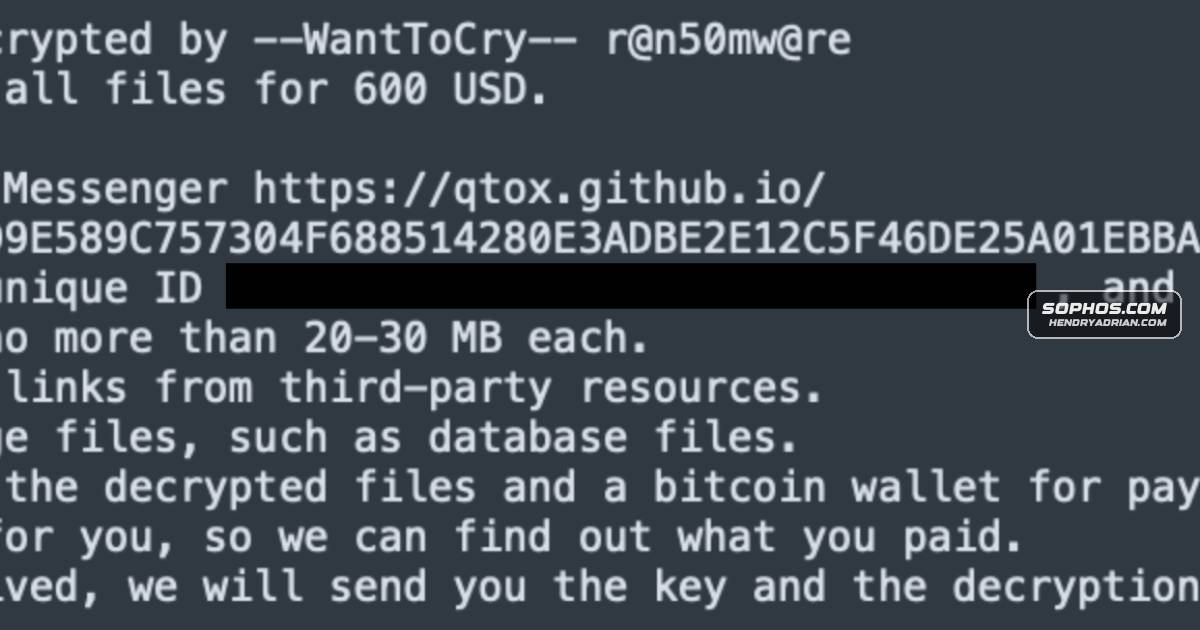
- WantToCry appends the .want_to_cry suffix to encrypted files and leaves notes named !Want_To_Cry.txt. SophosLabs observed a $600 ransom demand; there is no evidence that exfiltrated data was used for name-and-shame or double extortion.
- SophosLabs observed separate infrastructure for reconnaissance and encryption. Shared virtual-machine names in other attacks do not establish that the same device or threat actor was involved.
- Because the activity lacks local malware execution, process-based EDR and antivirus detection may be limited. Monitoring unusual external SMB read/write activity and file-content changes can help identify it.
- Recommended defenses include blocking inbound SMB at internet-facing firewalls, disabling SMBv1, removing guest or anonymous access, and ensuring backups cannot be accessed over SMB.
Article Details
- Attack Vectors
- Scanning the internet for systems exposing SMB ports 139 and 445.
- Automated brute-force attempts against exposed SMB services, followed by access using compromised or weak credentials.
- Exfiltrating files through authenticated SMB sessions to attacker-controlled infrastructure.
- Encrypting files on attacker-controlled systems and writing the encrypted files back to victims’ original locations through SMB.
- Leaving a ransom note named !Want_To_Cry.txt and directing victims to communicate through qTox or a Telegram account.
- Defensive Notes
- Disable SMBv1, remove guest or anonymous SMB access, and block inbound SMB traffic on TCP ports 139 and 445 at internet-facing firewalls.
- Ensure backups cannot be accessed through SMB.
- Monitor for sustained SMB read and write activity from external IP addresses, unusual file-access volumes, and activity outside normal business patterns.
- Use network-level controls and file-content monitoring to detect and respond to remote encryption activity.
- Use XDR to identify reconnaissance and brute-force attempts against exposed SMB services.
Indicators of compromise
| Type | Indicator | Context |
|---|---|---|
| IPV4 | 109[.]69[.]58[.]213 | IP geolocating to Germany that SophosLabs identified among attacker-controlled systems used for the encryption phase. |
| IPV4 | 185[.]189[.]13[.]56 | IP geolocating to the Russian Federation that SophosLabs identified among attacker-controlled systems used for the encryption phase. |
| IPV4 | 185[.]200[.]191[.]37 | IP geolocating to the United States that SophosLabs identified among attacker-controlled systems used for the encryption phase. |
| IPV4 | 194[.]36[.]179[.]18 | IP geolocating to Singapore that SophosLabs identified among attacker-controlled systems used for the encryption phase. |
| IPV4 | 194[.]36[.]179[.]30 | IP geolocating to Singapore that SophosLabs identified among attacker-controlled systems used for the encryption phase. |
| IPV4 | 87[.]225[.]105[.]217 | IP associated with a Russia-based hosting provider from which WantToCry reconnaissance and systematic authentication attempts originated. |
| URL | hxxps[:]//t[.]me/want_to_cry_team | Telegram contact URL listed in a WantToCry ransom-note template for communication with the threat actors. |
MITRE ATT&CK
T1078 · Valid AccountsAfter authentication with compromised or weak credentials, the operators used authenticated SMB sessions to access and modify victim files.T1110.001 · Password GuessingSophosLabs observed automated brute-force attempts against internet-exposed SMB services.T1486 · Data Encrypted for ImpactWantToCry encrypted exfiltrated files on attacker-controlled infrastructure and wrote the encrypted files back to victims’ systems.T1595.001 · Scanning IP BlocksWantToCry operators scan internet-facing systems for exposed SMB ports 139 and 445 to identify potential victims.