
Why Runtime Scanning Can Miss Supply Chain Threats Before They Execute
Summary
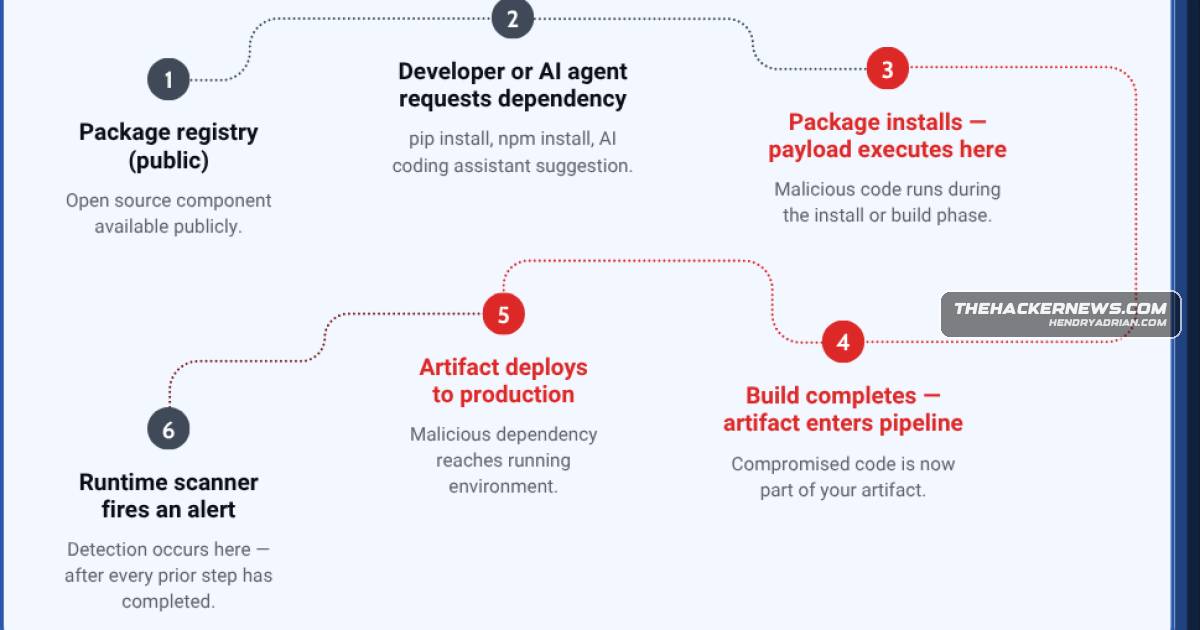
The article argues runtime scanners may detect malicious dependencies only after execution. It recommends governing package ingestion with an approved internal catalog, proxy enforcement, source builds and provenance checks, citing the xz Utils backdoor as an example.
Key points
- The article argues that runtime alerts can arrive after a malicious dependency has executed during installation or a build.
- It cites the xz Utils backdoor as an example of malicious code escaping detection before anomalous SSH behavior drew attention.
- It recommends an internal catalog of reviewed dependencies, with package requests routed through a proxy that permits approved versions and rejects others.
- The proposed approach includes building packages from source and using provenance to document how components were constructed.
- It recommends automating package-risk policies to assess signals such as maintainer behavior, release patterns and transitive dependency changes.
- The author says ingestion controls should complement, not replace, runtime scanning and software composition analysis.
Article Details
- Defense Focus
- Prevent malicious or unverified dependencies from entering CI/CD pipelines by enforcing governance at package ingestion, using a pre-vetted internal catalog and provenance-backed controls.
- Detection Methods
- Verify package provenance and that delivered versions match approved requests before allowing downloads.
- Build approved components from source and use cryptographic provenance to document how they were constructed.
- Automatically assess package risk using maintainer commit patterns, account behavior changes, release-cadence anomalies, and transitive dependency changes.
- Continue vulnerability scanning and runtime monitoring for dependencies admitted through the governed process.
- Data Sources
- Package requests, names, and versions
- Package provenance and build records
- Maintainer commit patterns and account behavior
- Release cadence and transitive dependency changes
- Vulnerability scan results and runtime alerts
- Platforms
- Internal package proxy
- Pre-vetted internal package catalog
- Package managers
- CI/CD build environments
- Defensive Actions
- Route dependency requests through an internal proxy that permits only approved catalog entries and rejects unverified packages before download.
- Curate, scan, build from source, and cryptographically sign components before making them available to developers or AI coding assistants.
- Apply automated policy checks to package and provenance signals before adding dependencies to the catalog.
- Retain vulnerability scanning and runtime monitoring as supplementary controls rather than relying on them to prevent ingestion-time compromise.