TA458 Uses Half-Click Webmail Exploits to Steal Email and Establish Persistent Access
Summary
Proofpoint details TA458’s use of half-click exploits against webmail platforms to steal credentials, contacts, and emails. SpyPress can also establish persistent access on Roundcube, while a SOGo zero-day was patched as CVE-2026-8496.
Key points
- TA458 sends exploit-laden emails; a target can be compromised simply by opening the message in a webmail viewer, without clicking a link or opening an attachment.
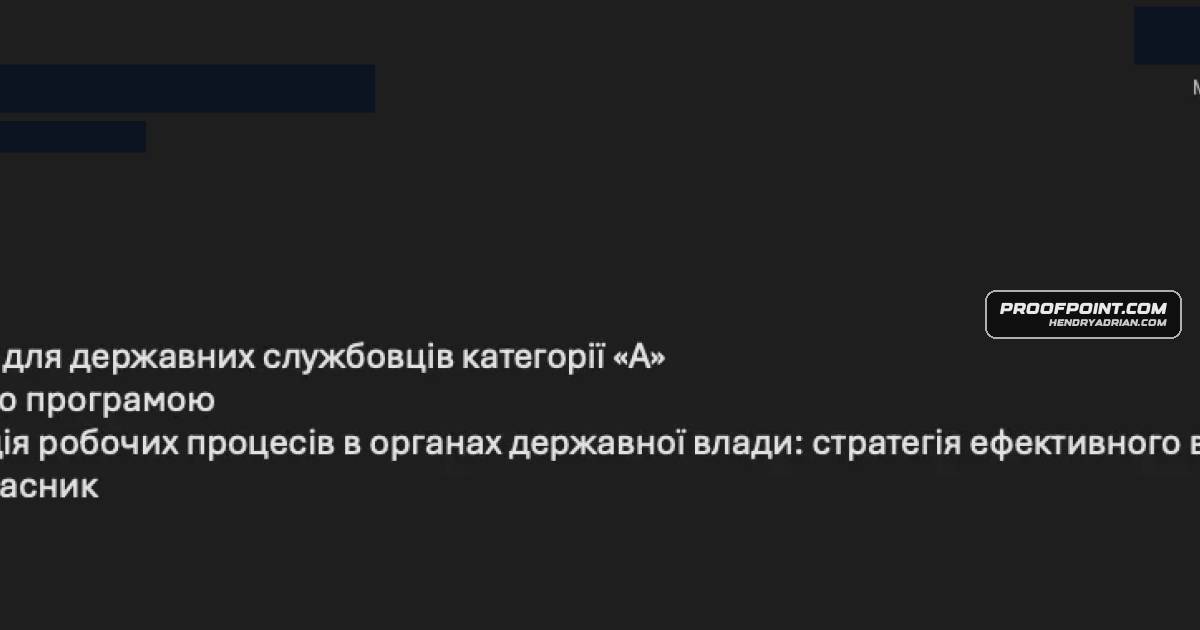
- Targets include Ukrainian government entities and military and government organizations in Eastern Europe, with occasional targeting of chemical, telecommunications, and technology firms.
- The group has exploited webmail platforms including Zimbra, mDaemon, Roundcube, Kerio, and SOGo. Proofpoint reported a SOGo zero-day to Alinto; it was patched in version 5.12.8 as CVE-2026-8496.
- SpyPress, an obfuscated JavaScript-based malware, can steal credentials, contacts, and emails; its capabilities vary by target webmail platform.
- On Roundcube, SpyPress uses CVE-2025-49113 to pursue long-term access, attempting multiple persistence methods, including reverse shells and webshells.
- Proofpoint assesses TA458 is likely aligned with Russia’s GRU, but says it lacks evidence to substantiate a possible link to a specific GRU unit.
Article Details
- Attack Vectors
- TA458 sends exploit-laden emails from actor-controlled or compromised accounts; opening the message in a webmail viewer can trigger a half-click exploit without a link click or attachment opening.
- The exploits target insufficiently sanitized webmail features to execute arbitrary JavaScript, including in Kerio, SOGo, Zimbra, mDaemon, and Roundcube.
- On Roundcube targets, SpyPress exploits unsafe PHP deserialization through the file upload handler to execute code and attempt persistence using reverse shells, fetched content, and dropped PHP webshells.
- Defensive Notes
- Patch affected webmail products; the article reports that SOGo patched CVE-2026-8496 in version 5.12.8.
- Proofpoint says it followed responsible disclosure practices and alerted vendors when it observed new exploits.
- The article lists ET rules for SpyPress C2 activity, dropped webshell requests, and exploits affecting SOGo, Zimbra, mDaemon, and Roundcube.
Indicators of compromise
| Type | Indicator | Context |
|---|---|---|
| DOMAIN | hgmydr[.]wiki | Listed in the article's SpyPress C&C indicator section. |
| DOMAIN | upgybj[.]store | Listed in the article's SpyPress C&C indicator section. |
| DOMAIN | xsza[.]net | Listed in the article's SpyPress C&C indicator section. |
| DOMAIN | xwe[.]us | Listed in the article's SpyPress C&C indicator section. |
| DOMAIN | zxzaq[.]com | Listed in the article's SpyPress C&C indicator section. |
| SHA256 | 3a449148a0e3cac604fb93210dd7d91ccf48e06ed9aae064bc53a419a84ce9ba | Hash of an exploit-laden email identified in the indicator table. |
| SHA256 | 625e4c166c7a1d5a1becf56b27d4f76a2f95935cbd8d556c30a493263d10dbf8 | Hash of an exploit-laden email identified in the indicator table. |
| SHA256 | 6b2c02bf82087a3ca5fb7ef8046554ff29ce85d52202bdcfae2b2653aede139a | Hash listed among the article's exploit-laden email indicators. |
| SHA256 | 8b5a4dc237a4c89042176bc89864a4c357dcdd14fa544fe6496ccb6c31cd5b7f | Hash of an exploit-laden email identified in the indicator table. |
| SHA256 | a0c80cab70d6672b01710a70f93311fc1c1db2fbbf9cd6daa543c34b87e3444a | Hash of an exploit-laden email identified in the indicator table. |
| SHA256 | e27d1bf82249002a66395c89dbda6ec5d8df012a84b79d36fffbbf7808d28878 | Hash of an exploit-laden email identified in the indicator table. |
| SHA256 | fb8ec4dbed14c0a91361abd82ebe9fb083615c3dbb15348f57317af7cc41dd34 | Hash listed among the article's exploit-laden email indicators. |
MITRE ATT&CK
T1059.004 · Unix ShellSpyPress attempts to establish a reverse bash shell using bash -i and /dev/tcp.T1059.007 · JavaScriptSpyPress uses JavaScript, including for its core malware functionality and webmail exploit activity.T1105 · Ingress Tool TransferSpyPress attempts to fetch content from a C&C domain using PHP, Python requests, or curl.T1190 · Exploit Public-Facing ApplicationTA458 exploited vulnerabilities in webmail platforms, including SOGo, Zimbra, mDaemon, and Roundcube.T1505.003 · Web ShellSpyPress attempts to drop PHP webshells at specified paths on Roundcube targets.
CVE
CVE-2023-43770CVE-2023-43770: Roundcube (n-day)CVE-2024-42009CVE-2024-42009: Roundcube (n-day)CVE-2024-42900Exploit-laden email (CVE-2024-42900 + CVE-2025-49113 - Roundcube)CVE-2025-27915StrikeReady also observed TA458 use CVE-2025-27915 as a zero-day targeting Zimbra webmail servers in a campaign from April 2025.CVE-2025-3929CVE-2025-3929: mDaemon (zero-day)CVE-2025-49113SpyPress uses a second Roundcube exploit (CVE-2025-49113) that abuses Roundcube's file upload handler to trigger unsafe PHP deserialization.CVE-2026-8496In March 2026, Proofpoint discovered TA458 exploiting a zero-day vulnerability in the SOGo webmail platform, which we reported to the vendor, Alinto; it was patched as CVE-2026-8496 in version 5.12.8.
Threat Actors
APT28CERT-UA attributed the longstanding infrastructure used in the separate Operation Roundish activity to APT28, which Proofpoint distinguishes from TA458.Fancy BearThe article gives Fancy Bear as an alternate name for TA422.TA458Proofpoint identifies TA458 as the actor behind Operation RoundPress and assesses that it is likely aligned with Russia's GRU.
Malware
Vendors
Products
Kerio WebmailProofpoint observed additional TA458 targeting of Kerio Webmail and SOGo Webmail, in addition to exploits deployed against Zimbra, mDaemon, and Roundcube.MDaemonProofpoint observed additional TA458 targeting of Kerio Webmail and SOGo Webmail, in addition to exploits deployed against Zimbra, mDaemon, and Roundcube.RoundcubeProofpoint observed additional TA458 targeting of Kerio Webmail and SOGo Webmail, in addition to exploits deployed against Zimbra, mDaemon, and Roundcube.SOGoIn March 2026, Proofpoint discovered TA458 exploiting a zero-day vulnerability in the SOGo webmail platform, which we reported to the vendor, Alinto; it was patched as CVE-2026-8496 in version 5.12.8.ZimbraProofpoint observed additional TA458 targeting of Kerio Webmail and SOGo Webmail, in addition to exploits deployed against Zimbra, mDaemon, and Roundcube.
Tools
Countries
AlbaniaTA458 primarily targets Ukrainian government and Eastern European military and government entities across Albania, Greece, Moldova, and Türkiye, with occasional targeting of chemical, telecommunications, and technologyGreecetargets Ukrainian government and Eastern European military and government entities across Albania, Greece, Moldova, and Türkiye, with occasional targeting of chemical, telecommunications, and technology firms.MoldovaUkrainian government and Eastern European military and government entities across Albania, Greece, Moldova, and Türkiye, with occasional targeting of chemical, telecommunications, and technology firms.Türkiyegovernment and Eastern European military and government entities across Albania, Greece, Moldova, and Türkiye, with occasional targeting of chemical, telecommunications, and technology firms.UkraineProofpoint has observed TA458 continue to target government entities in Ukraine, as well as military and government installations in Eastern Europe, with targets in Albania, Greece, Moldova, and Türkiye.
Industries
Chemicaland government entities across Albania, Greece, Moldova, and Türkiye, with occasional targeting of chemical, telecommunications, and technology firms.GovernmentThis is part 2 of a 2-part blog series Proofpoint is publishing about Russian espionage actors using half-click exploits to target government webmail servers.MilitaryTA458 primarily targets Ukrainian government and Eastern European military and government entities across Albania, Greece, Moldova, and Türkiye, with occasional targeting of chemical, telecommunications, and technologyTechnologyAlbania, Greece, Moldova, and Türkiye, with occasional targeting of chemical, telecommunications, and technology firms.Telecommunicationsentities across Albania, Greece, Moldova, and Türkiye, with occasional targeting of chemical, telecommunications, and technology firms.