
Podcast Examines AI-Agent Exploits, a Signed Rootkit and an NPM Supply-Chain Compromise
· 21:05 · Watch on YouTube ↗
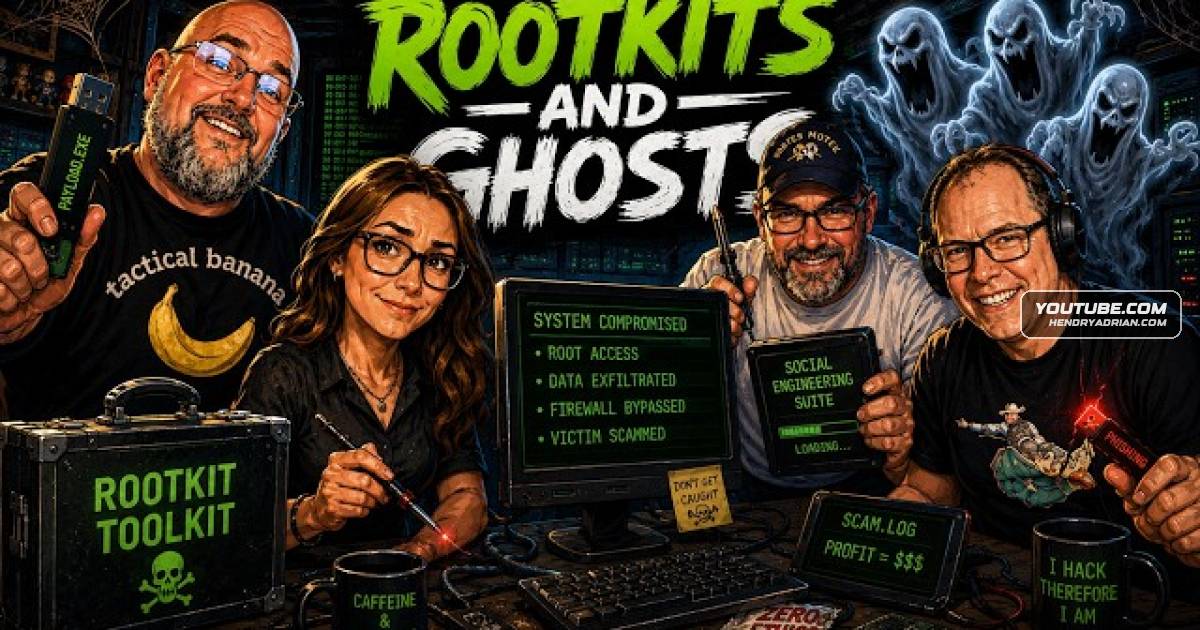
Summary
The hosts discuss two proof-of-concept attacks on AI coding agents, a ransomware variant using a malicious signed rootkit to evade EDR, and an NPM supply-chain compromise that reportedly exposed developer credentials.
Key points
- The hosts describe two proof-of-concept exploits, Friendly Fire and Ghost Approval, that reportedly trick AI coding agents scanning malicious repositories into executing local commands or using symbolic links to overwrite host files such as SSH keys.
- The discussion warns that coding agents may trust instructions or files in an adversarial repository and that approval prompts may not adequately protect developers.
- The program reports that Symantec exposed a ransomware variant called god damn, which deploys a custom rootkit driver called poison X.
- According to the discussion, operators got the malicious driver through Microsoft's hardware-signing process for a WHQL signature; the driver reportedly runs at ring zero, removes user-mode API hooks and blinds enterprise EDR agents.
- The hosts describe a reported NPM supply-chain compromise in which backdoored internal build tools let a worm payload hijack a pipeline and inject credential harvesters through post-install hooks.
- The reported harvesters targeted AWS tokens, GitHub PATs and developer session data.
- As possible safeguards, the hosts discuss testing software in an isolated environment before production deployment and checking program hashes, while noting that changes between test and production can still create risk.
Article Details
- Topics
- [02:26] Proof-of-concept attacks that trick AI coding agents scanning malicious repositories
- [08:10] Ransomware using a custom, reportedly signed rootkit driver to evade EDR
- [13:49] NPM supply-chain compromise and credential harvesting through post-install hooks
- [17:00] Software supply-chain risk and proposed testing and hash-verification practices