
How GRC and Red Teaming Work Together to Reduce Cyber Risk
· 1:22:19 · Watch on YouTube ↗
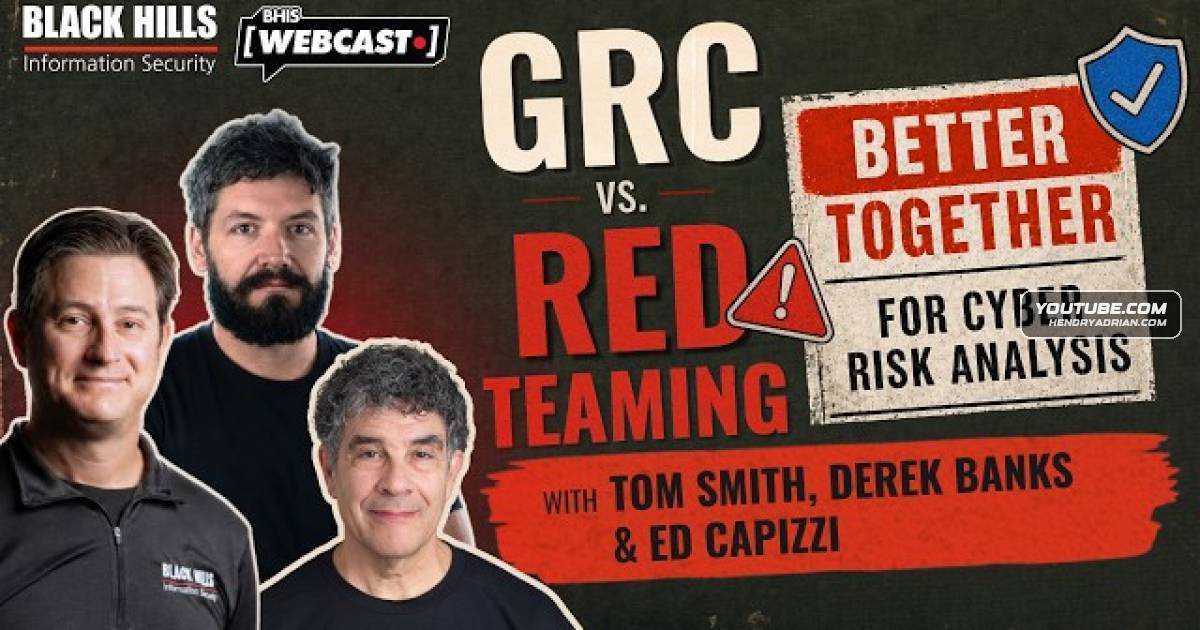
Summary
Black Hills Information Security speakers discuss how governance, risk and compliance assessments complement penetration testing, with examples involving access controls, MFA, incident response and remediation.
Key points
- GRC establishes requirements and supports management action, while penetration testing checks whether technical controls work in practice.
- The speakers recommend reviewing access provisioning, privilege changes and password reuse rather than relying solely on password complexity requirements.
- MFA is a security layer, not a guarantee: the discussion covers gaps in deployment, phishing through transparent proxies and repeated push notifications.
- GRC reviews can assess incident response, business continuity and supplier risk that a scoped penetration test may not cover.
- The speakers recommend exercising response plans beyond tabletop discussions and using test findings in risk assessments to support remediation and funding.
- For phishing awareness, they advise treating unexpected messages cautiously, verifying sensitive requests and reinforcing employees who report suspicious messages.
Article Details
- Topics
- [01:27] Complementary roles of GRC and offensive security
- [10:33] Access control, password reuse and excessive privileges
- [16:15] Incident response, continuity and penetration-test scope
- [24:00] MFA implementation gaps and bypass techniques
- [29:24] Using penetration-test findings to drive remediation
- [35:15] Testing and improving incident response plans
- [41:57] Security processes, culture and phishing awareness
- [48:30] Documenting exceptions and assessing risk