
Sophos Details STAC4749 Teams Vishing Campaign Leading to Chaos Ransomware
Summary
Sophos tracked STAC4749, a Teams-vishing campaign targeting dozens of North American organizations from February to June 2026. Operators used remote-access tools and evolving backdoors; at least three intrusions led to Chaos ransomware.
Key points
- Operators impersonated IT support through Teams chats and calls, using IT-themed .top domains and employee-like personas to persuade targets to grant remote access.
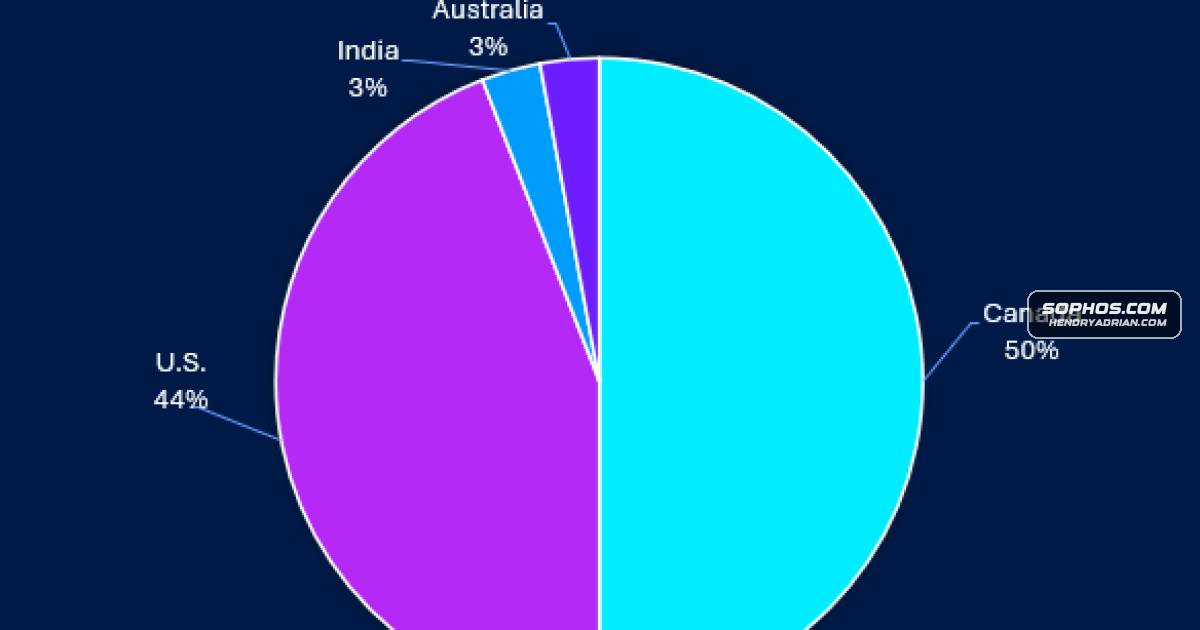
- About 95% of observed targets were in Canada or the United States; affected organizations spanned multiple sectors.
- The attackers used Quick Assist and later increasingly favored RemSupp, then ran PowerShell payloads that included custom loaders, a Python-based backdoor, and Go-based implants.
- Persistence included disguised Windows Run keys and hidden Startup-folder shortcuts; attackers also used tools such as DWAgent and AnyDesk for alternate remote access.
- Sophos found implants using pinned certificates to restrict command-and-control connections, with different certificate issuers associated with separate infrastructure.
- At least three intrusions led to Chaos ransomware deployment; in one, encryption followed initial access in under 17 hours. Data exfiltration was considered likely in at least one incident.
- Sophos found insufficient evidence to attribute STAC4749 to MuddyWater or another actor. Recommended defenses include monitoring suspicious Teams contacts, remote-access tool use, PowerShell, and registry persistence.
Article Details
- Attack Vectors
- Operators impersonated helpdesk or IT support through Microsoft Teams chats and voice calls to persuade users to grant remote access.
- After gaining a remote session, operators used Quick Assist or deployed RemSupp, then launched PowerShell to retrieve and execute payloads from attacker-controlled servers.
- Operators attempted to enable RDP on initial hosts for lateral movement and used additional remote-access tools in some intrusions.
- Payloads established persistence through registry Run keys and, in some cases, disguised Startup-folder shortcuts.
- At least three intrusions culminated in Chaos ransomware deployment after access was expanded across multiple systems; data exfiltration was considered likely in at least one incident.
- Defensive Notes
- Monitor Microsoft Teams for suspicious external chats and calls, especially requests to launch remote-support tools, download software, or grant system access.
- Use endpoint detection and response to identify abnormal PowerShell and command-line activity and unauthorized remote-administration or tunneling tools.
- Regularly audit registry Run keys and other persistence locations for entries disguised as legitimate services or applications.
- Train employees to recognize suspicious external messages, calls, and remote-access requests.
- Enforce application controls and restrict unauthorized software execution.
Indicators of compromise
| Type | Indicator | Context |
|---|---|---|
| DOMAIN | corp-connect[.]top | IT-support-themed domain associated with STAC4749 vishing attempts. |
| DOMAIN | info-secure[.]top | IT-support-themed domain associated with STAC4749 vishing attempts. |
| DOMAIN | it-service[.]top | IT-support-themed domain associated with STAC4749 vishing attempts. |
| DOMAIN | legio[.]name | Attacker infrastructure contacted by the STAC4749 reverse SOCKS proxy. |
| DOMAIN | scan-security[.]top | IT-support-themed domain associated with STAC4749 vishing attempts. |
| DOMAIN | scansequrity[.]top | IT-support-themed domain associated with STAC4749 vishing attempts. |
| DOMAIN | sequpdate[.]top | IT-support-themed domain associated with STAC4749 vishing attempts. |
| DOMAIN | sequritycheck[.]top | IT-support-themed domain associated with STAC4749 vishing attempts. |
| DOMAIN | sequrityupdate[.]top | IT-support-themed domain associated with STAC4749 vishing attempts. |
| DOMAIN | service-clien[.]top | IT-support-themed domain associated with STAC4749 vishing attempts. |
| DOMAIN | service-corporation[.]top | IT-support-themed domain associated with STAC4749 vishing attempts. |
| DOMAIN | service-help[.]top | IT-support-themed domain associated with STAC4749 vishing attempts. |
| DOMAIN | supportsoft[.]top | IT-support-themed domain associated with STAC4749 vishing attempts. |
| DOMAIN | system-connect[.]top | IT-support-themed domain associated with STAC4749 vishing attempts. |
| DOMAIN | system-online[.]top | IT-support-themed domain associated with STAC4749 vishing attempts. |
| DOMAIN | update-syscontrol[.]top | IT-support-themed domain associated with STAC4749 vishing attempts. |
| DOMAIN | upsecscan[.]top | IT-support-themed domain associated with STAC4749 vishing attempts. |
| DOMAIN | workers[.]dev | Attacker infrastructure hosting communications for a decrypted STAC4749 payload. |
| IPV4 | 193[.]29[.]57[.]37 | C2 server used by multiple STAC4749 payloads. |
| IPV4 | 94[.]140[.]114[.]192 | Hard-coded STAC4749 loader C2 address; the article specifies port 443. |
| IPV4 | 94[.]140[.]115[.]129 | Hard-coded STAC4749 loader C2 address; the article specifies port 443. |
| IPV4 | 94[.]140[.]115[.]18 | Hard-coded STAC4749 loader C2 address; the article specifies port 443. |
| URL | hxxps[:]//fa5[.]flsdwnld[.]online/f5yxog/confirm.exe | Attacker-controlled URL used in the article's PowerShell example to download a STAC4749 implant. |
MITRE ATT&CK
T1012 · Query RegistryThe payload queried Windows registry keys, including keys under HKLM\SOFTWARE\Microsoft\Windows NT\CurrentVersion, to fingerprint hosts.T1021.001 · Remote Desktop ProtocolIntrusions included attempts to enable RDP on the initial host for movement to additional systems.T1027 · Obfuscated Files or InformationThe article describes a PyArmour-obfuscated backdoor and Base64-encoded components in the loader and implant command argument.T1059.001 · PowerShellOperators launched PowerShell to retrieve and execute malicious payloads.T1082 · System Information DiscoveryThe first-stage payload collected system identifiers and operating-system version information.T1105 · Ingress Tool TransferPowerShell downloaded payloads from attacker-controlled servers, and the backdoor retrieved additional implants.T1219 · Remote Access ToolsOperators used Quick Assist and RemSupp for remote access, and some intrusions added DWAgent or AnyDesk as alternate remote-access channels.T1518.001 · Security Software DiscoveryThe first-stage payload attempted to discover security products active on the system.T1547.001 · Registry Run Keys / Startup FolderPayloads created registry Run keys for logon persistence; operators also created disguised Startup-folder shortcuts.T1566.004 · Spearphishing VoiceSTAC4749 operators used Microsoft Teams voice calls to impersonate helpdesk or IT support and socially engineer victims.T1572 · Protocol TunnelingA custom reverse SOCKS proxy tunneled traffic to attacker infrastructure.T1573 · Encrypted ChannelGolang implants established persistent encrypted connections to C2 servers.T1574.002 · DLL Side-LoadingOperators experimented with DLL sideloading using a legitimate CopyQ binary.
Threat Actors
Malware
Vendors
Products
CopyQcontinually updated their attack chain, including experimenting with DLL sideloading via a legitimate CopyQ binary, changing filenames and registry Run keys to avoid static detection, and streamlining backdoorMicrosoft Quick AssistAttackers used .top domains, Quick Assist, and RemSupp to gain remote access.Microsoft TeamsSophos tracked STAC4749, a Microsoft Teams vishing campaign that impersonated IT support using themed cloud domains and personas to gain access to dozens of North American organizations.Microsoft WindowsTo move laterally to additional systems, STAC4749 intrusions consistently included attempts to enable Remote Desktop Protocol (RDP) on the initial host by modifying Windows service configurations via msconfig.
Tools
AnyDeskChaos ransomware deployment, the attackers installed additional remote access tools such as DWAgent or AnyDesk to establish alternate remote access channels across the network. In one incident, the attackers alsoDWAgentin Chaos ransomware deployment, the attackers installed additional remote access tools such as DWAgent or AnyDesk to establish alternate remote access channels across the network. In one incident, theRemSupp#STAC4749
Countries
Industries
Construction & EngineeringServices organizations were impacted in 20% of the incidents, followed by manufacturing (17%), energy (12%), and construction and engineering (12%) organizations.EnergyServices organizations were impacted in 20% of the incidents, followed by manufacturing (17%), energy (12%), and construction and engineering (12%) organizations.LegalNotably, all the legal organizations targeted in the campaign specialize in intellectual property (IP) law or services.ManufacturingServices organizations were impacted in 20% of the incidents, followed by manufacturing (17%), energy (12%), and construction and engineering (12%) organizations.ServicesServices organizations were impacted in 20% of the incidents, followed by manufacturing (17%), energy (12%), and construction and engineering (12%) organizations.