
Researcher Reports USB and NFC Flaws in Hardware Wallet, Criticizes Bug Bounty Response
· 17:19 · Watch on YouTube ↗
Summary
Sergei Volokitin says a USB buffer overflow in a Cyper rock hardware wallet let him extract a PIN and 24-word root seed. He says the vendor fixed the bug two days after his report, but took 186 days to respond; he also found an unchecked NFC APDU overflow.
Key points
- Volokitin says the wallet accepted USB packets before PIN entry and insufficient length checks let crafted packets overflow a 6 KB buffer.
- In his demonstration, the USB flaw let him read device memory, recover the user's PIN, and extract the 24-word root seed used to derive private keys.
- He reports the device lacked mitigations such as ASLR and stack cookies.
- Volokitin says the vendor's code showed the USB overflow fixed on November 5, two days after his November 3 report; he inferred the vendor had viewed his unlisted demonstration from its view analytics.
- He says the vendor responded after 186 days, called the issue a duplicate, and offered $1,000 and a two-year warranty, which he declined.
- At the time of the talk, he found a separate unchecked NFC APDU length that could overflow a 32-byte stack buffer.
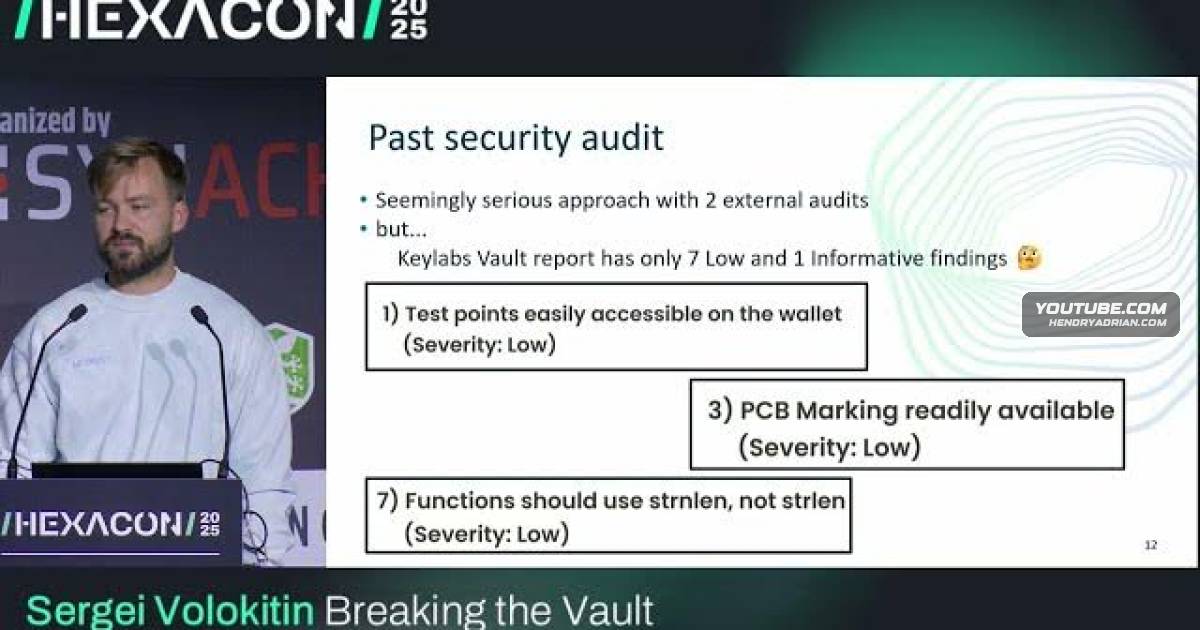
- His takeaways include securing complex USB attack surfaces, ensuring audits have adequate scope and expertise, and recognizing that bug bounty programs can result in fixes.
Article Details
- Topics
- [00:40] Hardware wallet security model and trusted user interface
- [01:50] Wallet design and Shamir secret sharing
- [05:16] USB packet length checks and buffer overflow
- [09:01] Demonstration extracting a PIN and root seed
- [11:13] Vulnerability disclosure and bug bounty response
- [13:18] Demo-view analytics and reported fix timeline
- [14:57] Separate NFC APDU buffer overflow
- [16:14] Hardware security, audit scope, and bug bounty lessons