
XCSSET v40 Uses Memory-Resident Execution to Hijack macOS Browsers and Trojanize Telegram
Summary
Unit 42 details XCSSET v40, macOS malware spread through poisoned Xcode projects, with memory-resident payloads, Chrome CDP hijacking, a Telegram trojanizer, and techniques to impair Apple security mechanisms.
Key points
- Unit 42 traced infection to malicious scripts in Xcode projects or Git repositories; execution begins when a developer builds the project, followed by host fingerprinting and staged, memory-resident payloads.
- The Chrome module enables the Chrome DevTools Protocol (CDP) and injects remote JavaScript to capture credentials, cookie tokens, and API data; it can also relay shell commands and output through a WebSocket C2 connection.
- A module identified in May 2026 replaces Telegram Desktop with a malicious ad hoc-signed app. Unit 42 could not verify the exact contents of its encrypted configuration.
- XCSSET v40 uses polymorphic loaders and encrypted modules; researchers observed eight distinct loader hashes delivered to one endpoint within 24 hours.
- Persistence methods include Git hooks, Launch Daemons, trojanized applications, and macOS defaults. The malware also targets updates, telemetry, XProtect files, and TCC permissions.
- The stats module checks for virtual environments, and hosts identified as virtual receive no further module deliveries, according to Unit 42.
- Unit 42 recommends behavioral monitoring, checking browser launch paths and macOS defaults changes, identifying ad hoc-signed apps, and scanning developer supply chains for poisoned projects.
Article Details
- Attack Vectors
- XCSSET is delivered through poisoned Xcode projects and vulnerable Git repositories; the infection runs when a developer builds the project locally.
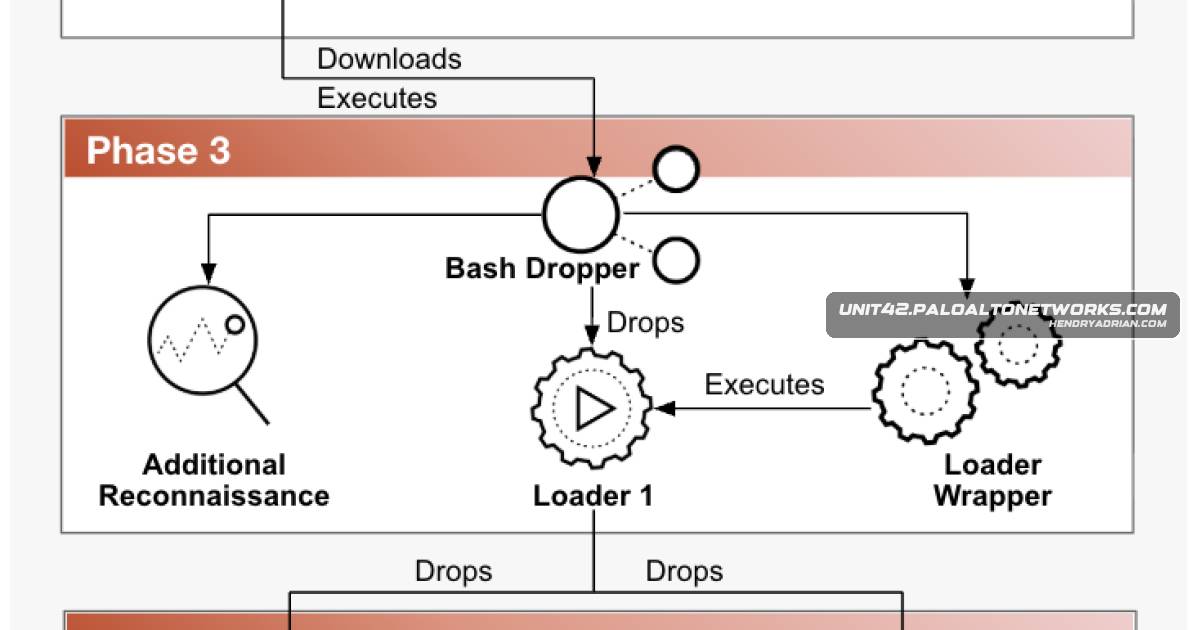
- The malware uses staged loaders that contact C2 infrastructure, collect host information, download modules, and execute core logic in memory.
- A malicious wrapper around Google Chrome launches the browser with Chrome DevTools Protocol enabled and uses a backdoor to inject JavaScript, manipulate sessions, and run shell commands.
- A Telegram Desktop trojanizer downloads a malicious replacement app, removes the legitimate copy, and launches the replacement.
- Persistence and re-infection mechanisms include Git hooks, Launch Daemons, .zshrc modification, trojanized applications, and payloads stored in macOS defaults.
- Defensive Notes
- Monitor abnormal AppleScript activity and process chains, including suspicious osascript calls and processes spawned from infected Xcode project build phases.
- Monitor browser launcher paths and block unauthorized file writes.
- Detect abnormal macOS defaults domains and changes made through the defaults utility.
- Track ad hoc signed applications and untrusted local code signers; isolate binaries that bypass native Gatekeeper requirements.
- Use automated supply-chain dependency scanning to detect poisoned open-source repositories before they enter developer pipelines.
Indicators of compromise
| Type | Indicator | Context |
|---|---|---|
| DOMAIN | amzndev[.]in | Listed as an XCSSET v40 C2 domain and used to serve the Chrome CDP helper binary. |
| DOMAIN | amzndev[.]ru | Listed as an XCSSET v40 C2 domain and used to serve the Chrome CDP helper binary. |
| DOMAIN | applecdn[.]ru | Listed in the article’s XCSSET v40 C2 domain infrastructure. |
| DOMAIN | applehosts[.]ru | Listed in the article’s XCSSET v40 C2 domain infrastructure. |
| DOMAIN | cdnamz[.]in | Listed in the article’s XCSSET v40 C2 domain infrastructure. |
| DOMAIN | cdnamz[.]ru | Listed in the article’s XCSSET v40 C2 domain infrastructure. |
| DOMAIN | dnsapple[.]ru | Listed in the article’s XCSSET v40 C2 domain infrastructure. |
| DOMAIN | googlenets[.]ru | Listed as an XCSSET v40 C2 domain and used to serve the Chrome CDP helper binary. |
| DOMAIN | icloudsnet[.]ru | Listed in the article’s XCSSET v40 C2 domain infrastructure. |
| DOMAIN | netcdnamz[.]ru | Listed in the article’s XCSSET v40 C2 domain infrastructure. |
| DOMAIN | netcdndev[.]in | Listed as an XCSSET v40 C2 domain and used to serve the Chrome CDP helper binary. |
| DOMAIN | rigmanets[.]in | Listed in the article’s XCSSET v40 C2 domain infrastructure. |
| DOMAIN | timewebnet[.]in | Listed in the article’s XCSSET v40 C2 domain infrastructure. |
| DOMAIN | whitead[.]in | Listed as an XCSSET v40 C2 domain and used to serve the Chrome CDP helper binary. |
| DOMAIN | whiteads[.]ru | Listed as an XCSSET v40 C2 domain and used to serve the Chrome CDP helper binary. |
| DOMAIN | wincdn[.]ru | Listed in the article’s XCSSET v40 C2 domain infrastructure. |
| IPV4 | 151[.]243[.]109[.]188 | Listed as XCSSET v40 C2 infrastructure. |
| IPV4 | 178[.]208[.]92[.]129 | Listed as XCSSET v40 C2 infrastructure. |
| IPV4 | 178[.]208[.]92[.]168 | Listed as XCSSET v40 C2 infrastructure. |
| IPV4 | 91[.]108[.]106[.]229 | Listed as XCSSET v40 C2 infrastructure. |
| IPV4 | 95[.]142[.]35[.]206 | Listed as XCSSET v40 C2 infrastructure. |
| IPV4 | 95[.]142[.]35[.]34 | Listed as XCSSET v40 C2 infrastructure. |
| IPV4 | 95[.]142[.]37[.]159 | Listed as XCSSET v40 C2 infrastructure. |
| SHA1 | 6e480d648fa1b70612f5d198a66875e28847547d | Shared operator SSL certificate thumbprint associated with the XCSSET campaign infrastructure. |
| URL | hxxps[:]//amzndev[.]in/d/zw_sfp64 | C2 URL identified as a download location for the Chrome CDP helper binary. |
| URL | hxxps[:]//amzndev[.]ru/d/zw_sfp64 | C2 URL identified as a download location for the Chrome CDP helper binary. |
| URL | hxxps[:]//googlenets[.]ru/d/zw_sfp64 | C2 URL identified as a download location for the Chrome CDP helper binary. |
| URL | hxxps[:]//netcdndev[.]in/d/zw_sfp64 | C2 URL identified as a download location for the Chrome CDP helper binary. |
| URL | hxxps[:]//whitead[.]in/d/zw_sfp64 | C2 URL identified as a download location for the Chrome CDP helper binary. |
| URL | hxxps[:]//whiteads[.]ru/d/zw_sfp64 | C2 URL identified as a download location for the Chrome CDP helper binary. |
MITRE ATT&CK
T1027 · Obfuscated Files or InformationThe malware uses layered encryption, randomized payloads, and ciphers to obscure binaries, strings, and source code.T1041 · Exfiltration Over C2 ChannelXCSSET sends collected host data, files, browser data, and command output back through its C2 infrastructure.T1056.001 · KeyloggingThe article describes keyboard-hijacking functionality in XCSSET modules.T1059.002 · AppleScriptThe malware uses AppleScript loaders and executes modules through AppleScript.T1059.004 · Unix ShellA downloaded bash script stages the loader, and the Chrome backdoor can pass commands to the host shell.T1071.001 · Web ProtocolsThe malware uses HTTP requests and a persistent WebSocket connection for C2 communication.T1082 · System Information DiscoveryThe stats module checks operating-system and hardware metadata, including VM-related hardware information.T1105 · Ingress Tool TransferXCSSET downloads loaders, modules, and payloads from its C2 infrastructure.T1195.001 · Compromise Software Dependencies and Development ToolsXCSSET spreads through poisoned Xcode projects and infected open-source repositories.T1204.002 · Malicious FileThe infection is triggered when a developer builds the poisoned Xcode project locally.T1497.001 · System ChecksThe stats module checks CPU and hardware metadata to determine whether the infected endpoint is a virtual machine.T1543.004 · Launch DaemonThe article reports persistence through Launch Daemons.T1546.004 · Unix Shell Configuration ModificationXCSSET uses .zshrc-based persistence and re-infection.T1555.003 · Credentials from Web BrowsersThe Chrome backdoor captures password-manager autofill credentials and browser cookie tokens.T1562.001 · Disable or Modify ToolsXCSSET hinders security updates and telemetry, locks the XProtect signature database, and resets TCC permissions.
Malware
Vendors
Products
Cortex XDRFigure 6 illustrates the encrypted payload injection process into osascript as detected in Cortex XDR.Cortex XSIAMAt the Security Operations level, Cortex XSIAM correlates these host-level detections with developer repository, network, and identity telemetry, providing SOC analysts with a unified attack narrative and automatedGoogle ChromeIt does this by wrapping the benign Google Chrome binary in a malicious persistence script.macOSXCSSET v40 is a heavily updated macOS malware family that uses memory-resident execution, polymorphism, and supply-chain infection through poisoned Xcode projects to target developers.Telegram DesktopXCSSET v40 introduces new modules, including a Chrome hijacking backdoor using the Chrome DevTools Protocol and a Telegram Desktop trojanizer.XcodeXCSSET v40 is a heavily updated macOS malware family that uses memory-resident execution, polymorphism, and supply-chain infection through poisoned Xcode projects to target developers.