
Gartner Urges Structured Evaluation of AI SOC Agents as Adoption Grows
Summary
Gartner recommends evaluating AI SOC agents against workload reduction, measurable security outcomes, analyst impact, autonomy, integration, vendor durability, and transparency. A 2026 survey finds adoption is rising, but trust and autonomy remain cautious.
Key points
- Gartner forecasts that by 2028, 70% of large SOCs will pilot AI agents, but only 15% will achieve measurable improvements without structured evaluation.
- Prophet Security’s 2026 survey reports that 40% of security teams use AI daily, while 56% are evaluating or piloting it.
- Among AI users, 72% reported cutting investigation time by at least 25%; 46% of teams that built their own tools said those efforts were abandoned, never reached production, or replaced.
- The survey found capacity constraints: 28% of alerts were never investigated, and up to 40% of organizations had turned off some detection rules.
- Human oversight remains common: 57% require review of every AI decision before an alert is closed, and no respondents reported granting full, unsupervised autonomy.
- Respondents cited data privacy and model training (44%) and explainability (41%) as barriers to AI adoption.
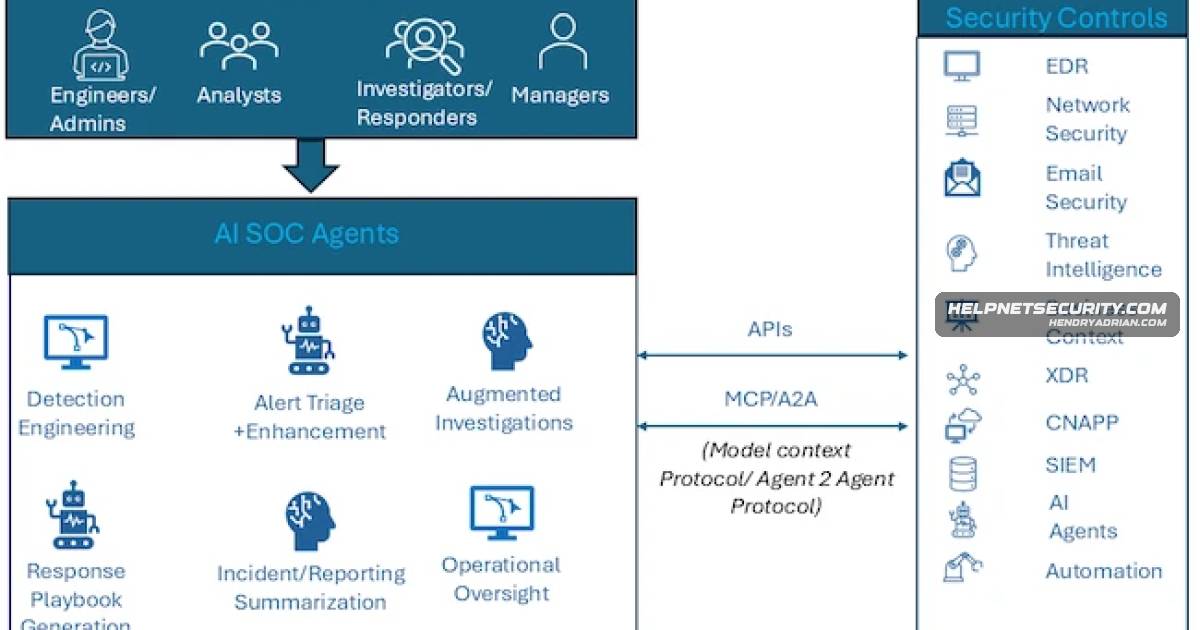
- Gartner’s evaluation framework emphasizes measurable TDIR outcomes, integration with existing tools, transparent audit trails, and clear limits on autonomy.
Article Details
- Publisher
- Help Net Security
- Report Period
- 2026
- Scope
- Evaluation of AI SOC agents and survey findings on adoption, outcomes, autonomy, integration, and trust.
- Key Statistics
- Gartner predicts that by 2028, 70% of large SOCs will pilot AI agents, while only 15% will achieve measurable improvements without structured evaluation.
- In Prophet Security's 2026 survey, 40% of security teams said they use AI daily, 56% were evaluating or piloting it, and 4% had no plans to adopt it.
- Survey respondents reported that 28% of alerts are never investigated; about 60% said a missed or uninvestigated alert proved material.
- Among teams using AI, 72% reported reducing investigation time by at least 25%.
- No survey respondent reported granting AI full, unsupervised autonomy.
- Recommendations
- Evaluate AI SOC agents against defined operational outcomes, including detection, response, false-positive reduction, and containment measures.
- Assess vendor durability, integration depth, interoperability, transparency, auditability, and data-handling practices.
- Test solutions against workloads and environments comparable to the organization's own, distinguishing proof-of-concept results from sustained production performance.
- Maintain human oversight and expand AI autonomy only as trust and a demonstrated track record develop.
People
Vendors
GartnerGartner says AI SOC agents are moving rapidly from hype into real-world evaluations, but most organizations will only see measurable gains if they use a structured, outcomes-driven framework.Prophet SecurityAnd according to Prophet Security’s State of AI in Security Operations 2026, 40% of security teams now use AI daily, 56% are currently evaluating or piloting within their environments, and only 4% have no plans to adopt