Eight eMudhra Certificate Authority Keys Compromised; Browsers and Software Block Certificates
Summary
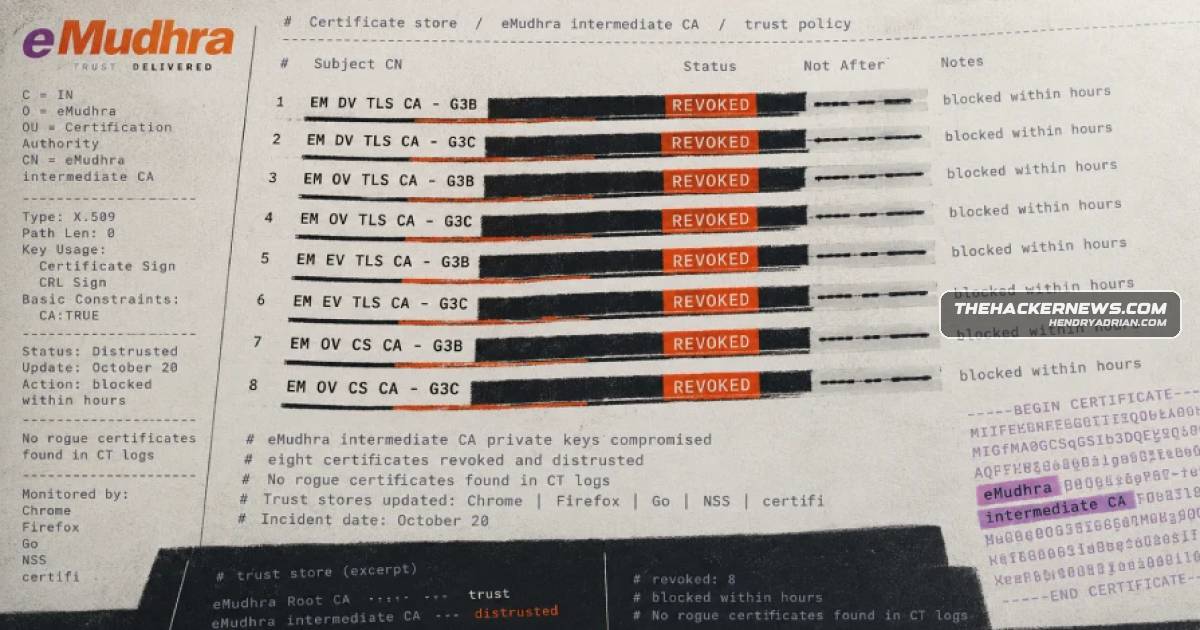
Eight eMudhra intermediate CA keys were compromised, prompting browser blocks and software fixes. How the keys left the company, whether others hold them, and whether they were misused remain unknown.
Key points
- A researcher reported the eight compromised keys to Chrome and Mozilla root programs on October 17; the programs blocked the affected TLS certificates within hours.
- No certificates chaining to the six website TLS intermediates had been logged to Certificate Transparency before Chrome's block.
- eMudhra revoked all eight certificates. Apple and Microsoft also blocked them, and other trust stores were notified.
- Go added key-based rejection in security releases; applications must be rebuilt with a fixed release to receive the change.
- Several trust bundles removed signing roots instead of blocking individual keys, which can also invalidate legitimate certificates chaining to those roots.
- The keys' exposure timeline and whether anyone besides the researcher holds them are unknown; available sources do not establish past misuse beyond Chrome's Certificate Transparency search.
Article Details
- Event Type
- Compromise of eight eMudhra intermediate certificate authority private keys, prompting browser and software trust-store blocks and emergency fixes.
- Impact
- The compromised keys could be used to issue certificates for websites. Chrome and Firefox blocked the six web-TLS intermediates, and eMudhra revoked all eight certificates; Apple and Microsoft also blocked them. No TLS certificate chaining to the six website intermediates had been logged to Certificate Transparency before Chrome's block. The source says it is unknown how the keys left eMudhra, when they left, or whether anyone besides the reporting researcher holds them. Some fixes remove roots rather than block individual keys, which can also disrupt legitimate certificates chaining to those roots.
People
Dennis JacksonMozilla cryptography engineer who published a certificate list, signatures, and information about the incident.Filippo ValsordaMaintains the cryptography packages in Go's standard library and confirmed in a comment that the keys were compromised and the certificates revoked.WayneResearcher credited by Mozilla as Wayne who reported the compromised keys and signed messages with each of them.
Vendors
Applecompanies in India, the United States, and the Netherlands, and it has roots in the Mozilla, Chrome, and Apple root stores. The eight compromised certificates are:eMudhraThe private keys of eight eMudhra intermediate certificate authority (CA) certificates are compromised, Mozilla and Google's Chrome Root Program confirms on October 20.GoogleThe private keys of eight eMudhra intermediate certificate authority (CA) certificates are compromised, Mozilla and Google's Chrome Root Program confirms on October 20.MicrosofteMudhra has revoked the eight certificates. Apple blocked them on October 19, Microsoft on October 20, and other trust stores were notified on October 19, according to Jackson's site.MozillaThe private keys of eight eMudhra intermediate certificate authority (CA) certificates are compromised, Mozilla and Google's Chrome Root Program confirms on October 20.SectigoEach of the eight also exists as a second certificate with the same public key, cross-signed by Sectigo under its AAA Certificate Services root, according to a certificate list published by Dennis Jackson, a Mozilla
Products
certifito them. Many other programs that check TLS certificates, from Go binaries to anything using Python's certifi bundle, do not check revocation data and keep trusting a chain until their code or their root bundleemSigneMudhra is an Indian CA that sells certificates under the emSign brand through companies in India, the United States, and the Netherlands, and it has roots in the Mozilla, Chrome, and Apple root stores. The eightGoThe keys are the ones Go blocked in its October 20 security releases without naming the CA, as The Hacker News reported earlier. The eight hash values in Go's code match the eight certificates. Go handled the fix on itsGoogle ChromeThe private keys of eight eMudhra intermediate certificate authority (CA) certificates are compromised, Mozilla and Google's Chrome Root Program confirms on October 20.Mozilla FirefoxA researcher reported the compromise to the root programs on the evening of October 17, and Chrome and Firefox blocked the eight certificates within hours, after Chrome verified the findings.NSScuts off every legitimate certificate that chains to those roots. Mozilla, which made the same change to NSS, said some servers will become unavailable to non-Firefox users of its trust list until those servers movewebpki-rootsThree of the fixes work by removing roots rather than blocking the keys. certifi, webpki-roots, and Homebrew's ca-certificates drop emSign ECC Root CA - G3 from their bundles, and Homebrew also drops Sectigo's AAA