
What Malware, Toolkits and Viruses Are—and How They’re Used
Summary
A high-level explainer introduces malware, toolkits and viruses, outlines their dual use in security testing and attacks, and summarizes malware’s history and role in gaining access to valuable data.
Key points
- The article uses “MTV” to mean malware, toolkits and viruses used to test, penetrate, exploit or compromise systems and data.
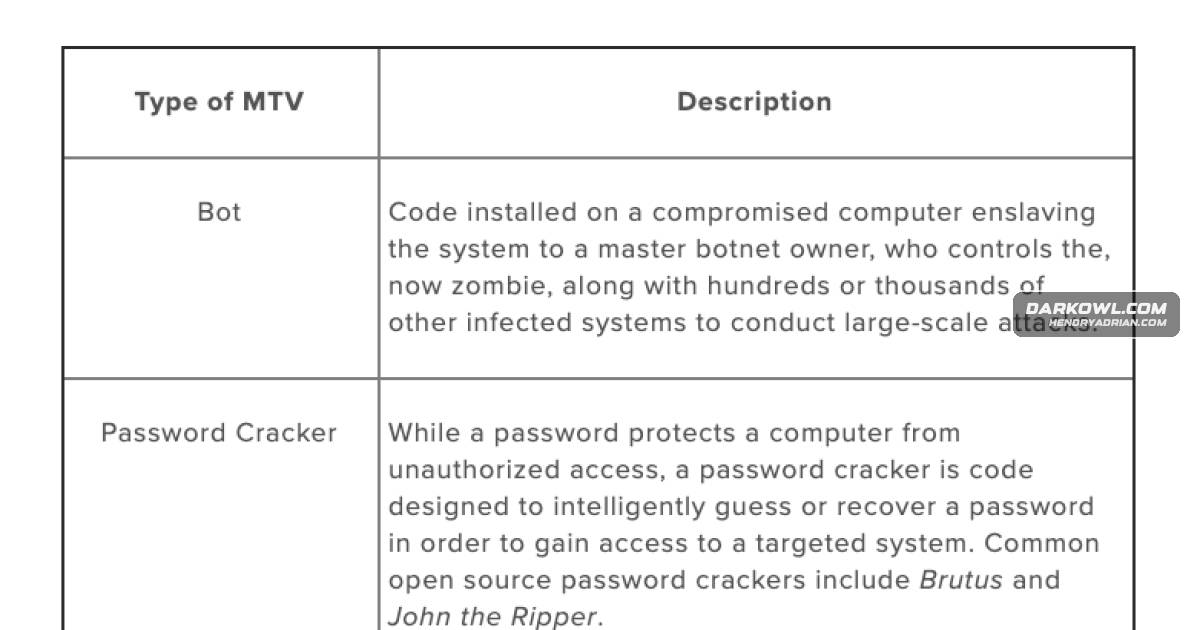
- Examples include bots, password crackers, rootkits, backdoors, keyloggers, ransomware and remote access Trojans.
- The same tools can support authorized security testing or malicious activity; THC Hydra is cited as a password-strength testing example.
- The article traces malware from Elk Cloner in the early 1980s through the growth of internet-based distribution and later threats such as Conficker and Sinowal.
- It describes attackers using discovery tools, credential cracking and backdoors to access systems and harvest personally identifiable information.
Article Details
- Topic
- Overview of malware, toolkits, and viruses (MTV) discussed and exchanged on the darknet
Malware
ConfickerBy the mid-to-late 2000’s, malware like Conficker and Sinowal demonstrated how aggressively a virus can spread, and remote command and control, enabled via clandestine communication and package concealment was born.Elk ClonerThe first example of malware debuted in the early 1980’s as a software video game piggyback, displaying the now-infamous Elk Cloner poem and corrupting the Apple boot sector.SinowalBy the mid-to-late 2000’s, malware like Conficker and Sinowal demonstrated how aggressively a virus can spread, and remote command and control, enabled via clandestine communication and package concealment was born.