
Package-Tracking Smishing Scams Use Fake USPS Sites to Steal Personal and Payment Details
Summary
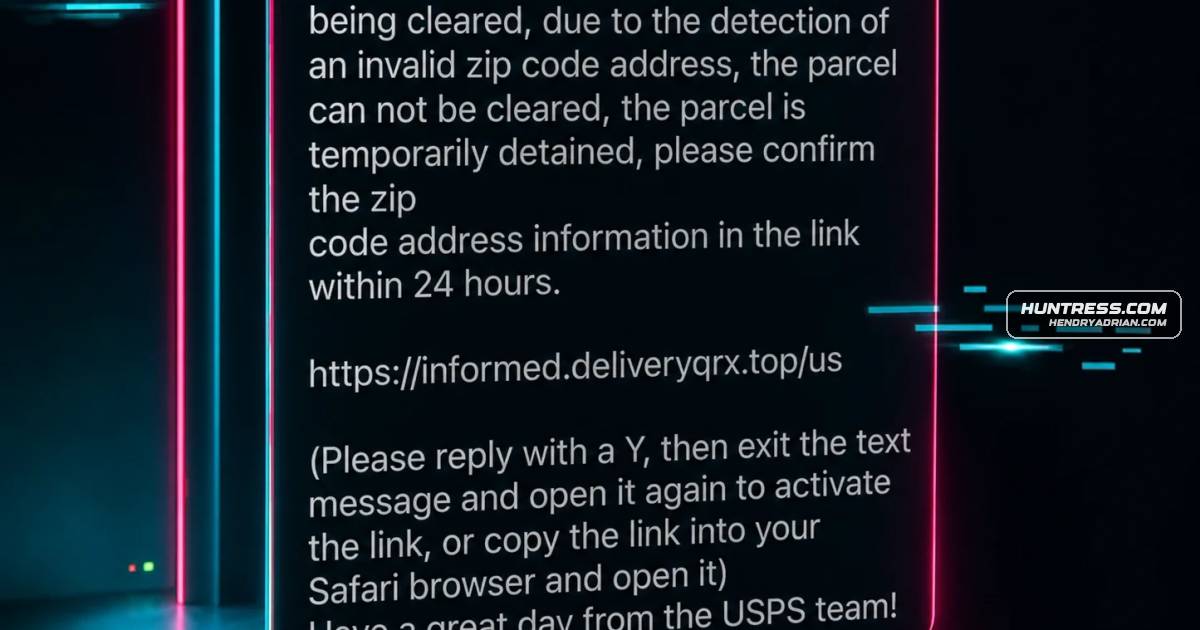
Huntress walks through a package-delivery smishing scam that impersonates USPS, harvests addresses, phone numbers and payment-card details through a fake site, and uses repeated payment errors to prompt victims to try more cards.
Key points
- The example text claims a USPS shipment has a problem and urges recipients to follow a link; replying may confirm that a phone number is active.
- The fake site imitates USPS, asks for an address and phone number, then requests a small delivery fee and payment details.
- Repeated card errors are used to encourage victims to submit additional payment-card information.
- The article flags urgency, odd wording, inconsistent capitalization, suspicious URLs, and unexpected country codes as warning signs; phone numbers can also be spoofed.
- Reach delivery services through a verified address or app rather than message links, and check shipment details with the retailer or carrier directly.
- If payment details were submitted, report or disable affected cards; if credentials were entered, change them anywhere they were reused.
- The example’s suspicious domain is informed[.]deliveryqrx[.]top.
Article Details
- Defense Focus
- Help recipients recognize package-tracking smishing and avoid disclosing personal or payment information on fraudulent sites.
- Detection Methods
- Inspect unsolicited SMS messages for urgency, spelling or grammatical issues, and suspicious links.
- Check whether the link uses an unexpected domain rather than the official USPS web address.
- Review the landing page for unusual wording, capitalization, punctuation, and suspicious payment requests.
- Treat an unexpected sender country code as a warning sign, but do not rely on the displayed phone number alone because numbers can be spoofed.
- Data Sources
- SMS message content and sender phone number
- Embedded URL and destination domain
- Landing-page text, requested information, and payment form
- Defensive Actions
- Do not click links or follow instructions in unsolicited messages; navigate independently to a verified website.
- Verify shipment issues using the retailer's order history or the official postal service website.
- If payment-card details were submitted, promptly report or disable the affected cards.
- If credentials were submitted, change them immediately anywhere they were used, and use unique passwords for each site.
Indicators of compromise
| Type | Indicator | Context |
|---|---|---|
| DOMAIN | informed[.]deliveryqrx[.]top | Domain shown in the package-tracking smishing message as the link to the fraudulent site. |