Huntress Warns Small Businesses That Cybersecurity Cuts Can Raise Recovery Costs
Summary
Huntress argues that underinvestment leaves businesses exposed, citing a 16-day median breach dwell time and high recovery costs. It recommends 24/7 SOC monitoring, EDR/ITDR, staff training, and incident-response planning.
Key points
- Huntress says healthcare and education accounted for nearly 40% of incidents it observed in 2024.
- Citing a separate analysis, the article says 61% of smaller businesses lack a dedicated cybersecurity team, 47% lack an incident-response plan, and 27% lack cyber insurance.
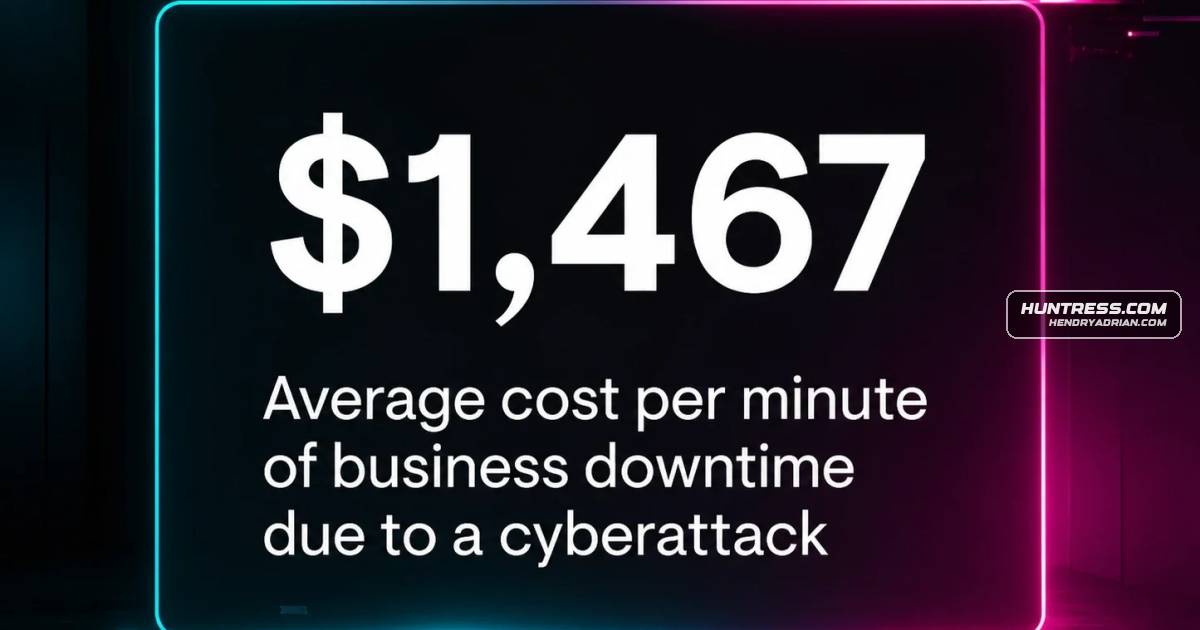
- The article cites average downtime costs of $1,467 per minute and says 20% of mid-sized businesses pay more than $250,000 to recover from a cyberattack.
- Huntress reports a 16-day median dwell time, the period between a breach and its detection.
- The article recommends SOC monitoring, EDR and ITDR tools, employee security-awareness training, and an incident-response plan.
- It uses the Minneapolis Public Schools and Shields Health Care Group breaches as examples of the potential data, operational, and reputational consequences.
Article Details
- Defense Focus
- Help businesses reduce cyber risk and limit breach impact through continuous monitoring, threat detection and response, identity protection, staff awareness, and incident preparedness.
- Detection Methods
- Continuously monitor systems, networks, and devices for suspicious activity.
- Analyze security data in real time to identify emerging threats and respond.
- Use endpoint detection and response to monitor laptops, servers, and workstations for suspicious activity.
- Use identity threat detection and response to identify and neutralize unauthorized access attempts.
- Run phishing simulations to assess employee awareness and provide follow-up coaching.
- Data Sources
- System, network, and device activity
- Endpoint activity from laptops, servers, and workstations
- Employee identity and access activity
- Phishing simulation results
- Defensive Actions
- Use a security operations center with continuous monitoring and real-time threat alerts.
- Combine endpoint detection and response with identity threat detection and response.
- Provide security awareness training and phishing simulations for employees.
- Create an incident response plan that defines roles, breach-containment steps, and stakeholder communications.
- Work with a managed service provider if the organization lacks an in-house IT team.
Vendors
Products
Huntress Managed EDRIdentify your vulnerabilities and explore cost-effective solutions like Huntress Managed EDR and Huntress Managed ITDR.Huntress Managed ITDRIdentify your vulnerabilities and explore cost-effective solutions like Huntress Managed EDR and Huntress Managed ITDR.Huntress Managed SATTake Huntress Managed SAT, for example. It offers fun, bite-sized training episodes created by cybersecurity experts to tackle real-world threats they’ve observed in the wild.
Industries
EducationOur analysis revealed that attackers targeted a broad range of industries last year, with healthcare and education bearing the brunt of the attacks.GovernmentBig threats to the tech, manufacturing, and government sectors were close behind.HealthcareOur analysis revealed that attackers targeted a broad range of industries last year, with healthcare and education bearing the brunt of the attacks.ManufacturingBig threats to the tech, manufacturing, and government sectors were close behind.TechnologyBy blending expert skills with advanced technology, a SOC provides: