
OAuth-Based Workspace Attacks Highlight Security Risks of Overpermissioned AI Agents
Summary
The article compares the Vercel and Composio incidents as OAuth-led workspace attack chains, then argues that overpermissioned AI agents can follow similar paths and that organizations need controls across email, OAuth, and data access.
Key points
- The author characterizes the Vercel and Composio incidents as similar attacks in which OAuth access, rather than email, was the entry point.
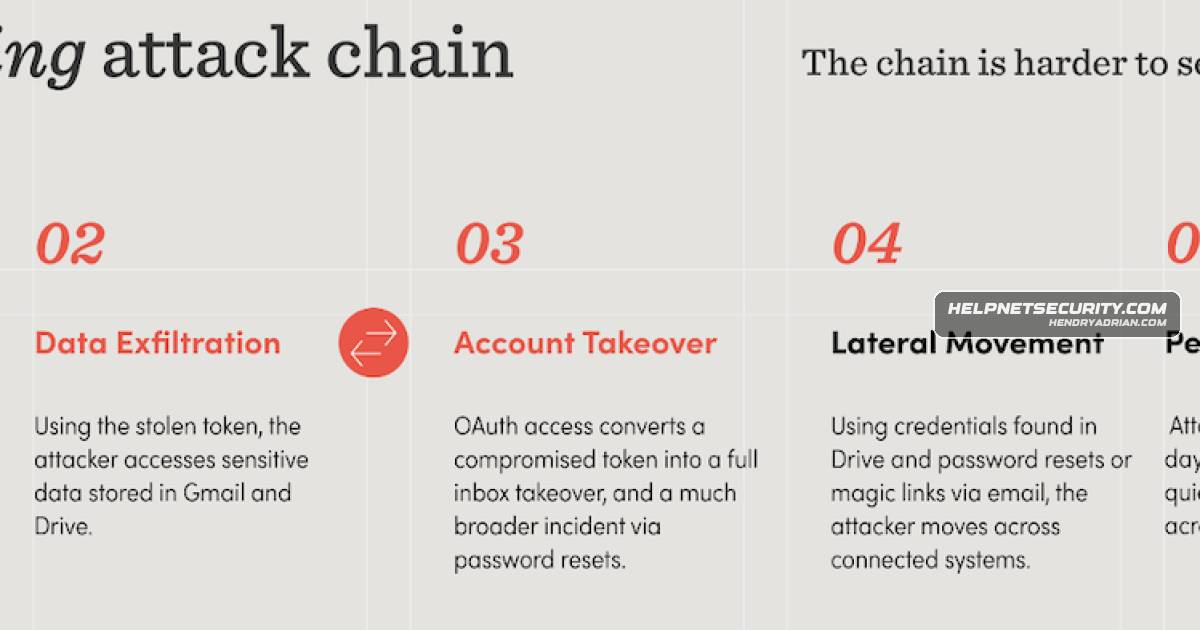
- The article says stolen OAuth tokens can provide access to Gmail and Drive and may persist through password resets.
- Access to email and Drive can expose sensitive data and support lateral movement through stored credentials or password-reset links.
- The author warns that AI agents with broad OAuth permissions may access unintended content and take downstream actions, potentially exposing data.
- Suggested safeguards include monitoring OAuth app behavior, limiting access to sensitive data, and protecting password-reset links with redaction and step-up verification.
- Material presents its email, OAuth, and file-security capabilities as controls for these risks.
Article Details
- Topic
- OAuth-based attacks against Google Workspace and the related risk of overpermissioned AI agents accessing sensitive data and moving laterally.
Products
GmailThe Vercel and Composio incidents show that modern workspace attacks can start with OAuth grants instead of email, allowing access to Gmail, Drive, and broader connected systems.Google DriveThe Vercel and Composio incidents show that modern workspace attacks can start with OAuth grants instead of email, allowing access to Gmail, Drive, and broader connected systems.Google WorkspaceOAuth tokens can become the entry point into Google Workspace and survive password resets.MaterialThat’s what we’ve built at Material. Here’s how our coverage maps to each step: