
How Huntress’s Sensitive Data Mode Limits SOC Access to Potential CUI
Summary
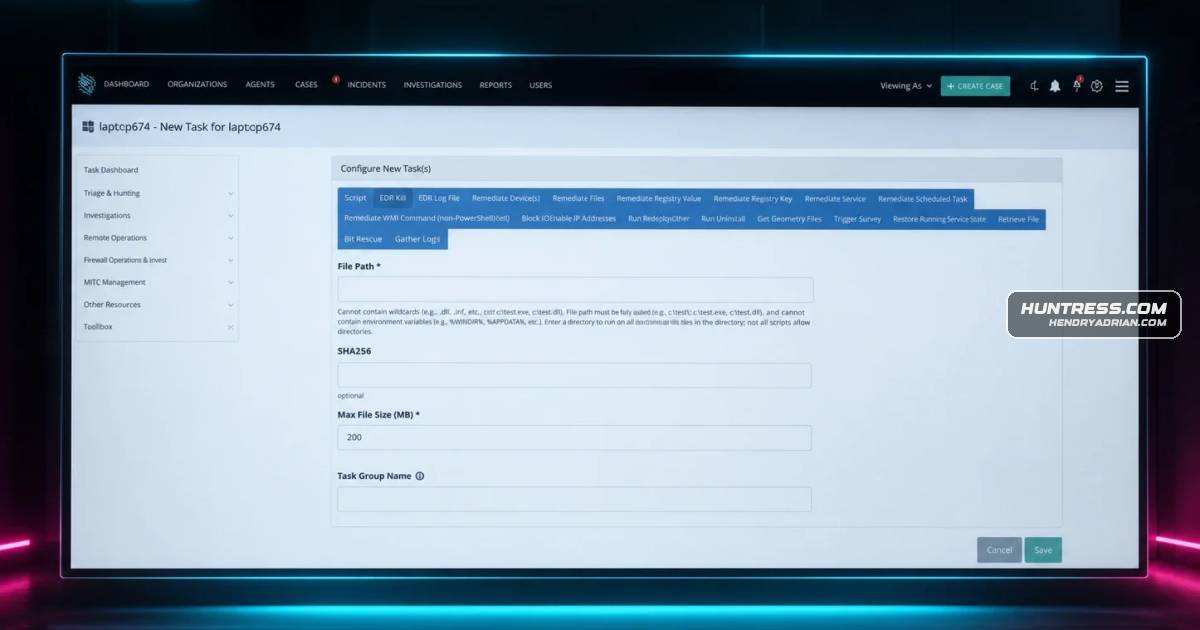
Huntress explains how its Sensitive Data Mode blocks SOC retrieval of high-risk file types that may contain CUI while allowing analysts to investigate executable files and scripts. The feature is available on request.
Key points
- Huntress describes itself as a CMMC Security Protection Asset, evaluated based on its security capabilities.
- Sensitive Data Mode blocks SOC access to high-risk file types, such as documents and spreadsheets, during investigations.
- Analysts can still retrieve and analyze executables, scripts, and other non-sensitive file types.
- Huntress says the feature is intended to support investigations while reducing exposure of potential CUI.
- Sensitive Data Mode is available now and can be configured by contacting Huntress support.
Article Details
- Topic
- Huntress Sensitive Data Mode and its role in supporting CMMC compliance
Vendors
Products
Managed EDRManaged Endpoint Detection and Response (EDR) to protect endpointsManaged Identity Threat Detection and Response (ITDR)Managed Identity Threat Detection and Response (ITDR) to secure identitiesManaged Security Awareness TrainingManaged Security Awareness Training (SAT) to arm employeesManaged SIEMManaged Security Information and Event Management (SIEM) to enhance defensesSensitive Data ModeTo support CMMC compliance, Huntress has a feature called Sensitive Data Mode, which blocks Huntress Security analyst access to potential CUI files, without compromising their ability to effectively detect and remediate