
Prove Sues KYXStart, Alleging Patent Infringement and Misuse of Former Employees’ Knowledge
Summary
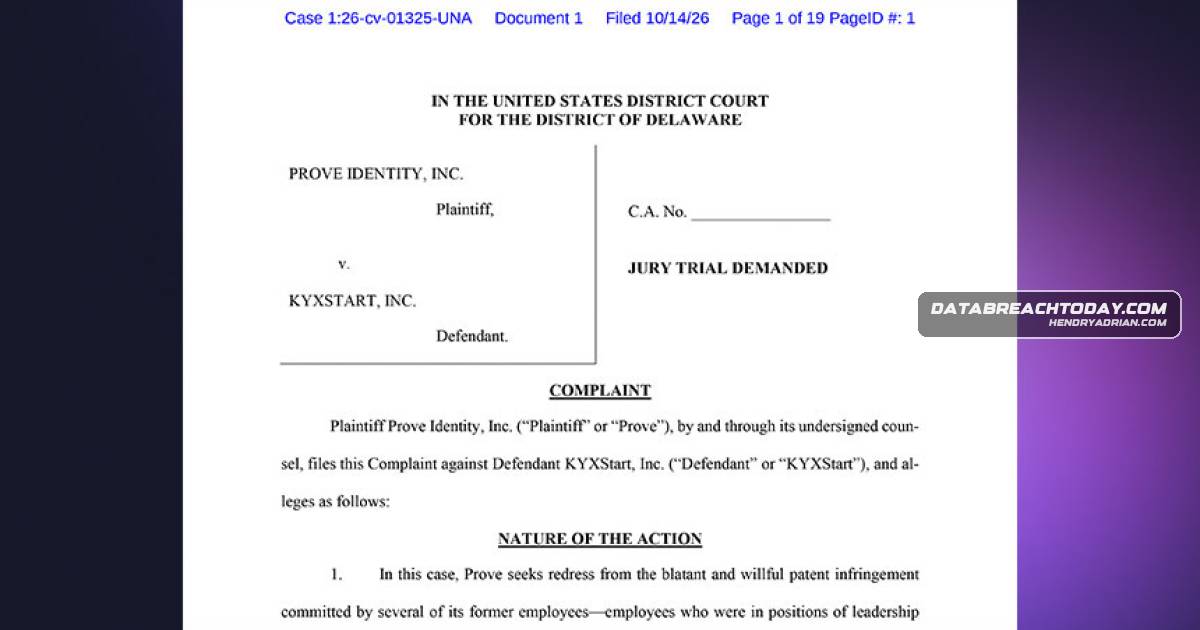
Prove sued KYXStart, alleging it infringed two digital identity patents and used former Prove employees’ knowledge to develop competing products. KYXStart disputed the claims in an earlier response, according to Prove.
Key points
- Prove filed a federal lawsuit in Delaware alleging KYXStart willfully infringed two patents related to digital identity verification and authentication.
- One patent concerns updating trust relationships based on network interactions; the other concerns validating identifiers within a recent time window to help prevent interception and replay attacks.
- Prove alleges former employees, including a named patent inventor, helped KYXStart access proprietary knowledge and develop competing services.
- The complaint names KYXStart services including person, business, payments, and telecommunications verification, as well as fraud intelligence and anti-money-laundering monitoring.
- Prove says it notified KYXStart of the alleged infringement in March; KYXStart responded through counsel in April with noninfringement arguments, which Prove disputes.
- The allegations have not been established in court; KYXStart did not respond to the publication’s request for comment.
Article Details
- Event Type
- Patent infringement and related unfair-competition lawsuit
- Impact
- Prove Identity alleges that KYXStart and former Prove employees used Prove's proprietary technology to develop competing products that infringe two patents covering digital identity verification and authentication. The allegations have not been established in court.
People
Michael StearneFormer Prove director of product management who became KYXStart's head of product; Prove alleges KYXStart recruited him despite his restrictive covenant.Ravindra BijlaniKYXStart's leader since its founding; Prove says he previously held a senior role at Prove.Renata LowenbraunFormer Prove vice president who joined KYXStart as a legal adviser and later became its general counsel, according to Prove.