
ThreatFabric Outlines Detection Gaps in Romance Scam Prevention
Summary
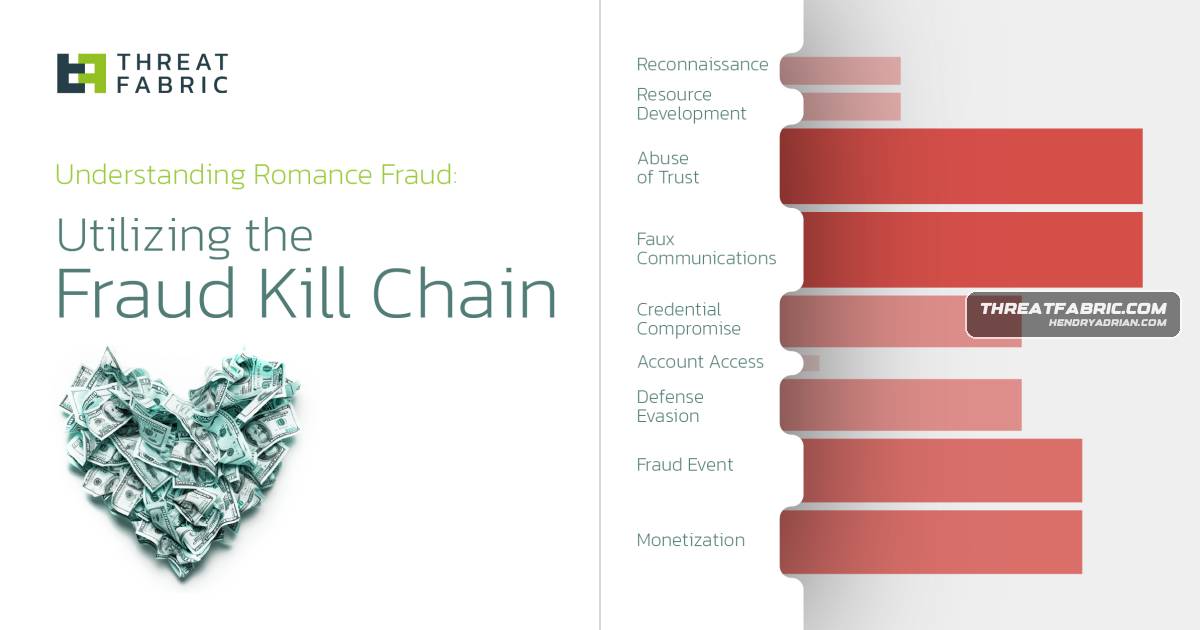
ThreatFabric describes romance scam tactics and recommends customer-journey visibility, monitoring across web and mobile channels, and behavioral biometrics to help anti-fraud teams detect social engineering.
Key points
- The article describes romance scams as progressing from fake profiles and relationship-building to fabricated emergencies, requests for money or sensitive information, and sometimes threats or blackmail.
- ThreatFabric says its research found that over a quarter of scams are performed this way.
- Because social engineering may leave account access and transactions appearing benign, the article emphasizes visibility into customer interactions between login and transactions.
- It recommends detection coverage across web, mobile, and app channels.
- It suggests behavioral biometrics models that look for signs of manipulation, pressure, or hesitation, as well as changes from an individual customer’s usual device behavior.
- ThreatFabric also recommends reviewing detection processes and using mobile threat intelligence to stay current on evolving threats.
Article Details
- Defense Focus
- Improve detection of romance scams by identifying behavioral signs of social engineering across customer interactions and digital channels.
- Detection Methods
- Review customer journeys across interactions from login through transactions.
- Use behavioral biometrics to detect manipulation, pressure, and hesitation.
- Compare a customer's device interactions with their usual behavior to identify anomalies.
- Data Sources
- Customer interaction data between login and transactions
- Web, mobile, and app channel activity
- Behavioral biometric signals
- Defensive Actions
- Check detection processes for end-to-end customer journey visibility.
- Ensure visibility across online, web, mobile, and app channels.
- Consider integrating in-channel behavioral biometrics into fraud detection processes.
- Keep mobile threat intelligence current.