
How Anti-Fraud Teams Can Detect Investment Scams Across Web and Mobile
Summary
ThreatFabric describes common investment-scam approaches and recommends monitoring full user journeys, using behavioral biometrics, and correlating device and behavioral risk across web and mobile channels.
Key points
- Investment scams may begin with impersonation, romance scams, spam, or social media ads before steering victims toward fake investment opportunities.
- Scams may use convincing platforms, fake reviews and logos, phishing sites, or promises of high returns in crypto, forex, and binary options.
- The article says 12% of scams in its research were classified as investment fraud, while some social media and romance scams may also involve investment fraud.
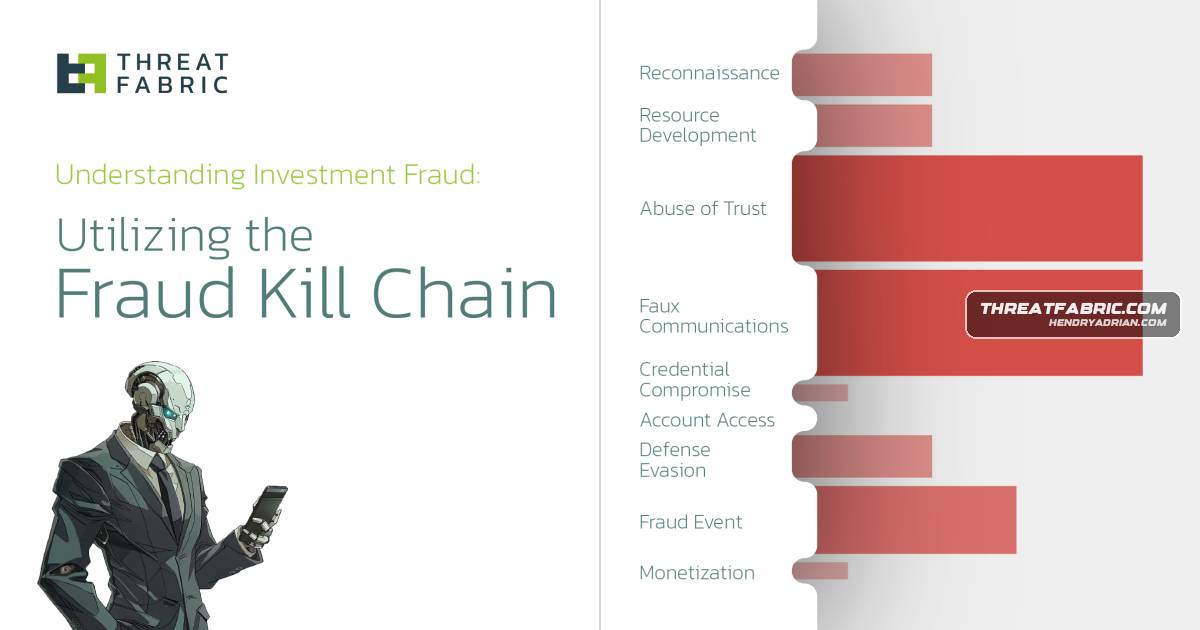
- Because these scams may lack distinctive technical indicators during credential compromise, account access, and defense evasion, behavioral models can help identify risk.
- Behavioral biometrics can flag signs of manipulation or pressure and interactions that differ from a customer's normal behavior.
- Anti-fraud teams are advised to monitor the full user journey across web and mobile and correlate device risk with behavioral risk.
Article Details
- Defense Focus
- Improve detection of investment scams and related account-control activity across online banking channels.
- Detection Methods
- Use multiple behavioral-biometric models to detect manipulation, pressure, hesitation, and customer interactions that differ from normal behavior.
- Correlate device risk with behavioral risk and signals of on-call activity or an active RAT.
- Monitor the full user journey rather than only login and transaction points.
- Data Sources
- Behavioral-biometric signals
- Device-risk signals
- Behavioral-risk signals
- On-call and active-RAT indicators
- Web- and mobile-channel activity
- Platforms
- Web channels
- Mobile channels
- Defensive Actions
- Ensure visibility across both web and mobile channels.
- Correlate risk signals across channels and technologies, including device risk and behavioral risk.
- Monitor the entire user journey, not only login and transaction events.
- Keep mobile threat intelligence current.
Products
FacebookSocial Media: Scammers use platforms like Facebook, Instagram, and Twitter to promote fraudulent investment opportunities, often using images of luxury items to entice people.InstagramSocial Media: Scammers use platforms like Facebook, Instagram, and Twitter to promote fraudulent investment opportunities, often using images of luxury items to entice people.TwitterSocial Media: Scammers use platforms like Facebook, Instagram, and Twitter to promote fraudulent investment opportunities, often using images of luxury items to entice people.