
Malicious Bitwarden CLI Release Steals Cloud Credentials, Researchers Say
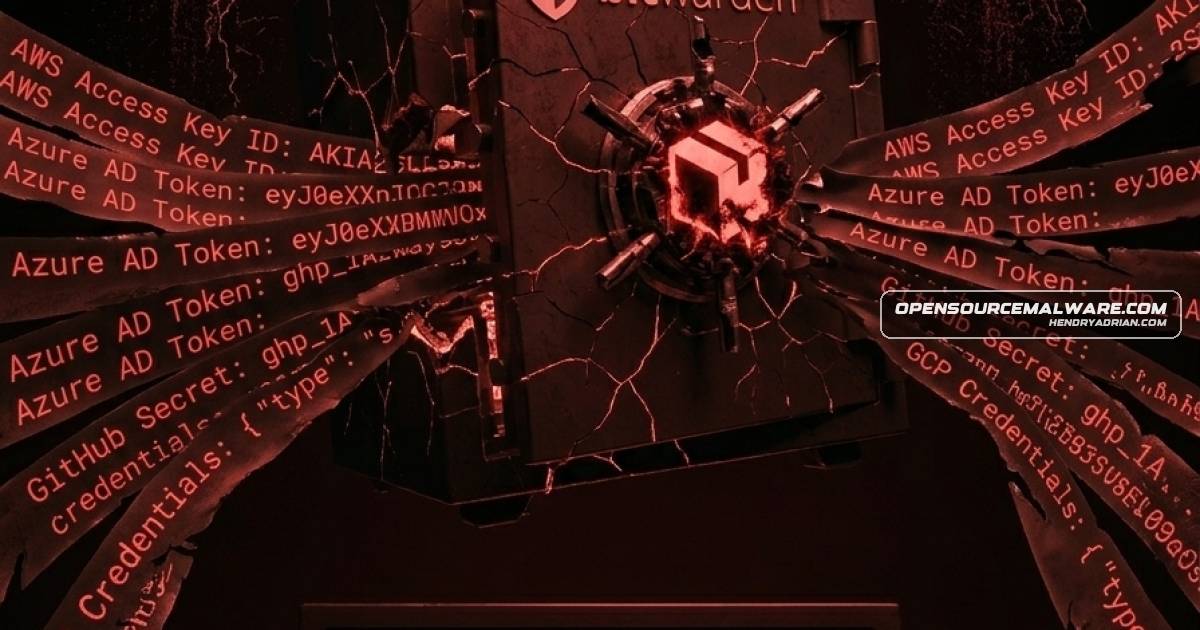
Summary
The episode examines a malicious Bitwarden CLI release, npm lifecycle-script risks, OWASP guidance, and reports of AI-assisted malware adapted across package ecosystems. The speakers say the Bitwarden version was removed and question the attackers’ Shai-Hulud claim.
Key points
- The speakers describe Bitwarden CLI version 2026.4.0 as a malicious release that ran through an npm pre-install script; they say it was removed after being available for about 14 hours.
- They say the malware targeted developer workstations and CI runners, harvesting credentials and configuration data associated with AWS, Azure, GCP, GitHub, and Claude.
- The episode describes exfiltration to a lookalike Checkmarx domain, checkmarx[.]cx. The speakers say the attackers’ claimed connection to Shai-Hulud was not supported by researchers they trusted.
- The speakers discuss how npm lifecycle scripts can run automatically during installation, contrasting npm’s default behavior with package managers where scripts are off by default.
- They review OWASP npm security recommendations, including lock files, limiting install scripts, artifact governance, and protections against dependency confusion and typosquatting.
- The speakers report finding malicious packages targeting the same users across multiple ecosystems within an eight-hour period, and say generative AI helped adapt existing malware between programming languages.
Article Details
- Event Type
- Software supply-chain compromise involving a malicious Bitwarden CLI npm package release
- Impact
- The malicious Bitwarden CLI version 2026.4.0 reportedly ran a pre-install script that installed and executed an infostealer, harvesting credentials and environment data from developer workstations and CI runners, including credentials associated with AWS, Azure, GCP, and GitHub. The package was available for about 14 hours before it was taken down. A speaker said that, as of their latest check, three people had been compromised and GitHub credentials and other data had been publicly exfiltrated; the extent of broader impact was not established.
Indicators of compromise
| Type | Indicator | Context |
|---|---|---|
| DOMAIN | checkmarx[.]cx | Lookalike Checkmarx domain identified as an exfiltration destination for data stolen by the malicious package. |
| HOSTNAME | audit[.]checkmarx[.]cx | Domain shown in the threat graph for the Bitwarden CLI compromise and associated with the reported malicious infrastructure. |
MITRE ATT&CK
T1059.007 · JavaScriptThe package's pre-install script executed JavaScript files, including a payload run under Bun.T1195.001 · Compromise Software Dependencies and Development ToolsThe attack involved a malicious version of a legitimate npm package distributed through the software supply chain.T1552.005 · Cloud Instance Metadata APIThe infostealer checked EC2 instance metadata for data it could retrieve.T1567.001 · Exfiltration to Code RepositoryStolen data was reportedly placed in public GitHub repositories created in compromised users' accounts.
People
Threat Actors
Vendors
Products
AWShow this cloud-native infostealer silently executes via pre-install scripts to harvest credentials across AWS, Azure, GCP, and GitHub, as well as hoovering up AI config files like Claude. We also discuss itsAzurecloud-native infostealer silently executes via pre-install scripts to harvest credentials across AWS, Azure, GCP, and GitHub, as well as hoovering up AI config files like Claude. We also discuss its exfiltrationBitwarden CLIBitwarden CLI Compromise: We analyze the recently discovered malicious version (2026.4.0) of the Bitwarden CLI package. We break down how this cloud-native infostealer silently executes via pre-install scripts toBunbetween package managers, noting that while these scripts are off by default in tools like pnpm and bun, they remain on by default in npm.Claudeto harvest credentials across AWS, Azure, GCP, and GitHub, as well as hoovering up AI config files like Claude. We also discuss its exfiltration tactics to a lookalike domain and explain why we are skeptical of theGCPinfostealer silently executes via pre-install scripts to harvest credentials across AWS, Azure, GCP, and GitHub, as well as hoovering up AI config files like Claude. We also discuss its exfiltration tacticsGitHubinfostealer silently executes via pre-install scripts to harvest credentials across AWS, Azure, GCP, and GitHub, as well as hoovering up AI config files like Claude. We also discuss its exfiltration tactics to anpmThe Danger of npm Lifecycle Scripts: Why are pre-install and post-install scripts such a popular attack path? We discuss how threat actors exploit these convenience features to auto-install malware. We also explore the