Why Fraud Controls Miss Mobile Malware on Trusted Devices
Summary
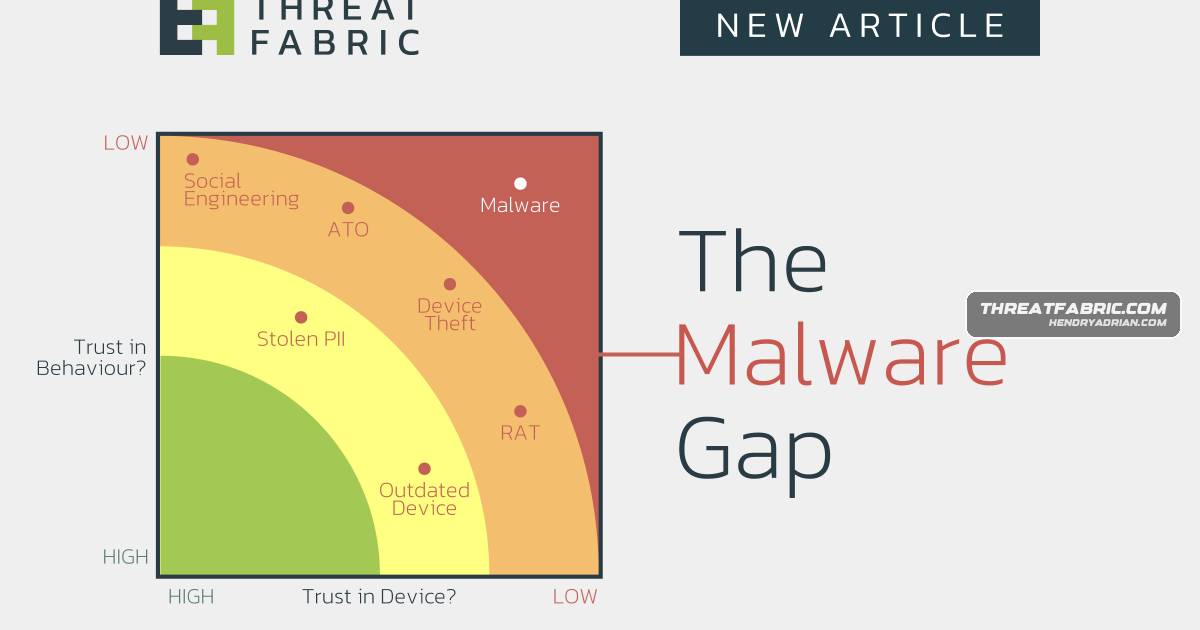
Mobile malware can combine social engineering, device takeover and automated fraud while evading behavioral and device checks. The article explains how malware intelligence can help identify compromised devices and connect fraud signals.
Key points
- Campaigns may begin with social engineering or sideloaded apps, then use delayed activation, targeting and on-device execution to steal credentials or automate transactions.
- Accessibility abuse, overlays, screen capture and remote control can let malware operate within an authenticated session on a victim’s device.
- Device integrity checks and behavioral analytics may miss malware when activity appears to come from a familiar device and resembles normal user behavior.
- The article argues that malware intelligence can identify known families and malicious capabilities, classifying devices as compromised rather than merely unfamiliar.
- It recommends combining malware intelligence with device signals, behavioral analytics and transaction monitoring to detect campaigns earlier.
Article Details
- Topic
- The mobile malware gap in fraud detection and the role of malware-aware threat intelligence
Malware
AnatsaWell‑documented banking trojans such as Anatsa (and dozens of later families) demonstrate a repeatable pattern: benign app publication, delayed weaponisation, selective targeting, and cyclical activity designed to evadeBTMOBBTMOB actually corrupts itself to bypass inspection.HerodotusOthers are circumventing Device Security altogether, by Side Loading the app, such as Xenomorph and Herodotus.PhantomCardMalware using the Ghost Tap mechanism, such as PhantomCard and RatOn, incorporate NFC Relay techniques, moving cashouts to (often unmonitored) POS channels.RatOnMalware using the Ghost Tap mechanism, such as PhantomCard and RatOn, incorporate NFC Relay techniques, moving cashouts to (often unmonitored) POS channels.XenomorphOthers are circumventing Device Security altogether, by Side Loading the app, such as Xenomorph and Herodotus.