
Why Microsoft 365 Identity Gaps Persist and How Continuous Hardening Can Help
Summary
The article explains how Microsoft 365 configuration drift can leave identity gaps open and describes how continuous identity security posture management can help teams identify and harden those gaps.
Key points
- Identity Security Posture Management (ISPM) continuously assesses Microsoft 365 configurations, policies, permissions, and account settings against a security baseline.
- Huntress says more than 60% of the tenants it evaluated were missing over half of its recommended controls, and 55% allowed standard users to perform admin-level functions.
- The article describes drift from user and role changes, policy exceptions, and updates to Microsoft defaults or licensing as a cause of recurring exposure.
- Weak MFA, overprivileged accounts, policy drift, and stale permissions can create opportunities for account takeover, business email compromise, and privilege escalation.
- The article cites Microsoft data indicating an average of 48 minutes from initial intrusion to lateral movement, and argues that daily or weekly scans may be too slow to catch risky changes.
- Huntress promotes its Managed ISPM service, which it says detects drift within minutes and offers a Learning Mode to preview user impact before policies are enforced.
Article Details
- Topic
- Identity Security Posture Management (ISPM) for continuously identifying and hardening Microsoft 365 identity configurations, permissions, and policies.
Vendors
Products
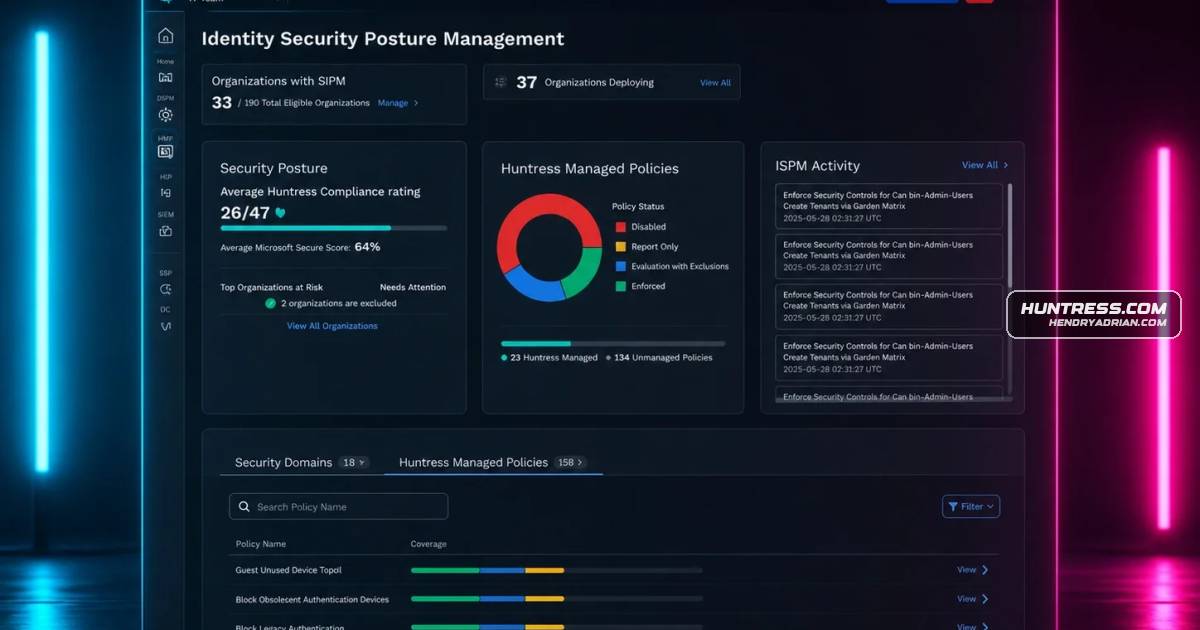
Huntress Managed ISPMHuntress Managed ISPM is built to solve the challenges that leave Secure Scores stuck below targets. Rather than surfacing a to-do list and handing it back to your team, it defines the gold standard for Microsoft 365Microsoft 365 Apps for EnterpriseHomeBlogWhy Your Microsoft 365 Secure Score is Stuck (and How ISPM Fixes It)