GhostAction Phishing Kit Targets Open-Source Maintainers With Credential Theft and OAuth Automation
Summary
GhostAction used a GitHub lookalike to phish a maintainer, capture credentials, and automate OAuth device authorization for repository and workflow access. A victim was stopped by an additional MFA challenge; successful token theft was not confirmed.
Key points
- A personalized fake GitHub security alert sent a maintainer to my-github[.]com, hosted on infrastructure associated with GhostAction.
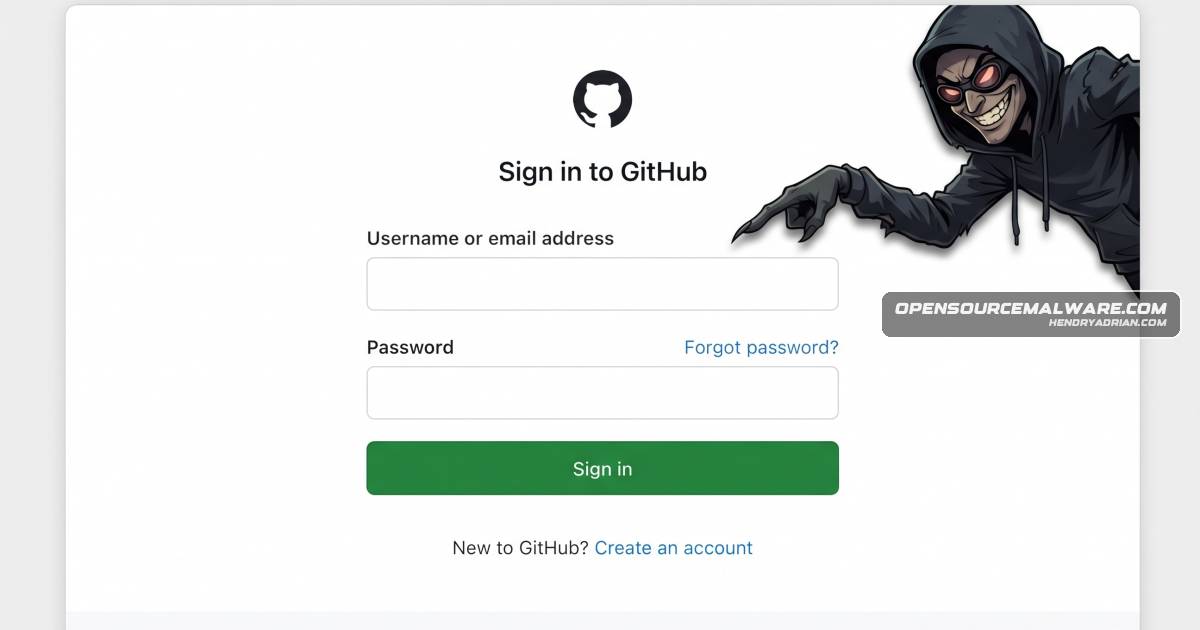
- Recovered pages and a HAR document a reverse proxy that collected submitted login credentials and included an authenticator-code prompt.
- Injected JavaScript attempted to authorize an OAuth device flow requesting repo, workflow, and read:org scopes, then send the token to the campaign domain.
- The source confirms the token-exfiltration capability, but the HAR did not show the OAuth flow completing or a token being exfiltrated.
- The victim was not compromised: an additional MFA challenge stopped the attacker after a successful login; passwords were changed and account activity was reviewed.
- The evidence links developer phishing to GhostAction’s malicious-workflow activity, but does not prove phishing caused earlier account compromises.
- Defenders should block and hunt the phishing domain and related indicators, revoke suspicious sessions and OAuth grants, and review repositories, workflows, keys, and reachable secrets.
Article Details
- Attack Vectors
- Personalized phishing email impersonating a GitHub security alert and directing maintainers to my-github[.]com.
- Reverse-proxy phishing pages collected GitHub usernames, passwords, and one-time codes through attacker-controlled routes.
- Injected JavaScript automated a GitHub OAuth device flow requesting repo, workflow, and read:org scopes; the script was designed to send the resulting access token to the campaign domain on TCP/8443. Successful token issuance or exfiltration was not observed in the captured browser session.
- GhostAction workflows searched repositories and reachable Git history for secrets and sent collected results to 193.32.204[.]199.
- Defensive Notes
- Block and hunt for the listed my-github[.]com domains and phishing URLs, and search email telemetry for the sender and the “New sign-in from Moscow, Russia” subject fragment.
- Treat 95.214.27[.]108 as an IP used in the phishing lure, not as confirmed attacker infrastructure.
- If a recipient interacted with the link, preserve browser, DNS, proxy, and endpoint telemetry before cleanup.
- Revoke GitHub sessions and tokens, reset credentials, review SSH and GPG keys and OAuth or GitHub App authorizations, and remove unfamiliar grants associated with client ID Ov23ctrqCqZ79UaYKwyq.
- Inspect accessible repositories and organizations for unexpected workflows, direct pushes, release changes, deploy keys, webhooks, and trigger-only commits; rotate reachable package, cloud, deployment, and CI/CD credentials.
Indicators of compromise
| Type | Indicator | Context |
|---|---|---|
| DOMAIN | api[.]my-github[.]com | Attacker-controlled subdomain used by the phishing application for proxied API routes and browser telemetry. |
| DOMAIN | collector[.]my-github[.]com | Attacker-controlled subdomain used by the phishing application for analytics submissions. |
| DOMAIN | docs[.]my-github[.]com | Attacker-controlled subdomain used by the phishing application for proxied documentation links. |
| DOMAIN | github[.]my-github[.]com | Attacker-controlled subdomain used by the reverse-proxy phishing application to serve GitHub-related assets. |
| DOMAIN | my-github[.]com | Confirmed phishing domain associated with GhostAction and hosted on the campaign server. |
| DOMAIN | support[.]my-github[.]com | Attacker-controlled subdomain used by the phishing application for proxied support links. |
noreply@my-github[.]com | Sender address shown in the phishing email; the original sender authentication was unavailable. | |
| IPV4 | 193[.]32[.]204[.]199 | Confirmed GhostAction server used to host the phishing domain and receive collected CI/CD, repository, and secret data. |
| SHA256 | 68c20885a3e234c9eb1e4f87a7013298923646f9c50dfdad97a9e35d989119f8 | SHA-256 of the recovered redirect-controller JavaScript used by the phishing kit. |
| SHA256 | e6bdd7e782ef2fbf42209509993811a63ae19f1580d2453b8324b87db5ad1449 | SHA-256 of the captured redirect response served by the campaign infrastructure. |
| URL | hxxps[:]//my-github[.]com:8443/t | Campaign listener identified in the source as the destination for OAuth access-token exfiltration; successful receipt was unverified. |
| URL | hxxps[:]//my-github[.]com/login | Attacker-hosted credential collection page confirmed by screenshot and recovered source. |
| URL | hxxps[:]//my-github[.]com/SDRVuhYw | Targeted phishing URL; the path was confirmed and its redirect behavior changed during the campaign. |
| URL | hxxps[:]//my-github[.]com/session | Attacker-controlled route receiving the phishing login form submission. |
| URL | hxxps[:]//my-github[.]com/sessions/two-factor/app | Attacker-hosted authenticator-code phishing page confirmed by screenshot. |
MITRE ATT&CK
T1056.003 · Web Portal CaptureThe reverse-proxy phishing pages collected GitHub login credentials and presented an authenticator-code prompt.T1078.004 · Cloud AccountsThe article reports that the attacker successfully logged into the victim’s GitHub account but was stopped by an additional MFA challenge.T1195.002 · Compromise Software Supply ChainThe reported GhostAction campaign injected malicious GitHub Actions workflow files into repositories accessible to compromised maintainer accounts.T1528 · Steal Application Access TokenInjected JavaScript automated an OAuth device flow and was designed to exfiltrate the resulting access token; completion was not observed in the captured session.T1566.002 · Spearphishing LinkThe actor sent a personalized phishing email containing a link to a lookalike GitHub domain.
People
Threat Actors
Products
GitHublast blog post, we warned our readers that the GhostAction threat actor had registered a new domain my-github[.]com and we theorized that they were intending to use it for phishing. Unfortunately, we were right: theGitHub Actionsit for phishing. Unfortunately, we were right: the GhostAction campaign has moved beyond malicious GitHub Actions workflows and into direct, personalized phishing of open-source developers. OpenSourceMalware