
Huntress Describes Athena AI System for SOC Signal Triage and Investigations
Summary
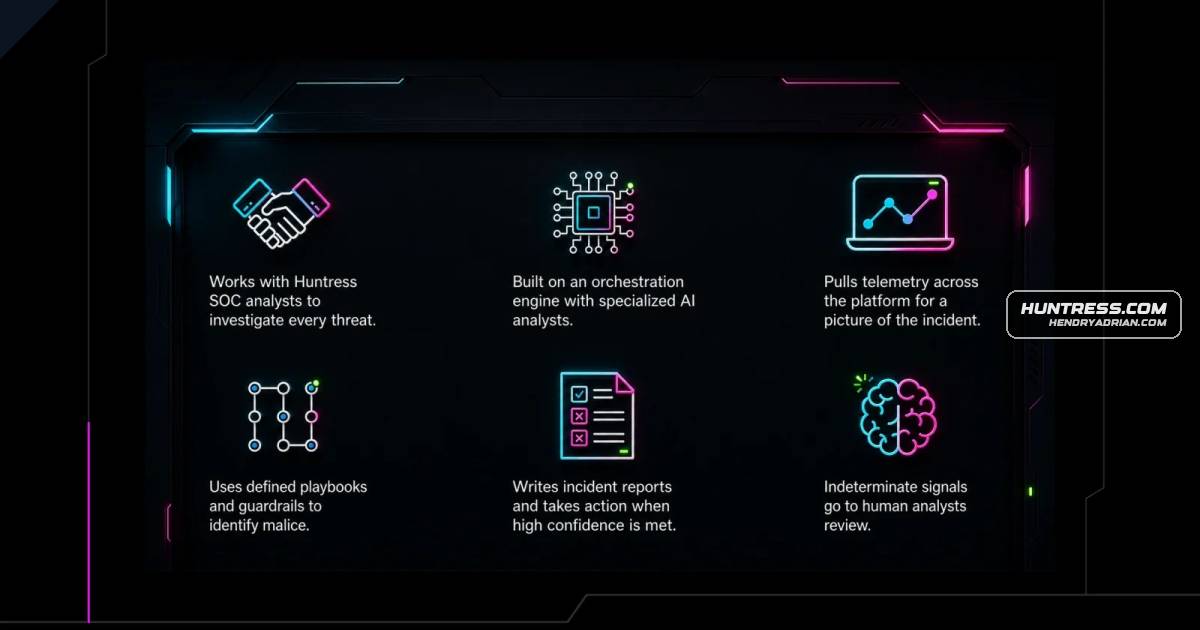
Huntress says its Athena system uses more than 40 specialized agents to group and investigate security signals, prioritize suspected live threats for human analysts, and deliver reports for some confirmed malicious activity without analyst review.
Key points
- Athena comprises more than 40 specialized agents and is intended to automate time-consuming SOC investigation work, not replace analysts.
- When an investigation opens, an agent groups related signals on the same entity using shared characteristics such as process, source IP, or attack pattern.
- Athena prioritizes suspected hands-on-keyboard threats, including ransomware and lateral movement, for rapid human review.
- Sub-agents gather endpoint process activity and identity context, including comparisons of suspicious logins with organizational baselines.
- For some identity investigations, Athena can confirm malicious activity, generate an incident report, and deliver it to the customer without human review.
- Cases go to analysts when Athena has high confidence of malicious activity or when findings are inconclusive; the queue includes its evidence and analysis.
Article Details
- Event Type
- Huntress describes Athena, its agentic investigation system, for automated SOC signal triage, evidence collection, and analysis.
- Impact
- Huntress says Athena bundles related signals, prioritizes suspected hands-on-keyboard threats for human review, and can investigate some cases and report confirmed malicious activity without analyst review. The company says this enables faster investigations, more consistent reports, fewer false positives, and scalable SOC capacity.