
Password-Spraying Campaign Exploited Deprecated OAuth Flow to Bypass MFA
Summary
Huntress reports a major Azure CLI password-spraying campaign that used deprecated OAuth ROPC to bypass MFA and Conditional Access. The initial LSHIY-hosted activity was terminated, but attempts later shifted to other IP ranges.
Key points
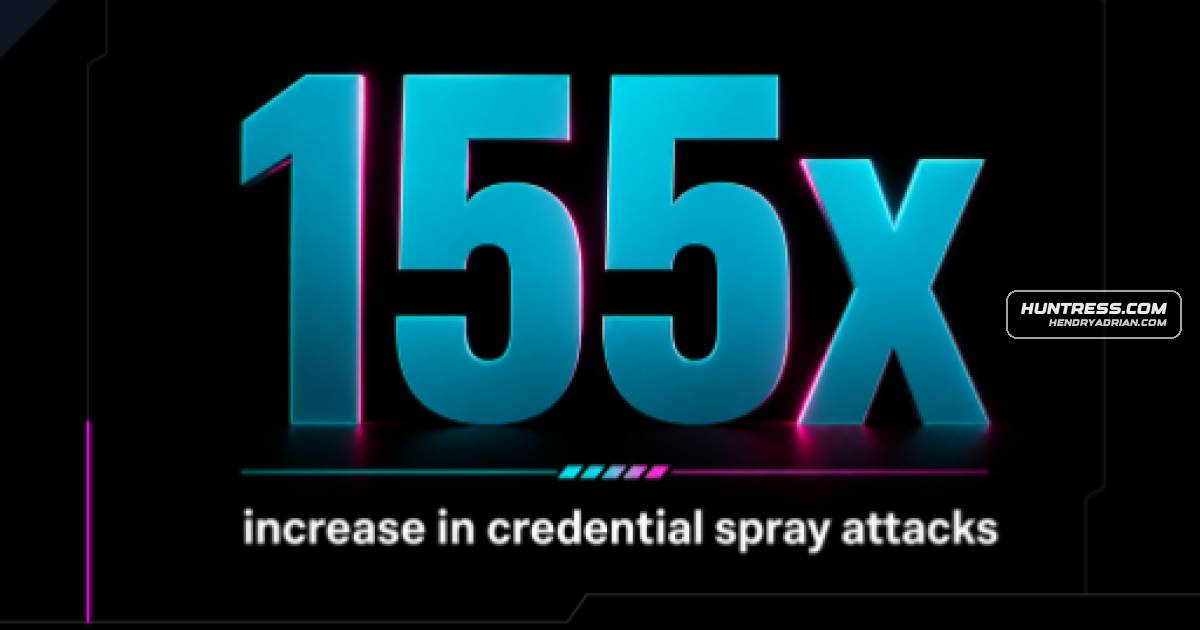
- Huntress observed a 155-fold rise in credential-spraying attacks in the first half of 2026.
- In a two-week period in June, the LSHIY-linked campaign generated more than 81 million login attempts and compromised 78 accounts.
- The attackers used the deprecated Resource Owner Password Credentials (ROPC) flow to obtain user-delegated tokens, bypassing MFA and Conditional Access when credentials were valid.
- Huntress observed no follow-on compromise activity after the successful logins; it suggested the credentials may have been validated for resale.
- LSHIY said the activity using its IP range had been terminated in early July. The actor later appeared to shift to FranTech-hosted IPv6 ranges and Tor exit nodes, with lower attempt volumes.
- Huntress recommends disabling ROPC, restricting Azure CLI access for non-admins, enforcing MFA across users and client apps, and strengthening password hygiene and Conditional Access.
Article Details
- Event Type
- Password-spraying campaign against Microsoft's Azure CLI using the deprecated Resource Owner Password Credentials (ROPC) flow.
- Impact
- Huntress reported more than 81 million related login attempts and 78 account compromises over a two-week period in mid-June. Of 23 affected businesses it analyzed, all but eight had MFA implemented. Huntress observed no follow-on compromise activity after successful logins.
MITRE ATT&CK
Vendors
FranTechSince LSHIY's takedown, the threat actor appears to have moved to an IP block hosted by ISP FranTech (AS53667), spraying from two IPv6 ranges (2605:6400::/32, 2605:6404::/32), as well as IPv4 ranges via Tor exit nodes.LSHIY LLCagainst Microsoft's Azure CLI originating from an IPv6 range controlled by internet hosting provider LSHIY LLC. While the campaign started months earlier, in mid-June Huntress observed more than 81 million relatedMicrosoftMuch of this spike is thanks to a single campaign against Microsoft's Azure CLI originating from an IPv6 range controlled by internet hosting provider LSHIY LLC. While the campaign started months earlier, in mid-June