Anthropic Warns AI Models Could Enable Self-Propagating IoT Botnets
Summary
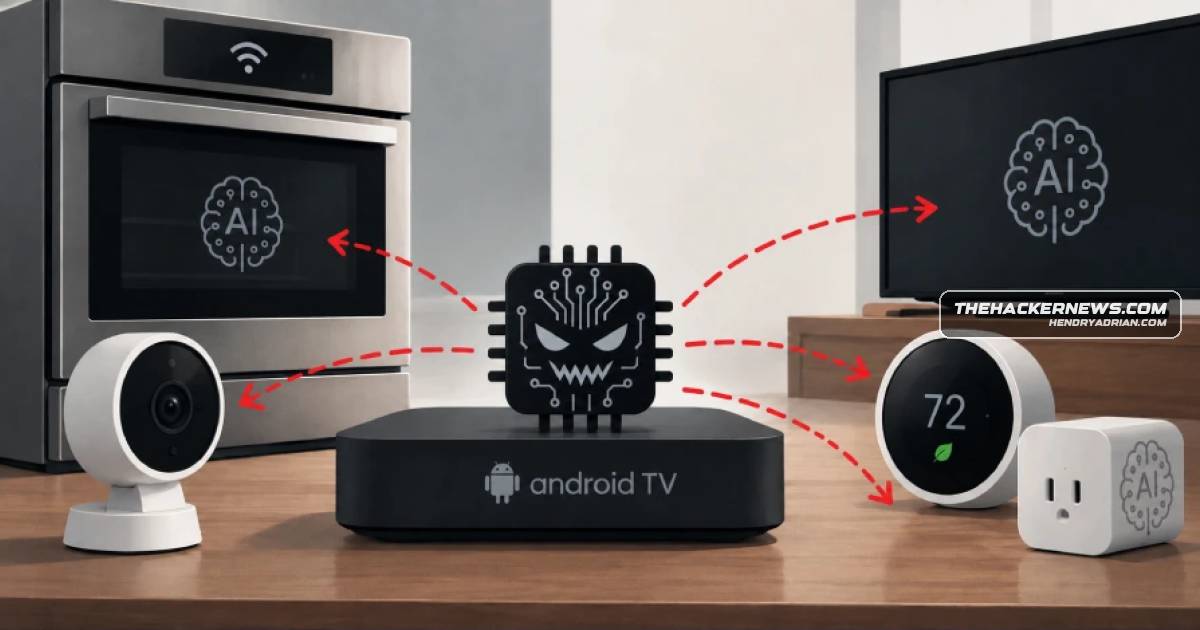
Anthropic warns that AI models could help create self-propagating IoT botnets. In tests, one model reliably propagated another model across Android emulator nodes; Anthropic says it has not built a full replicator.
Key points
- Anthropic warns that AI worms could copy model weights to compromised devices or download them from a public hub, making the weights part of the malware.
- The proposed botnets could use poorly secured IoT devices, including Android TV boxes, for distributed AI computation.
- Anthropic tested 11 open-weight models; it said GLM-5.2 was the only one to reliably propagate Llama3.1-8B to all eight Android emulator nodes in four of five trials.
- Anthropic said a fleet of hundreds of thousands of inexpensive Android TV boxes could provide meaningful distributed inference capacity.
- The company said it has not created a full self-replicating system and has not tested whether AI botnets could intelligently counter defenders.
Article Details
- Event Type
- Anthropic warning about the potential development of self-propagating AI botnets targeting IoT devices, accompanied by tests of open-weight models.
- Impact
- No full self-replicating botnet was reported. Anthropic said GLM-5.2 reliably propagated Llama3.1-8B to 8 of 8 nodes running the redroid Android emulator in 4 of 5 trials. The article describes potential for compromised IoT devices to run AI inference and spread further, possibly making such botnets difficult to shut down.
Products
GLM-5.2Alibaba, DeepSeek, Google, Meta MoonShot AI, OpenAI, and Zhipu AI (aka Z.ai), Anthropic said it found GLM-5.2 to be the only model to propagate Llama3.1-8B reliably to 8/8 nodes running the redroid Android emulatorLlama3.1-8BAI, OpenAI, and Zhipu AI (aka Z.ai), Anthropic said it found GLM-5.2 to be the only model to propagate Llama3.1-8B reliably to 8/8 nodes running the redroid Android emulator in 4 out of 5 trials.