
Three Microsoft 365 Attacks Abuse User Actions Instead of Exploits
Summary
Huntress explains how ClickFix, over-permissioned apps, and device-code phishing can expose Microsoft 365 accounts without exploits, and recommends user awareness and tighter tenant controls.
Key points
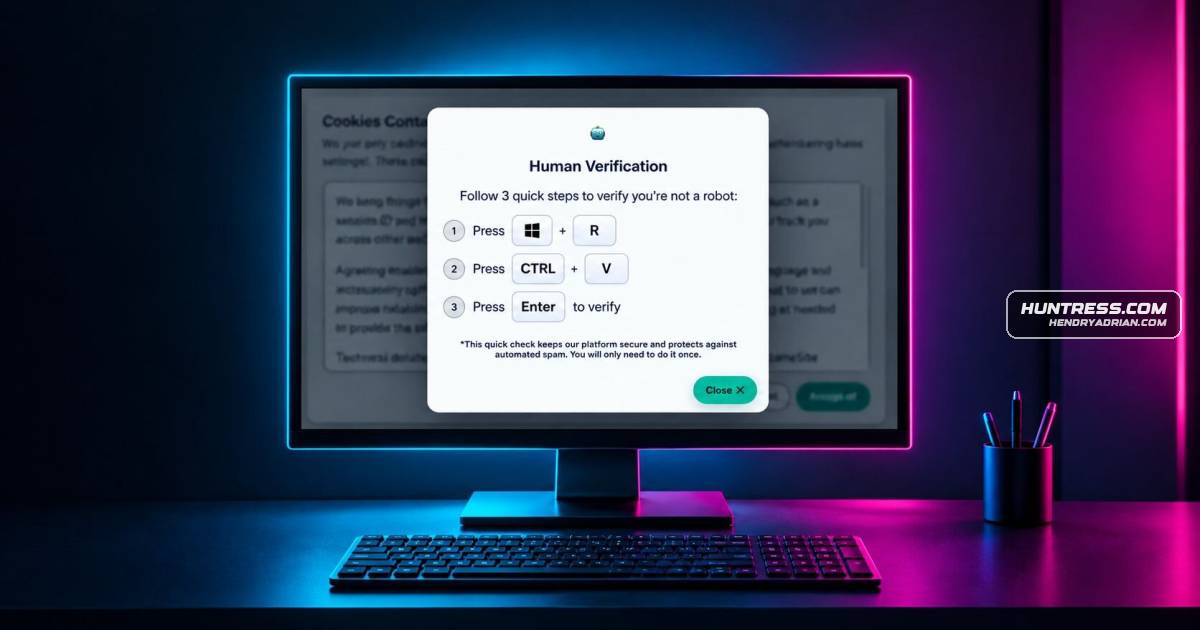
- In the ClickFix scenario, a fake CAPTCHA prompts a user to run attacker-supplied PowerShell, which steals session cookies that can be used to access the employee’s inbox despite MFA.
- A phished standard account can gain Global Admin access when users can own apps with directory-wide permissions; the attacker can add a long-lived app secret and automate the escalation.
- The article describes EvilTokens device-code phishing, where a user’s sign-in on Microsoft’s real login page grants access to the attacker’s session.
- Huntress and Microsoft tracked EvilTokens targeting more than 300 organizations in about two weeks; the platform was taken down in under nine months.
- Users should be wary of verification pages that ask them to open the Run dialog and of unexpected login codes.
- Administrators should review app ownership and directory-wide permissions, restrict access to admin tools, enforce MFA registration, and revoke sessions and tokens when responding to suspected compromise.
Article Details
- Topic
- Social-engineering attacks involving ClickFix, session hijacking, over-permissioned apps, and device-code phishing
MITRE ATT&CK
T1059.001 · PowerShellAttackers use PowerShell commands that employees are tricked into running through ClickFix.T1078 · Valid AccountsAttackers use phished employee credentials to sign in to their accounts.T1098.001 · Additional Cloud CredentialsAn attacker creates a new secret for an app with directory-wide role-management permissions to retain access and obtain Global Admin privileges.T1204.004 · Malicious Copy and PasteIn the ClickFix attack, employees are tricked into pasting and executing a malicious command.T1528 · Steal Application Access TokenThe device-code phishing attack gives attackers access to a live session associated with the code entered by the employee.T1550.004 · Web Session CookieAttackers use stolen browser session cookies to access employee accounts and bypass the need to complete MFA again.T1566.002 · Spearphishing LinkPhishing emails direct employees to a look-alike SharePoint site or prompt them to use a device code.
People
Carlton GammonsMicrosoft's Principal Corporate Counsel; the article identifies him as explaining the legal effort that helped take down EvilTokens.Lauren ZajacHuntress's Chief Legal Officer; the article identifies her as explaining the legal effort that helped take down EvilTokens.Rich MozeleskiHuntress's Product Manager; the article identifies him as explaining the effort that helped take down EvilTokens.
Vendors
Products
Azure management portalSteve can't open the admin center, but the Azure management portal and Entra are wide open, so the attacker starts looking around. In app registrations, they find something odd. Steve owns a finance integration app.EntraSteve can't open the admin center, but the Azure management portal and Entra are wide open, so the attacker starts looking around. In app registrations, they find something odd. Steve owns a finance integration app.Microsoft 365 Apps for Enterprisegap irrelevant. This is token impersonation, also called session hijacking, and it reaches well past Microsoft 365, since everything the browser held is up for grabs.Microsoft OneDriveexactly what handed over the account. The attacker now has the employee's email and every document in OneDrive, and can search through it all.Microsoft SharePointlike a company-wide note about an updated holiday policy. The attacker swaps in a link to a look-alike SharePoint site, adds a deadline, and tells people not to reply to their manager, because a quick check with theOutlooktheir browser using a free extension called Cookie Editor, refreshes, and then lands in the employee's Outlook inbox. They have the password but never had the phone, and the stolen session makes that gap irrelevant.
Tools
Cookie Editorthe approved MFA. The attacker loads those cookies into their browser using a free extension called Cookie Editor, refreshes, and then lands in the employee's Outlook inbox. They have the password but never had theEvilginxwho has an ordinary account and an ordinary workday. The attacker wants his access, so they put an Evilginx proxy between Steve and the login page, phish his credentials, and sign in as Steve. Steve hasn't set upEvilTokensand an attacker gets access to their mailbox without ever seeing the password. That's the attack behind EvilTokens, a phishing-as-a-service (PhaaS) platform that Huntress and Microsoft tracked hitting more than 300n8nFor the last step, the attacker describes what they want in plain English to n8n, a workflow automation tool, and asks it to make them a Global Admin. After a couple of minutes of back and forth, the workflow runs.