
Dragos Reports Prompt Theft and Hidden Routing Across AI Inference Providers
Summary
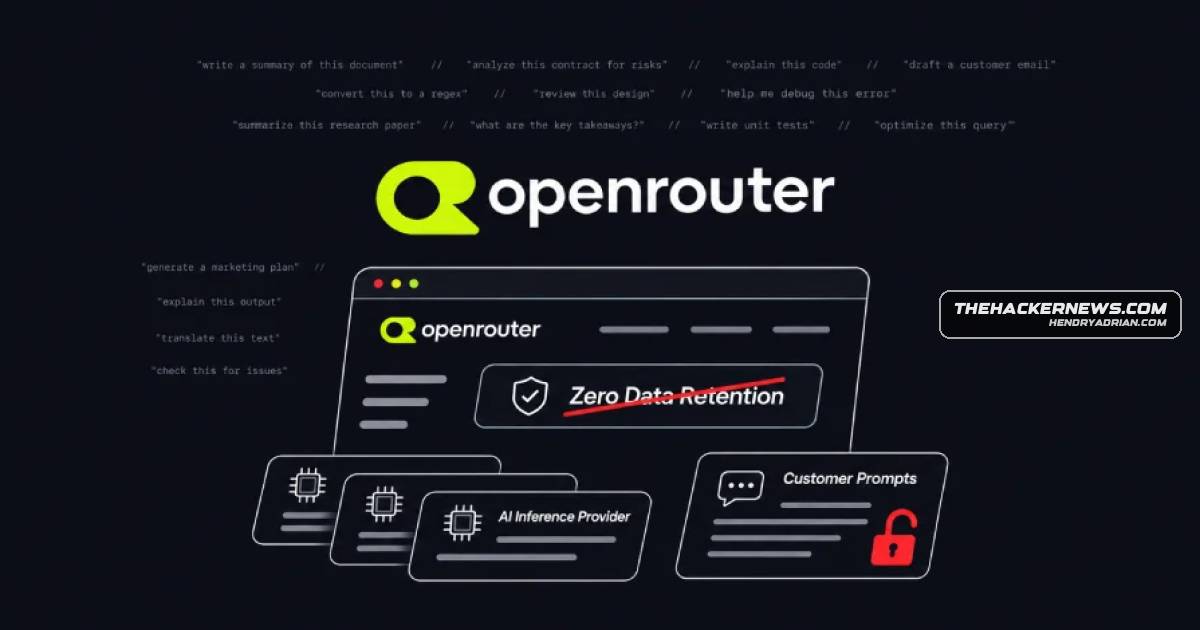
Dragos says canary-token tests uncovered prompt copying, credential misuse and undisclosed routing across AI inference providers. OpenRouter removed three providers and 125 endpoints from Zero Data Retention eligibility and notified potentially affected customers.
Key points
- Dragos seeded about two million prompts with unique links and credentials from July to November; use of those canaries indicated that the prompts had been accessed.
- Dragos reported that attackers copied provider traffic, including some requests rejected before model execution, and tested planted AWS keys, generating tens of thousands of AWS API calls.
- Researchers found marketplace sellers logging inference requests and traced undisclosed traffic forwarding; one seller reportedly added about 1,000 hidden tokens to each prompt.
- An unnamed Chinese AI lab fetched secret links from more than half of the seeded prompts sent to its models, including many marked as Zero Data Retention or no data collection.
- OpenRouter removed three providers and 125 endpoints from Zero Data Retention eligibility, notified potentially affected customers, and said the findings did not indicate a breach of OpenRouter itself. It is unclear whether the removed providers are the three Dragos said were breached.
- Phala reported an attacker accessed request data on an inference server; it contained the incident on November 8 and restored service with added protections. Together AI said an unauthorized party downloaded stored prompt samples after a credential was committed to its public GitHub repository.
- Dragos advised customers to choose and verify upstream providers, avoid reseller marketplaces, and consider canary credentials and credential scrubbing; it said self-hosting avoids third-party prompt access.
Article Details
- Attack Vectors
- Attackers reportedly compromised AI inference providers and copied customer requests as they arrived, including requests marked Zero Data Retention.
- Some marketplace sellers enabled request logging and collected prompts routed through their models.
- A routing configuration issue at Novita sent some MiniMax requests to MiniMax's official API beyond what customers intended.
- At Together AI, an unauthorized party downloaded stored prompt samples after an AI coding agent committed a credential to the company's public GitHub repository.
- An attacker reportedly used stolen AWS credentials to inspect cloud resources and attempt to establish additional access.
- Defensive Notes
- Rotate every key, token, password, or other secret contained in requests to DeepSeek V4 Flash 0731 that reached Phala through OpenRouter from 2026-10-21 00:00 UTC through 2026-11-08 05:35 UTC.
- Choose upstream providers directly, verify that privacy settings actually change request routing, and avoid reseller marketplaces.
- Verify network paths to identify whether requests and responses are forwarded to third parties.
- Use planted canary credentials as tripwires, and scrub known credential formats from prompts while recognizing that this may miss other sensitive data.
- Self-hosting avoids third-party prompt access; using a first-tier provider reduces the number of companies and privacy policies to assess.
MITRE ATT&CK
T1040 · Network SniffingResearchers said an attacker copied provider traffic at its first point of arrival, including requests rejected before model execution.T1078.004 · Cloud AccountsAn attacker tested stolen AWS keys and used them to make cloud API calls.T1098.001 · Additional Cloud CredentialsThe attacker attempted to create Bedrock API keys using stolen AWS access.T1136.003 · Cloud AccountThe attacker attempted to add IAM users to maintain access.T1526 · Cloud Service DiscoveryUsing tested AWS keys, the attacker searched Secrets Manager and Parameter Store.T1580 · Cloud Infrastructure DiscoveryUsing tested AWS keys, the attacker listed S3 buckets.
People
Vendors
DragosAttackers stole data from inside three AI inference providers for months, and none of the three knew until researchers told them, the industrial cybersecurity company Dragos said this week.MiniMaxThe samples had been collected for routine software testing and were generated by requests to the MiniMax M3, GLM-5.2, and Kimi K2.6 models in June and July.NovitaNovita, another provider on the gateway, confirmed this week in a privacy notice that a routing configuration issue caused some MiniMax requests to be sent on to MiniMax's official API, beyond what was intended forOpenRouterOpenRouter, a gateway that routes customers' AI requests to a pool of third-party providers, said today that it has removed three providers from its platform, removed 125 endpoints from eligibility for Zero DataPhalaAn attacker took control of an inference server at Phala and could view request data while it was being processed, the provider said in a preliminary incident report last week. The incident was contained on November 8,Together AIAt Together AI, an unauthorized party downloaded stored samples of customer prompts after an AI coding agent committed a credential to the company's public GitHub repository, the company said yesterday in a security
Products
AWSThe largest of the three breaches involved a couple hundred AWS keys that were planted, each sent in exactly one request to one provider during a few short windows in late October. Every request sent during thoseDeepSeek V4 Flash 0731Requests to the DeepSeek V4 Flash 0731 model that reached Phala through the gateway between October 21 at 00:00 UTC and November 8 at 05:35 UTC should be treated as exposed, the report says, and every key, token,FeishuTwenty-four days after one prompt was sent, its secret link was posted into a chat on Feishu, the Chinese workplace app known as Lark elsewhere. The link was opened within two minutes from three desktops and threeGitHubsamples of customer prompts after an AI coding agent committed a credential to the company's public GitHub repository, the company said yesterday in a security notice. The samples had been collected for routineGLM-5.2had been collected for routine software testing and were generated by requests to the MiniMax M3, GLM-5.2, and Kimi K2.6 models in June and July.Kimi K2.6collected for routine software testing and were generated by requests to the MiniMax M3, GLM-5.2, and Kimi K2.6 models in June and July.MiniMax M3The samples had been collected for routine software testing and were generated by requests to the MiniMax M3, GLM-5.2, and Kimi K2.6 models in June and July.
Tools
ARTEXOn November 1, the same attacker brought in ARTEX, an AI-driven penetration testing framework, and used it only to confirm that keys it already held were still live. Two of its user agents, artex-agent andThinkst Canarytokenpipelines already send serves as a tripwire if any use of it is treated as an incident, and a free Thinkst Canarytoken is enough to get started. Settings that scrub known credential formats from prompts help too,
Countries
ChinaA Chinese AI lab, which the research does not name, fetched the secret links from more than half of the seeded prompts sent to its models between July and October, including about two-thirds of the requests marked noFranceit looked like individuals on home internet connections. One, working from a Mac on home broadband in France, took passwords from two prompts and typed root SSH login attempts by hand, then used the same machine toUnited Statesabout two-thirds of the requests marked no data collection or Zero Data Retention. Prompts sent to U.S. hosting providers that resell the lab's models triggered the same scraper, thereby flowing back to the lab.