
Researchers Show Malicious Webpage Could Hijack Meta Muse and Access Private Chats
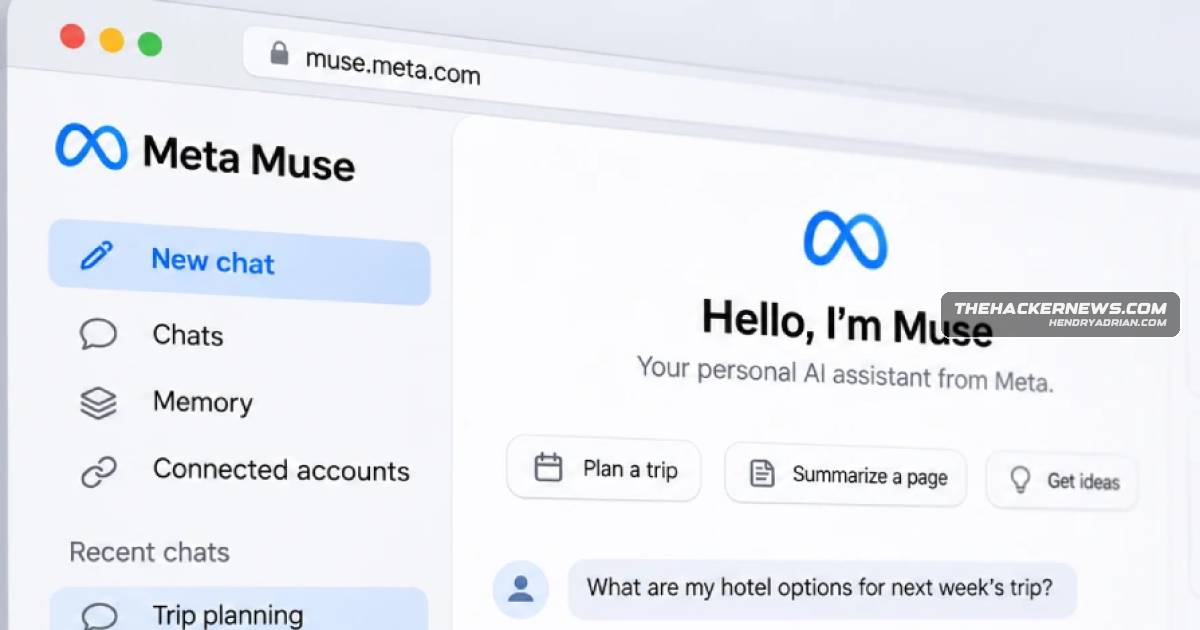
Summary
NebuSec demonstrated in a lab that a malicious webpage could expose Meta Muse conversations and memories, then chain browser and Linux kernel flaws to reach credentials and other protected resources on one user's cloud machine. Meta has not confirmed fixes.
Key points
- NebuSec said a malicious webpage could extract or alter a Muse user's conversations and stored memories without an approval prompt.
- Researchers chained a flaw in Muse's built-in browser with a Linux kernel flaw to take control of the user's cloud machine.
- The demonstration reached the credential store, saved files, and Sentinel, Muse's monitoring layer.
- The researchers said the compromise remained on one user's machine and did not reach the underlying shared server or other users' machines.
- NebuSec says it reported the flaws and they were fixed before publication; Meta has not publicly confirmed the fixes.
- The write-up does not say whether user data was accessed before the patches.
Article Details
- Event Type
- Security research disclosure of a laboratory-demonstrated attack chain affecting Meta Muse
- Impact
- Researchers demonstrated that a malicious webpage opened by Muse could extract and alter a user's private conversations and stored memories without an approval prompt. Chaining a flaw in Muse's built-in browser with a Linux kernel flaw enabled full control of that user's cloud machine, including access to stored credentials, files, and Sentinel. The demonstration remained confined to one user's machine and did not reach the shared server or other users' machines. NebuSec says Muse's team fixed the reported weaknesses before publication; Meta has not publicly confirmed the fixes, and the article says it is unknown whether any user data was accessed before patching.
Vendors
Products
Microsoft SentinelThere, a monitoring layer called Sentinel is meant to be the single gate for anything the agent sends out, and the passwords and tokens for connected accounts are supposed to stay beyond the agent's reach.MuseA malicious webpage could extract a Meta Muse user's private conversations and stored memories from the assistant without triggering any approval prompt, researchers have shown.