
Why Firewalls Are Web Applications—and Often Softer Targets
Summary
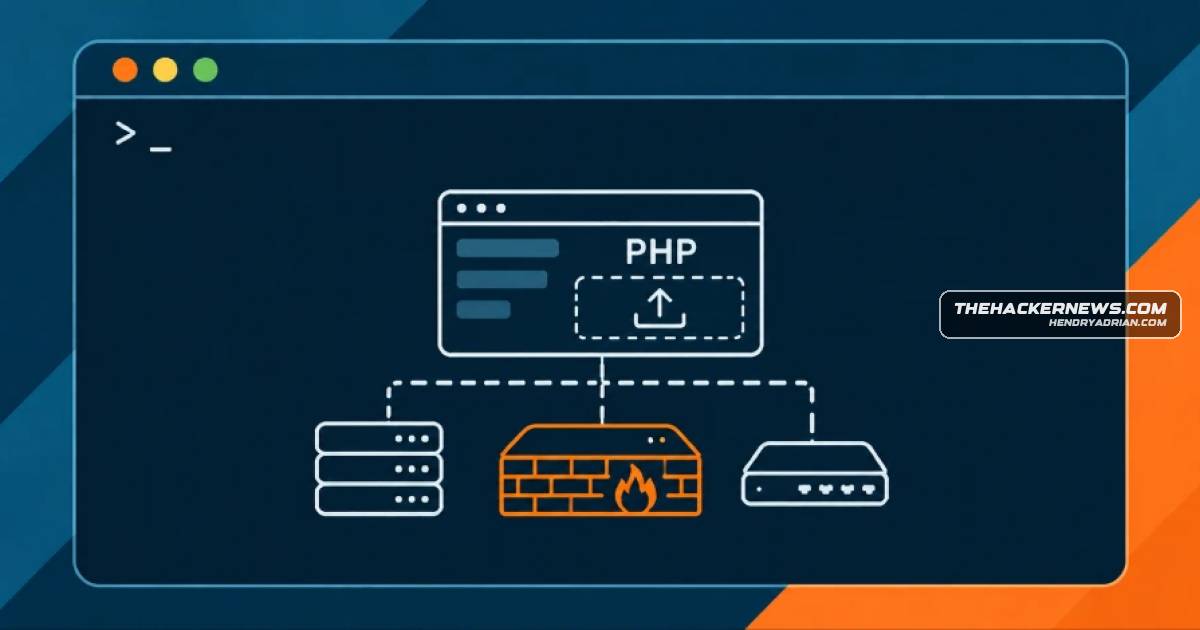
The PHP2Shell case shows how predictable appliance software can expose web-facing management interfaces. Dream reported that attackers used the exploit chain to gain root on 25 systems; the article advises restricting management access.
Key points
- Palo Alto Networks confirmed exploitation of two unauthenticated PHP vulnerabilities against internet-exposed PAN-OS management interfaces.
- Dream reported that the actor obtained and decrypted PAN-OS firmware, extracted PHP libraries, and built memory profiles for nine software versions.
- The investigation attributed root access on 25 systems—24 firewalls and one management server—to a chain combining PHP2Shell with the Fragnesia Linux kernel flaw.
- Crafted multipart uploads can exhaust PHP memory during request parsing, leaving uninitialized request memory or a pointer to freed memory.
- The PAN-OS exploit reportedly leaked the libphp.so base address through a Set-Cookie header to defeat ASLR; SELinux confined the resulting shell.
- The article recommends removing internet access to management interfaces and limiting them to trusted internal IP addresses, while accounting for the limits of web application firewalls.
Article Details
- Topic
- PHP2Shell exploitation of PHP vulnerabilities against internet-exposed PAN-OS management interfaces and the security risks of web applications on network appliances.
MITRE ATT&CK
T1068 · Exploitation for Privilege EscalationThe actor chained PHP2Shell with the Fragnesia Linux kernel flaw to gain root privileges on 25 systems.T1190 · Exploit Public-Facing ApplicationAttackers exploited PHP vulnerabilities on internet-exposed PAN-OS management interfaces to execute code without authentication.
CVE
CVE-2026-109618PHP Group · PHP; Siemens · AMIS TS; +105 moreOctober 28, Palo Alto Networks confirmed that attackers were exploiting the two PHP vulnerabilities, CVE-2026-109618 and CVE-2026-109619, against PAN-OS management interfaces exposed to the internet. Both flaws letCVE-2026-109619PHP Group · PHP; Siemens · AMIS TS; +106 moreNetworks confirmed that attackers were exploiting the two PHP vulnerabilities, CVE-2026-109618 and CVE-2026-109619, against PAN-OS management interfaces exposed to the internet. Both flaws let anyone execute code onCVE-2026-46300Linux · Linux; Red Hat · NVIDIA for RHEL 10; +28 morefor nine software versions. The actor then chained PHP2Shell with a Linux kernel flaw (Fragnesia, CVE-2026-46300) to gain root on 25 systems (24 firewalls and one management server) in the U.S., Japan, Taiwan, and
People
Vendors
Products
NGINXlimits the middle boxes we rely on. They can even interfere in ways nobody planned. Intruder found that nginx in front of PAN-OS buffered chunked request bodies, which broke public exploit chains. Web applicationPAN-OSthat attackers were exploiting the two PHP vulnerabilities, CVE-2026-109618 and CVE-2026-109619, against PAN-OS management interfaces exposed to the internet. Both flaws let anyone execute code on the web serverPHPwas the firewall. On October 28, Palo Alto Networks confirmed that attackers were exploiting the two PHP vulnerabilities, CVE-2026-109618 and CVE-2026-109619, against PAN-OS management interfaces exposed to the
Countries
JapanCVE-2026-46300) to gain root on 25 systems (24 firewalls and one management server) in the U.S., Japan, Taiwan, and South Korea.South Koreato gain root on 25 systems (24 firewalls and one management server) in the U.S., Japan, Taiwan, and South Korea.TaiwanCVE-2026-46300) to gain root on 25 systems (24 firewalls and one management server) in the U.S., Japan, Taiwan, and South Korea.United States(Fragnesia, CVE-2026-46300) to gain root on 25 systems (24 firewalls and one management server) in the U.S., Japan, Taiwan, and South Korea.