
CheckoutSwitch Scams Use Fake Fees to Route People to Unrelated Purchases
Summary
Gen Threat Labs traced fake delivery, prize and account-warning emails to unrelated merchant purchases, and found that details entered on a fake DHL page appeared in a retailer account. Its analysis found widespread deceptive affiliate marketing.
Key points
- Fake parcel, prize and cloud-storage warnings request small payments while routing people to merchants selling unrelated products or services.
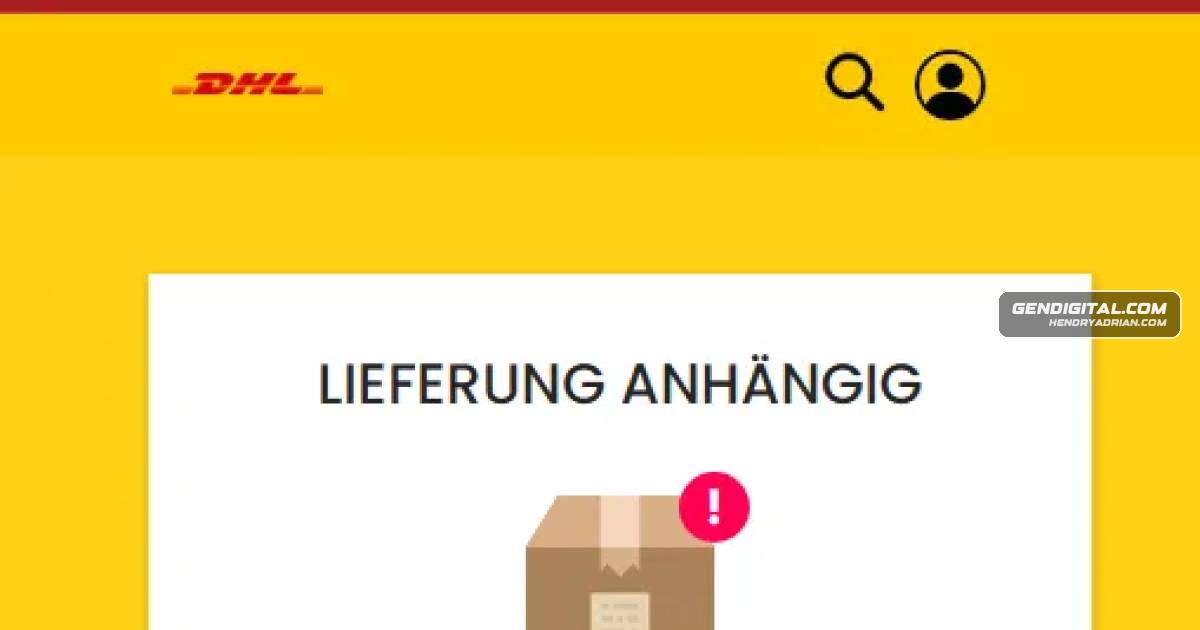
- In a DHL-themed campaign, researchers followed a €9.99 delivery-fee request to an unrelated retailer and found the entered name and address in that retailer’s customer account.
- The account finding was observed directly; the research did not establish identity theft, acceptance of terms, or subsequent recurring charges.
- A month-long sample contained 1,090,839 unique emails: 59% were classified as deceptive affiliate marketing, 25% as likely scams and 16% as suspicious affiliate marketing.
- In a separate analysis of the same dataset, 98% of emails contained at least one Google Cloud Storage link, which could route visitors through tracking and affiliate systems.
- Gen reported observing 1.2 million unique campaign emails daily among its protected customers, reaching 200,000 to 300,000 customers per day.
- The researchers advise checking unexpected delivery notices, offers and account warnings through the company’s official website or app before entering personal or payment details.
Article Details
- Publisher
- Gen Digital
- Report Period
- Four-month prevalence observation; separate one-month email analysis
- Scope
- CheckoutSwitch deceptive email campaigns, their redirects and payment requests, and observed reuse of submitted personal data
- Sample Size
- 1,090,839 unique emails; about 33,000 emails were randomly selected per day over one month
- Key Statistics
- Gen observed 1.2 million unique campaign emails daily within its protected customer base.
- The campaigns reached 200,000 to 300,000 customers daily within Gen's protected customer base.
- In the analyzed dataset, 59% of emails were classified as deceptive affiliate marketing, 25% as likely scams, and 16% as suspicious affiliate marketing.
- 98% of emails in the analyzed dataset contained at least one Google Cloud Storage link.
- English accounted for 51% and French for 35% of the analyzed emails.
- Recommendations
- Verify unexpected delivery notices, offers, and account warnings through the company's official website or app before entering personal or card details.
- Businesses should examine the emails and pages generating referrals and check what customers were promised before they arrived.
MITRE ATT&CK
Countries
AustraliaThe highest prevalence was observed in the United Kingdom, followed by Australia and the Netherlands, with the United States, France, Austria, Belgium, Canada and Switzerland also ranking prominently.AustriaThe highest prevalence was observed in the United Kingdom, followed by Australia and the Netherlands, with the United States, France, Austria, Belgium, Canada and Switzerland also ranking prominently.BelgiumThe highest prevalence was observed in the United Kingdom, followed by Australia and the Netherlands, with the United States, France, Austria, Belgium, Canada and Switzerland also ranking prominently.CanadaThe highest prevalence was observed in the United Kingdom, followed by Australia and the Netherlands, with the United States, France, Austria, Belgium, Canada and Switzerland also ranking prominently.FranceThe highest prevalence was observed in the United Kingdom, followed by Australia and the Netherlands, with the United States, France, Austria, Belgium, Canada and Switzerland also ranking prominently.GermanyThe message claimed to be a promotion from Hagebau, a well-known hardware retailer in Germany, and told the recipient they had already won their new grill.NetherlandsThe highest prevalence was observed in the United Kingdom, followed by Australia and the Netherlands, with the United States, France, Austria, Belgium, Canada and Switzerland also ranking prominently.SwitzerlandThe highest prevalence was observed in the United Kingdom, followed by Australia and the Netherlands, with the United States, France, Austria, Belgium, Canada and Switzerland also ranking prominently.United KingdomThe highest prevalence was observed in the United Kingdom, followed by Australia and the Netherlands, with the United States, France, Austria, Belgium, Canada and Switzerland also ranking prominently.United StatesThe highest prevalence was observed in the United Kingdom, followed by Australia and the Netherlands, with the United States, France, Austria, Belgium, Canada and Switzerland also ranking prominently.
Industries
Affiliate marketingAffiliate marketing gives businesses a way to pay partners for bringing them customers.Cloud storageIn a separate analysis of the same dataset, we found that 98% of emails contained at least one Google Cloud Storage link.HealthcareOther messages impersonated healthcare services or used antivirus, streaming and cloud-account warnings.RetailAs we examined more messages, we found retail prizes, parcel delivery notifications and warnings that cloud accounts or personal files were about to disappear.StreamingOther messages impersonated healthcare services or used antivirus, streaming and cloud-account warnings.