
Cofense Reports 239% Rise in Brand-Spoofing Malware Campaigns
Summary
Cofense reports a 239% rise in brand-spoofing malware campaigns in the first half of 2026 versus 2025. Threat actors used familiar brands to deliver legitimate remote access tools, with Adobe the most abused; Cofense recommends allowlisting tools and updating training.
Key points
- Cofense observed a 239% increase in malware-delivery campaigns impersonating brands in the first half of 2026 compared with the same period in 2025.
- Adobe, the Social Security Administration, Docusign, the IRS, and Zoom were among the most impersonated brands; Adobe ranked first by campaign volume.
- The report says 94% of malware-delivery campaigns abused legitimate remote access tools (RATs).
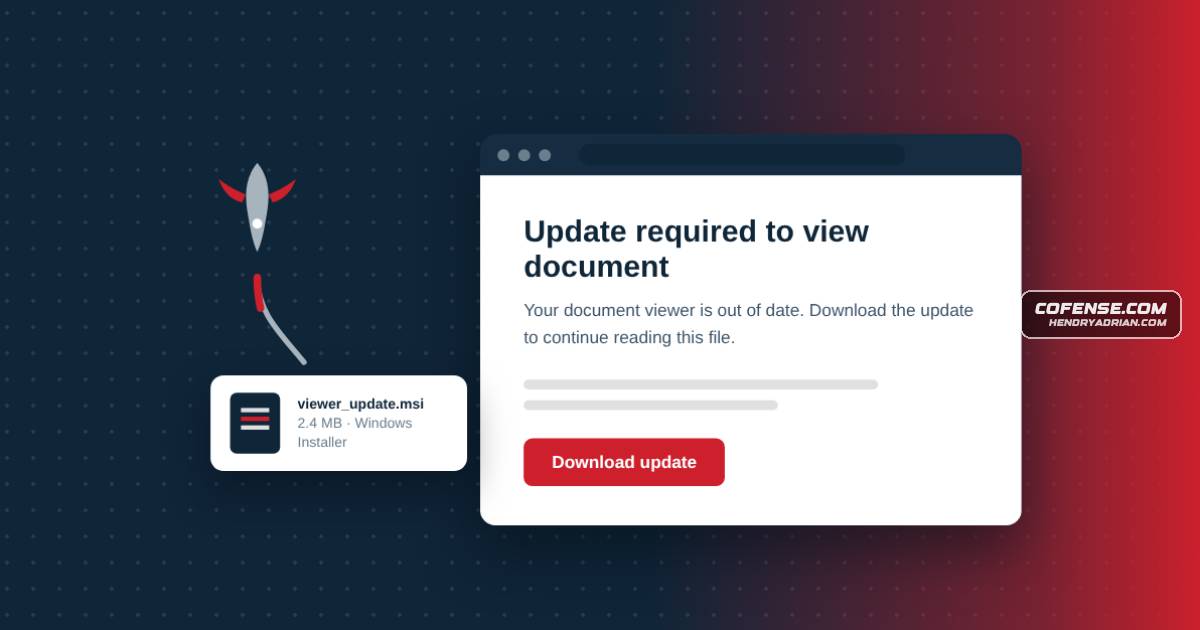
- Phishing lures and malware filenames mimicked expected brand-related documents, updates, benefits notices, tax refunds, or meeting invitations.
- Threat actors used services such as Google or Amazon to host malware, and campaigns often delivered tools including ConnectWise RAT, Datto RMM, and SimpleHelp.
- Cofense recommends allowlisting approved remote access tools, blocking unapproved tools or their certificates, and updating employee training with current lure scenarios.
Article Details
- Publisher
- Cofense
- Report Period
- First half of 2026, compared with the first half of 2025
- Scope
- Brand-spoofing campaigns delivering malware and abusing legitimate remote access tools
- Sample Size
- Not disclosed
- Key Statistics
- Malware-delivery campaigns increased 239% in the first half of 2026 compared with the first half of 2025.
- Adobe-spoofing campaigns delivering malware increased 18-fold compared with the first half of 2025.
- 94% of campaigns delivering malware abused legitimate remote access tools (RATs).
- 18% of malware-delivery campaigns impersonated brands not seen before.
- The five most-spoofed brands accounted for around 24% of malware-delivery campaign volume.
- Recommendations
- Establish and enforce an allowlist of approved remote access tools; block unapproved tools from installing on corporate devices.
- If an allowlist is unavailable, block digital certificates associated with remote access tools the organization does not use.
- Update employee security-awareness training and simulations to cover current Adobe document, SSA benefit, IRS refund, and Zoom meeting lures.
- Use context, continuous monitoring, and mitigative controls to identify and contain legitimate remote access tools abused by threat actors.
MITRE ATT&CK
T1059.001 · PowerShellThe report states that threat actors have used PowerShell commands to install additional malware payloads after an initial RAT infection.T1204.002 · Malicious FileVictims are tricked into running downloaded files that install remote access tools controlled by threat actors.T1219 · Remote Access ToolsThreat actors abuse legitimate remote access tools, including ConnectWise RAT and Datto RMM, to gain unauthorized access.T1566.002 · Spearphishing LinkPhishing emails use links that lead victims to malicious websites or malware downloads.
Products
AteraZoom-spoofing campaigns typically deliver ConnectWise RAT (29%), TrustConnect (14%), and Atera (7%).ConnectWise RATparticularly difficult to manage is that the tools being delivered are not traditional malware. ConnectWise RAT, Datto RMM, SimpleHelp, and similar products are the same software that many IT departments use forDatto RMMdifficult to manage is that the tools being delivered are not traditional malware. ConnectWise RAT, Datto RMM, SimpleHelp, and similar products are the same software that many IT departments use for legitimateFaronics DeploySSA-spoofing typically delivers ConnectWise RAT (55%), SimpleHelp (12%), and Faronics Deploy (9%).GoTo RATAdobe-spoofing campaigns typically deliver ConnectWise RAT (44%), Datto RMM (16%), and GoTo RAT (7%).SimpleHelpto manage is that the tools being delivered are not traditional malware. ConnectWise RAT, Datto RMM, SimpleHelp, and similar products are the same software that many IT departments use for legitimate remote support.SplashtopIRS-spoofing campaigns typically deliver ConnectWise RAT (50%), Tiflux RAT (13%), Splashtop (13%) or some combination of the three.SuperOpsFigure 4: Docusign-spoofing file is a SuperOps RMM instance abused by the threat actor (ATR 415883).TifluxIRS-spoofing campaigns typically deliver ConnectWise RAT (50%), Tiflux RAT (13%), Splashtop (13%) or some combination of the three.TrustConnectZoom-spoofing campaigns typically deliver ConnectWise RAT (29%), TrustConnect (14%), and Atera (7%).