
Cold Relic Used Stolen Google Workspace Data to Target a Second U.S. Organization
Summary
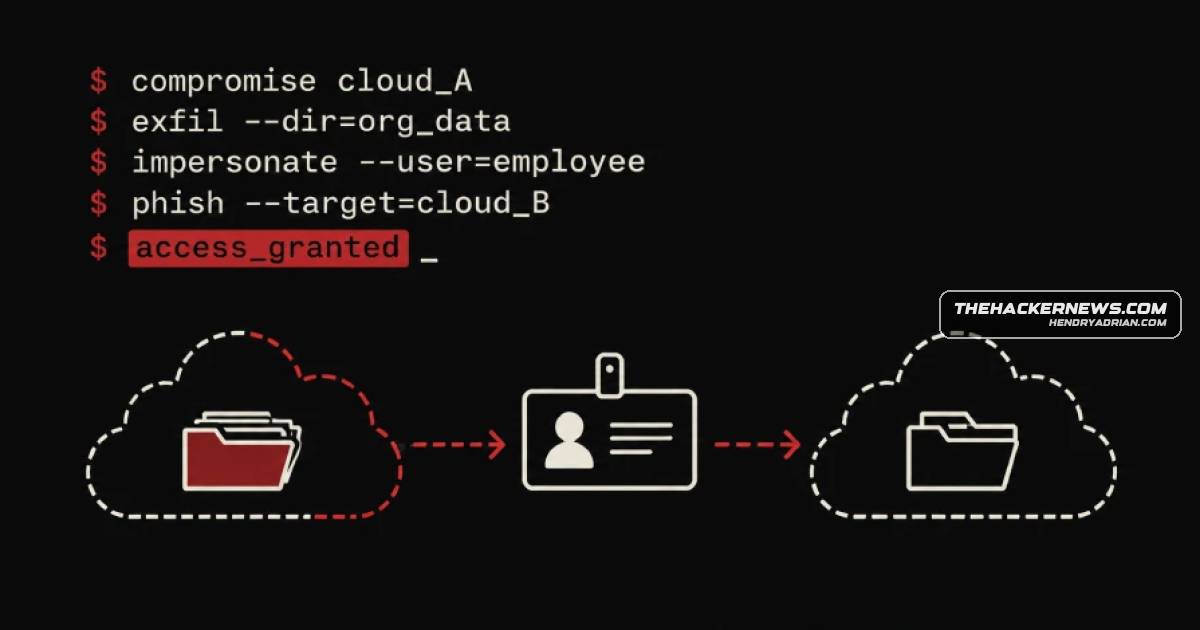
Google reported that Russia-linked Cold Relic used data from a 2025 cloud compromise to impersonate an employee and phish a second U.S. organization’s Entra ID user, then register an MFA device and download accessible cloud files.
Key points
- Google said Cold Relic compromised a U.S. organization’s cloud productivity environment in late 2025 using stolen Super Admin credentials and an MFA push-fatigue attack.
- The attackers registered their own device, used passkeys and MFA backup codes, and downloaded the organization’s cloud storage data.
- Google reported that the attackers queried security and email audit logs and modified or deleted Alert Center notifications to reduce forensic visibility.
- After losing access to the first organization, Cold Relic impersonated its employees to contact people in their professional networks.
- The attackers targeted a second U.S. organization through an employee impersonation and phishing links designed to steal Entra ID credentials and authentication tokens.
- Google said the attackers registered a new MFA device for the second organization’s user account and bulk-downloaded files accessible in that user’s cloud drive.
Article Details
- Attack Vectors
- Initial access to the first organization used a residential proxy network located near the victim, stolen Super Admin credentials, and an MFA push-fatigue attack.
- The intruder registered its own MFA device and used passkeys and MFA backup codes to retain access.
- Using stolen employee information and impersonated identities, the group sent phishing links through a secure messaging app to harvest Entra ID credentials and authentication tokens.
- The intruders downloaded cloud-drive files and exported organizational data, including by mass-sharing files to an attacker-operated email account and using Google Takeout.
MITRE ATT&CK
T1078.004 · Cloud AccountsThe group used stolen Super Admin and Entra ID credentials to access cloud accounts.T1090.002 · External ProxyThe group used a residential proxy network near the first victim to achieve initial access.T1098.005 · Device RegistrationThe group registered its own MFA devices in the first organization's tenant and the second organization's SSO solution to retain access.T1530 · Data from Cloud StorageThe group downloaded files from the victims' cloud storage drives.T1537 · Transfer Data to Cloud AccountThe group mass-shared files from the first victim's cloud storage to a Cold Relic-operated email account.T1566.003 · Spearphishing via ServiceThe group sent phishing links through a secure messaging app while impersonating a known professional contact.T1621 · Multi-Factor Authentication Request GenerationThe group used MFA push-notification fatigue; the victim accepted an MFA request.T1654 · Log EnumerationThe group queried Admin security investigation and email audit logs to assess defensive visibility.
Threat Actors
Vendors
GoogleGoogle's Mandiant and Threat Intelligence Group (GTIG) said it investigated a 2026 compromise at a U.S.-based organization in which the adversary leveraged data, the corporate staff directory, and identities harvestedMicrosoftThe attack then moved to the next phase when the threat actor compromised a Microsoft Entra ID user account of a second U.S.-based organization that used Entra ID as its federated single sign-on (SSO) identity provider
Products
Google Takeoutultimately enabled the threat actor to export full employee lists and domain-wide data via the Google Takeout service using the Super Admin privileges. Following mass data theft, the attackers continued toGoogle Workspaceorganization that used Entra ID as its federated single sign-on (SSO) identity provider for Google Workspace.Microsoft Entra IDThe attack then moved to the next phase when the threat actor compromised a Microsoft Entra ID user account of a second U.S.-based organization that used Entra ID as its federated single sign-on (SSO) identity provider
Countries
RussiaThe Russia-linked cyber espionage group known as Cold Relic (formerly COLDRIVER and UNC4057) has been observed weaponizing a single cloud compromise into a launchpad for a series of linked intrusions resulting inUnited StatesGoogle's Mandiant and Threat Intelligence Group (GTIG) said it investigated a 2026 compromise at a U.S.-based organization in which the adversary leveraged data, the corporate staff directory, and identities harvested
Industries
DefenseAttacks mounted by the threat actor have successfully compromised high-value targets, including government officials, defense contractors, and non-governmental organizations (NGOs) across Europe and North America.Governmentand malware campaigns to gain access information that may be of strategic importance to the Russian government.Non-governmental organizationsAttacks mounted by the threat actor have successfully compromised high-value targets, including government officials, defense contractors, and non-governmental organizations (NGOs) across Europe and North America.