
SignDrop PoC Claims Windows CLFS Flaw Can Grant SYSTEM Access
Summary
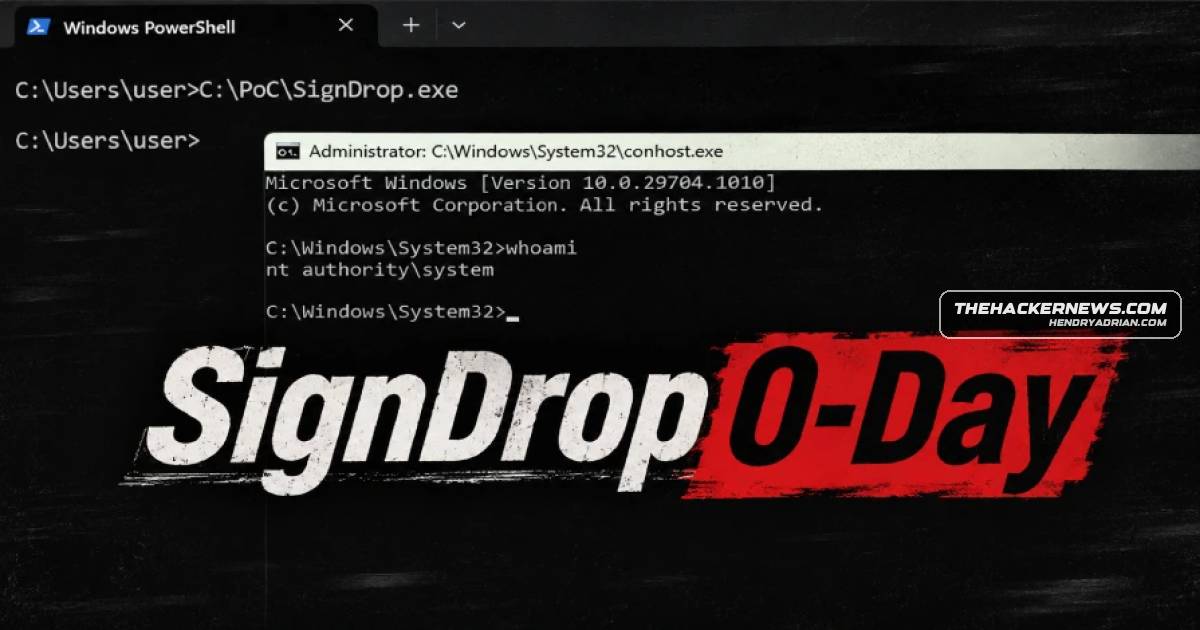
A public SignDrop proof of concept claims a local Windows user can exploit CLFS companion-file creation to gain SYSTEM access. Microsoft has not confirmed the flaw or issued a CVE or patch; a separate assessment found the exploit works but is unreliable.
Key points
- The SignDrop PoC alleges a local privilege-escalation flaw in the Windows Common Log File System (CLFS) driver; Microsoft has not confirmed the issue.
- The technique reportedly redirects creation of a privileged .cnpf companion file using object manager symbolic links, producing a SYSTEM-owned file writable by the standard user.
- The published chain triggers the Defender antimalware service through its update interface; Defender must be enabled, and the exploit makes UAC prompts conspicuously open standard-user and SYSTEM shells.
- The researcher claims systems with CLFS authentication Mode 0 or 1 are in scope. Disabling the mitigation with Mode 2 or 3 is warned against because it permits parsing tampered log files.
- The repository reports testing on Windows 11 26H2 and experimental builds of Windows 11 26H2 and Windows Server 2025. A separate assessment said the exploit works but is not reliable enough for operational use.
- No CVE, advisory, patch, or exploitation in attacks was reported in the article; the broader claim that other elevated antimalware engines are vulnerable remains untested.
Article Details
- Vulnerability Types
- Local privilege escalation through object manager symbolic-link redirection during privileged CLFS companion-file creation
- Affected Versions
- Windows 11 26H2
- Windows 11 26H2 Experimental build
- Windows Server 2025 Experimental
- Exploitation Status
- not_reported
- Exploit Availability
- public_exploit
- Patch Status
- unavailable
MITRE ATT&CK
CVE
CVE-2026-50656Microsoft · Microsoft Malware Protection EngineDefender since April. The vendor confirmed an earlier Defender exploit called RoguePlanet in June as CVE-2026-50656 and patched it the following month.CVE-2026-69414Microsoft · Microsoft Malware Protection EngineThe ShieldBreak bypass followed in August and was assigned CVE-2026-69414. Three of the researcher's earlier Defender flaws have been exploited in attacks.
People
Heewon SongResearcher on 78researchlab's PurpleHound offensive content team who tested SignDrop and found that it works.MSNightmareResearcher publishing under this name released the SignDrop exploit code and writeup.Sungyup NamHead of research at 78researchlab; reported the assessment that SignDrop works but is not reliable enough for operational use.
Vendors
Products
Defenderfile creation to a location the attacker chooses. In the published code, the privileged process is the Defender antimalware service, triggered through its update interface.Microsoft WindowsPublic exploit code released earlier this week claims that a local Windows user can gain SYSTEM privileges through the Common Log File System driver.Windows 11To reduce that exposure, Microsoft added an authentication check to CLFS log files in updates for Windows 11 25H2, 26H1, and Windows Server 2025 shipped in October 2025. The check attaches a hash-based messageWindows Common Log File System DriverPublic exploit code released earlier this week claims that a local Windows user can gain SYSTEM privileges through the Common Log File System driver.Windows Server 2025added an authentication check to CLFS log files in updates for Windows 11 25H2, 26H1, and Windows Server 2025 shipped in October 2025. The check attaches a hash-based message authentication code, built from