
How an SSRF Response Header Exposed a Kubernetes Cluster
· 14:03 · Watch on YouTube ↗
Summary
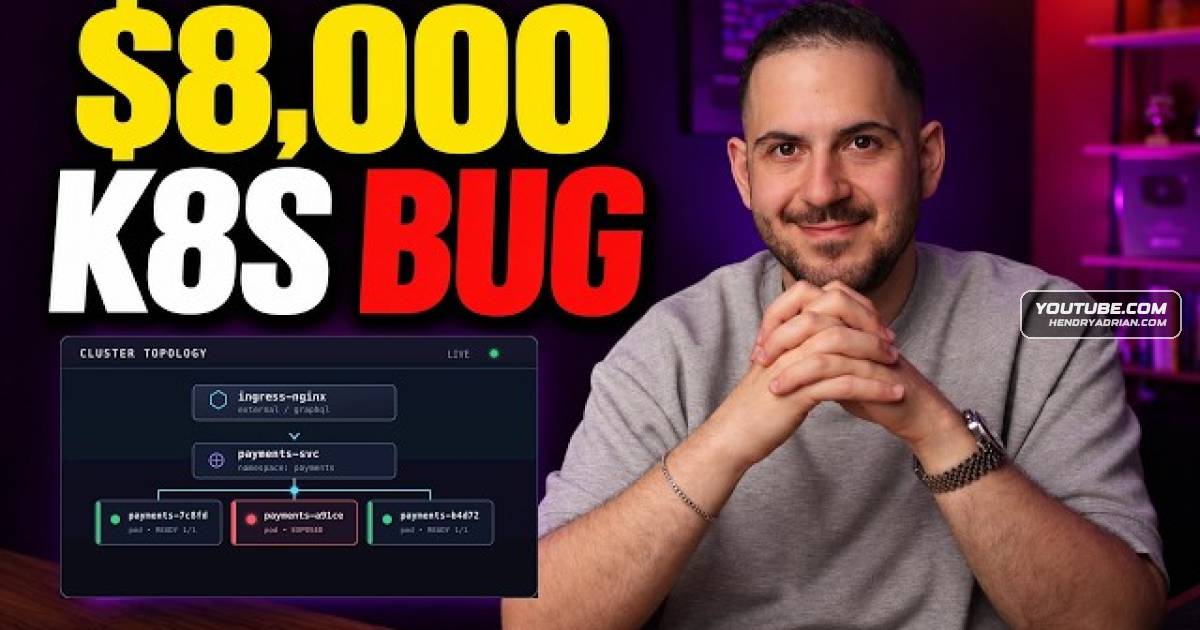
A bug bounty hunter shows how an overlooked response header revealed Kubernetes pod and service details through SSRF, enabling internal service discovery and a demonstration of potential downtime via an Envoy admin endpoint.
Key points
- The speaker says an SSRF response header exposed the pod IP, pod name and service information that his initial metadata and localhost checks had missed.
- Using those details, the demonstration builds candidate Kubernetes service and namespace names, then probes internal services through the SSRF.
- The walkthrough shows access to an Envoy sidecar admin interface and describes a POST request that can take the demonstrated environment offline.
- The speaker says he avoided triggering the disruptive action in the original report and used evidence of accessible endpoints to explain potential impact to the bug bounty program.
- A free Hack The Box lab recreates the scenario; the speaker also compares AI-assisted mapping with manual testing and says results depend on providing relevant context.
Article Details
- Topics
- [00:04] SSRF discovery and why metadata and localhost checks missed the cluster
- [01:10] Reproducing the Kubernetes SSRF scenario in a Hack The Box lab
- [04:36] Comparing AI-assisted attack-path mapping with manual analysis
- [07:17] Using response-header details to enumerate Kubernetes services
- [10:00] Assessing and safely demonstrating potential cluster impact for a bug bounty report
- [13:13] Lessons from the walkthrough and the value of learning Kubernetes more deeply