
Spamhaus Listings: Causes, Checks and Delisting Steps
Summary
A practical guide to Spamhaus blocklists, why senders may be listed, how to check listings by DNS, and steps to address sending practices or compromised machines before requesting delisting.
Key points
- Spamhaus publishes listings; receiving mail servers decide whether to block or filter messages based partly on those listings.
- The guide distinguishes SBL, DBL, PBL, XBL and CSS listings, and explains that ZEN combines multiple lists.
- Spamhaus uses pristine, typo and recycled spam traps; listing decisions can depend on sending volume, duration and message content.
- DNS lookup results can identify listing types. Public resolvers may return 127.255.255.254 as an error, so the guide recommends using an ISP or self-operated resolver.
- Suggested corrective steps include stopping purchased or scraped lists and unsolicited outreach, reviewing address collection, removing inactive contacts, and consolidating sending across many IPs or domains.
- For an XBL listing, the guide recommends cleaning the compromised machine; for an SBL listing, it says the ISP or hosting provider must submit the removal request.
- The article says delisting is free and has no fixed timeline; resolution depends on correcting the cause.
Article Details
- Topic
- Spamhaus email blocklists, their effects on email deliverability, reasons for listings, and delisting remediation.
Indicators of compromise
| Type | Indicator | Context |
|---|---|---|
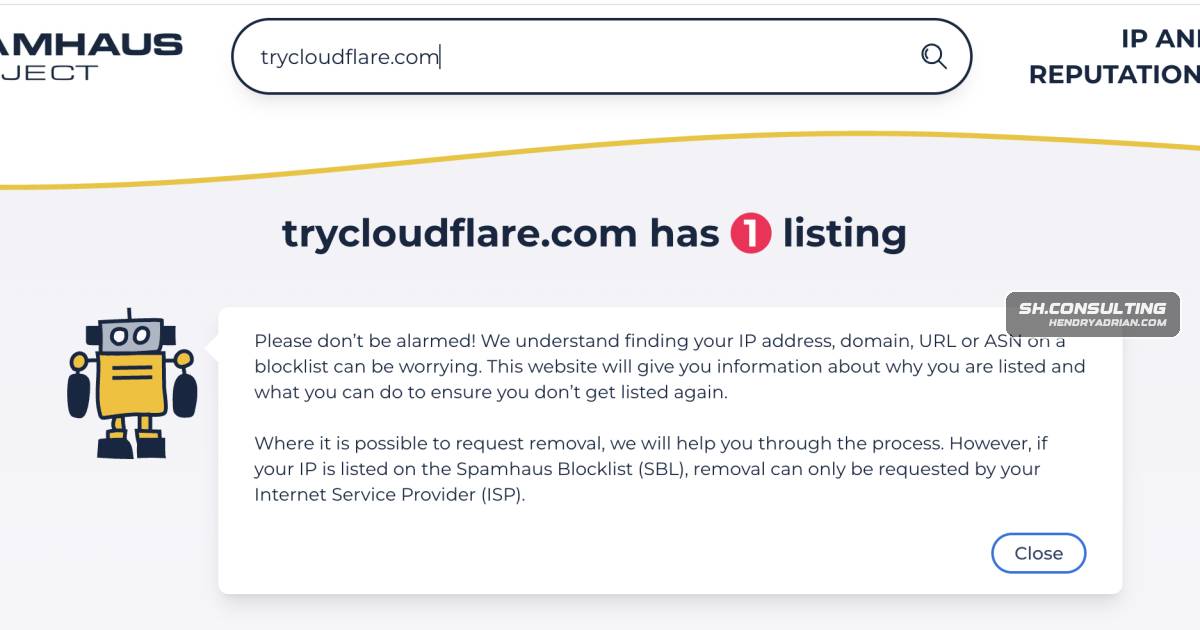
| DOMAIN | trycloudflare[.]com | Shared domain reported as abused by phishing campaigns and listed on the Spamhaus DBL on October 13, 2026. |
Vendors
Products
CSSSpamhaus Blocklists: SBL, DBL, CSS, PBL and the ZEN Multi ListDBLSpamhaus Blocklists: SBL, DBL, CSS, PBL and the ZEN Multi ListPBLSpamhaus Blocklists: SBL, DBL, CSS, PBL and the ZEN Multi ListSBLIt really depends, but it's reasonable to expect a Spamhaus SBL listing to block roughly 30% to 40% of all your mail. That assumes a normal mix of mailbox providers, with the usual majority at Gmail, a smaller share atXBLThe XBL (Exploits Block List) lists IP addresses of compromised machines: computers infected with malware, open proxies, or devices that are part of a botnet. Legitimate companies usually end up here because an infectedZenSpamhaus Blocklists: SBL, DBL, CSS, PBL and the ZEN Multi List