
Unit 42 Details Active Exploitation of BeyondTrust CVE-2026-1731
Summary
Unit 42 reports active exploitation of BeyondTrust CVE-2026-1731, a pre-authentication RCE flaw triggered through bash arithmetic in a WebSocket handler. Observed activity includes web shells, SparkRAT and VShell deployment, lateral movement and attempted data theft.
Key points
- Unit 42 observed exploitation of CVE-2026-1731, a critical pre-authentication RCE vulnerability in BeyondTrust Remote Support and older Privileged Remote Access versions.
- A crafted remoteVersion value in the WebSocket handshake can trigger command execution because thin-scc-wrapper evaluates input in bash arithmetic contexts.
- Observed post-exploitation activity included account creation, reconnaissance, web shell and backdoor deployment, lateral movement, and attempted data staging and exfiltration.
- Unit 42 observed SparkRAT and VShell, as well as tools including SimpleHelp and AnyDesk; attackers also used DNS queries to an OAST service to check execution and identify systems.
- Unit 42 reported activity affecting organizations in several sectors across the U.S., France, Germany, Australia and Canada.
- CISA added the CVE to its KEV catalog on Feb. 13, 2026; Cortex Xpanse telemetry identified more than 10,600 exposed instances.
- The article recommends applying BeyondTrust patches and restricting administrative interfaces; it also provides XQL queries for investigating post-exploitation activity.
Article Details
- Attack Vectors
- Unauthenticated attackers exploit CVE-2026-1731 through the WebSocket handshake by supplying a crafted remoteVersion value that triggers command execution in thin-scc-wrapper.
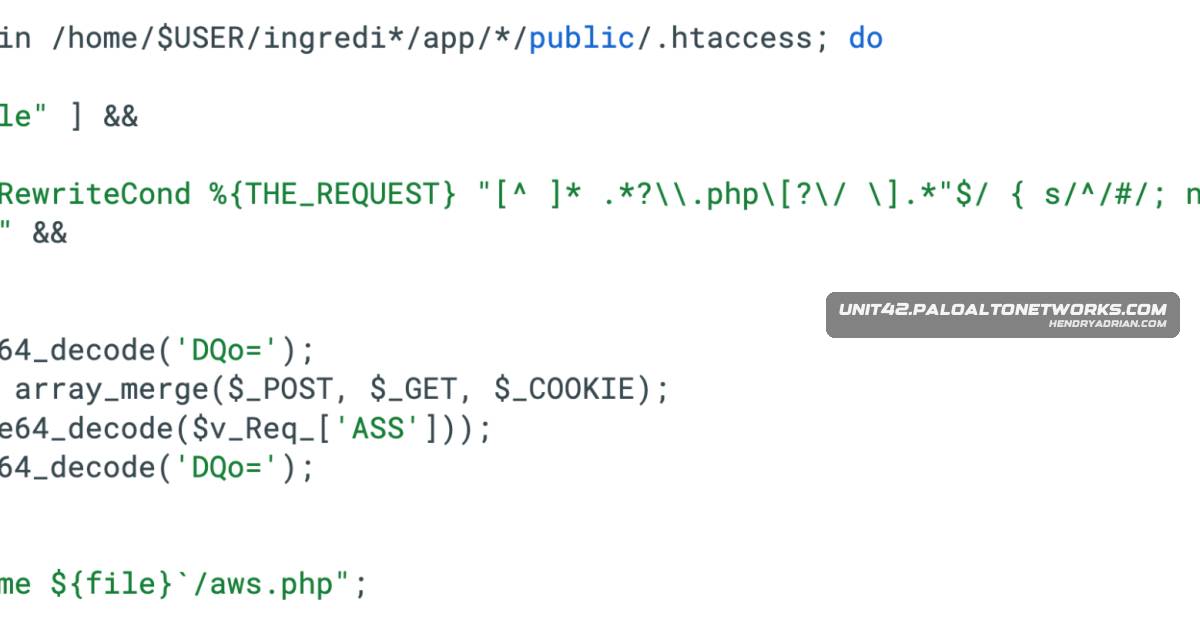
- Observed post-exploitation activity includes account creation, web-shell and backdoor deployment, remote-management tool installation, reconnaissance, lateral movement, and attempted data exfiltration.
- Attackers used DNS queries to an OAST domain to confirm code execution and identify compromised systems.
- Defensive Notes
- Apply BeyondTrust patches: upgrade Remote Support versions older than 21.3 and Privileged Remote Access versions older than 22.1; self-hosted customers can also upgrade to Remote Support 25.3.2 or Privileged Remote Access 25.1.1 or later.
- BeyondTrust SaaS customers were patched as of February 2, 2026. Manually patch self-hosted instances not subscribed to automatic updates.
- Restrict administrative interfaces to segmented internal management networks or zero-trust access gateways.
- Use the published Unit 42 XQL queries to hunt for post-exploitation activity in Bomgar sessions on Windows and Linux; monitor for suspicious command execution and account changes.
Indicators of compromise
| Type | Indicator | Context |
|---|---|---|
| DOMAIN | 39uchxifap4cvgzsuirom0szrrg[.]d65lre9sfqnlcv49317gcis6pyjsatzho[.]oast[.]pro | Listed as attacker OAST infrastructure associated with the activity. |
| DOMAIN | d65sb7ngveucv5k2nm508abdsjmbn7qmn[.]oast[.]pro | Attacker OAST domain used in infrastructure associated with DNS-based execution validation. |
| DOMAIN | judiemkqjajsfzpidfjlowgl8nyrtd49x[.]oast[.]fun | Listed as attacker OAST infrastructure associated with the activity. |
| DOMAIN | q0r2e5q2dzbykcox9qmkptm12s8mwb[.]oastify[.]com | Attacker OAST domain used to validate code execution and fingerprint compromised systems. |
| IPV4 | 23[.]162[.]40[.]187 | Listed as attacker infrastructure associated with the exploitation activity. |
| IPV4 | 37[.]19[.]221[.]180 | Listed as attacker infrastructure associated with the exploitation activity. |
| IPV4 | 45[.]61[.]150[.]96 | Listed as attacker infrastructure; also associated with reverse-shell activity on port 4444. |
| IPV4 | 70[.]23[.]0[.]66 | Listed as attacker infrastructure associated with the exploitation activity. |
| IPV4 | 82[.]29[.]53[.]187 | Attacker host serving an app_cli endpoint. |
| IPV4 | 82[.]29[.]72[.]16 | Listed as attacker infrastructure associated with the exploitation activity. |
| IPV4 | 83[.]138[.]53[.]139 | Listed as attacker infrastructure associated with the exploitation activity. |
| IPV4 | 85[.]155[.]186[.]121 | Attacker host associated with a SimpleHelp access endpoint. |
| IPV4 | 92[.]223[.]44[.]134 | Listed as attacker infrastructure associated with the exploitation activity. |
| IPV4 | 98[.]10[.]233[.]76 | Listed as attacker infrastructure associated with the exploitation activity. |
| SHA256 | 0ecc867ce916d01640d76ec03de24d1d23585eb582e9c48a0364c62a590548ac | Listed as a malware or backdoor artifact hash in the article's indicator section. |
| SHA256 | 4762e944a0ce1f9aef243e11538f84f16b6f36560ed6e32dfd9a5f99e17e8e50 | Hash identified as an installer for SimpleHelp used in the reported activity. |
| SHA256 | 66cceb2c2f1d9988b501832fd3b559775982e2fce4ab38fc4ffe71b74eafc726 | Hash associated with the maintenance.php artifact recovered during the investigation. |
| SHA256 | 679ee05d92a858b6fe70aeb6072eb804548f1732e18b6c181af122b833386afb | Hash associated with the d6 artifact listed in the article's indicators. |
| SHA256 | 98442387d466f27357d727b3706037a4df12a78602b93df973b063462a677761 | Hash associated with the aws.php web shell recovered during the investigation. |
| SHA256 | 98a7b0900a9072bb40af579ec372da7b27af12b15868394df51fefe290ab176b | Hash identified in the article as a VShell artifact. |
| SHA256 | 9f431d5549a03aee92cfd2bdbbe90f1c91e965c99e90a0c9ad5a001f4e80c350 | Hash identified in the article as a SparkRAT artifact. |
| SHA256 | cc2bc3750cc5125a50466f66ae4f2bedf1cac0e43477a78ed2fd88f3e987a292 | Hash associated with the bash script used in the reported activity. |
| SHA256 | cf83e1357eefb8bdf1542850d66d8007d620e4050b5715dc83f4a921d36ce9ce | Hash associated with the file_save.php backdoor artifact listed in the article. |
| URL | hxxp[:]//134[.]122[.]13[.]34:8979/c | SparkRAT endpoint listed as attacker infrastructure. |
| URL | hxxp[:]//64[.]31[.]28[.]221/support | Attacker infrastructure URL listed in connection with the exploitation activity. |
| URL | hxxp[:]//82[.]29[.]53[.]187:8778/app_cli | Attacker app_cli endpoint listed as an indicator. |
| URL | hxxp[:]//85[.]155[.]186[.]121/access | Attacker access URL associated with SimpleHelp activity. |
| URL | hxxps[:]//64[.]95[.]10[.]115:23011/update.sh | Attacker-hosted update.sh URL listed as an indicator. |
| URL | hxxps[:]//temp[.]sh/tQTSs/storm.exe | Specific payload URL listed as an indicator of the exploitation activity. |
| URL | hxxps[:]//transfer[.]weepee[.]io/7nZw7/blue.drx | Specific URL used to retrieve the malicious blue.drx script for execution. |
MITRE ATT&CK
T1005 · Data from Local SystemAttackers targeted configuration files, internal system databases, and a PostgreSQL dump for collection.T1041 · Exfiltration Over C2 ChannelUnit 42 observed attackers attempting to transmit staged data to an attacker-controlled C2 server.T1059.001 · PowerShellPowerShell commands were used to encode and transmit system-hostname data in DNS queries.T1059.004 · Unix ShellThe injected command executes through bash arithmetic evaluation; attackers also used bash scripts and piped downloaded content to sh.T1059.006 · PythonA custom Python script temporarily changed the primary administrator's password hash and later restored it.T1071.004 · DNSAttackers used DNS queries to an OAST domain to confirm code execution and identify compromised systems.T1105 · Ingress Tool TransferAttackers used download-and-execute commands, including wget and curl, to retrieve scripts and payloads.T1136.001 · Local AccountAttackers created local administrator accounts on compromised systems.T1136.002 · Domain AccountAttackers created domain accounts after exploitation.T1190 · Exploit Public-Facing ApplicationAttackers exploited the exposed BeyondTrust WebSocket handler to obtain pre-authentication remote code execution.T1482 · Domain Trust DiscoveryAttackers used remote-management tools to perform reconnaissance of domain trusts.T1505.003 · Web ShellAttackers deployed PHP web shells, including aws.php and file_save.php, to execute commands on compromised appliances.
CVE
CVE-2024-12356BeyondTrust · Privileged Remote Access; BeyondTrust · Remote SupportThe relationship between CVE-2026-1731 and CVE-2024-12356 highlights a localized, recurring challenge with input validation within distinct execution pathways.CVE-2026-1731BeyondTrust · Remote Support(RS) & Privileged Remote Access(PRA)CVE-2026-1731 is a critical pre-authentication remote code execution vulnerability in BeyondTrust Remote Support’s thin-scc-wrapper WebSocket handler that Unit 42 has observed being actively exploited to deploy web
Threat Actors
ARMORY CASTLEThe article explicitly identifies UNC5221 as an alias for Silk Typhoon, which it reports exploited CVE-2024-12356 in historic campaigns; no attribution for the CVE-2026-1731 activity is stated.Emissary PandaThe article explicitly identifies Emissary Panda as an alias for Silk Typhoon, which it reports exploited CVE-2024-12356 in historic campaigns; no attribution for the CVE-2026-1731 activity is stated.SHORE CASTLEThe article explicitly identifies APT27 as an alias for Silk Typhoon, which it reports exploited CVE-2024-12356 in historic campaigns; no attribution for the CVE-2026-1731 activity is stated.Silk TyphoonThe article reports Silk Typhoon as an actor that exploited CVE-2024-12356 in historic campaigns; it gives no attribution for the CVE-2026-1731 activity.
Malware
SparkRAThandler that Unit 42 has observed being actively exploited to deploy web shells, backdoors (including SparkRAT and VShell), create accounts, move laterally, and exfiltrate data across multiple sectors and countries.VshellUnit 42 has observed being actively exploited to deploy web shells, backdoors (including SparkRAT and VShell), create accounts, move laterally, and exfiltrate data across multiple sectors and countries.
Vendors
BeyondTrustCVE-2026-1731 is a critical pre-authentication remote code execution vulnerability in BeyondTrust Remote Support’s thin-scc-wrapper WebSocket handler that Unit 42 has observed being actively exploited to deploy webPalo Alto NetworksCISA added the vulnerability to its KEV catalog, Cortex Xpanse found 10,600+ exposed instances, and Palo Alto Networks provided detection queries, mitigation guidance, and product protections to help defenders respond.
Products
BeyondTrust Privileged Remote AccessPalo Alto Networks also recommends that BeyondTrust self-hosted customers of Remote Support and Privileged Remote Access manually patch any instances that are not subscribed to automatic updates in the applianceBeyondTrust Remote SupportCVE-2026-1731 is a critical pre-authentication remote code execution vulnerability in BeyondTrust Remote Support’s thin-scc-wrapper WebSocket handler that Unit 42 has observed being actively exploited to deploy webCortex Cloudthere are no known indications of the exploitation of this vulnerability within cloud infrastructure, Cortex Cloud customers are better protected from, and can detect and remediate, vulnerable cloud infrastructure byCortex XDRThe Unit 42 Managed Threat Hunting team continues to track any attempts to exploit this CVE across our customers, using Cortex XDR and the XQL queries below.Cortex XpanseCISA added the vulnerability to its KEV catalog, Cortex Xpanse found 10,600+ exposed instances, and Palo Alto Networks provided detection queries, mitigation guidance, and product protections to help defenders respond.Cortex XSIAMThese findings are also available for Cortex XSIAM customers who have purchased the ASM module.
Tools
AnyDeskAttempt to install additional remote management tools (i.e., SimpleHelp and AnyDesk) and/or tunneling tools (i.e., Cloudflare)Burp CollaboratorAttackers used out-of-band (OAST) techniques targeting the Burp Suite Collaborator service oastify[.]com to validate successful code execution and fingerprint compromised systems.CloudflareAttempt to install additional remote management tools (i.e., SimpleHelp and AnyDesk) and/or tunneling tools (i.e., Cloudflare)Metasploit MeterpreterAdditionally, Unit 42 observed attackers attempting reverse shells to infrastructure consistent with the default Metasploit Meterpreter over port 4444.NezhaAlong with PowerShell scripts designed to download and install a Nezha monitoring agent, we also observed a multi-method “download and execute” cradle.SimpleHelpAttempt to install additional remote management tools (i.e., SimpleHelp and AnyDesk) and/or tunneling tools (i.e., Cloudflare)
Countries
AustraliaAttacks have impacted organizations across financial services, legal, high tech, higher education, wholesale/retail, and healthcare in the U.S., France, Germany, Australia and Canada.CanadaAttacks have impacted organizations across financial services, legal, high tech, higher education, wholesale/retail, and healthcare in the U.S., France, Germany, Australia and Canada.FranceAttacks have impacted organizations across financial services, legal, high tech, higher education, wholesale/retail, and healthcare in the U.S., France, Germany, Australia and Canada.GermanyAttacks have impacted organizations across financial services, legal, high tech, higher education, wholesale/retail, and healthcare in the U.S., France, Germany, Australia and Canada.United StatesAttacks have impacted organizations across financial services, legal, high tech, higher education, wholesale/retail, and healthcare in the U.S., France, Germany, Australia and Canada.
Industries
Financial ServicesAttacks have impacted organizations across financial services, legal, high tech, higher education, wholesale/retail, and healthcare in the U.S., France, Germany, Australia and Canada.HealthcareAttacks have impacted organizations across financial services, legal, high tech, higher education, wholesale/retail, and healthcare in the U.S., France, Germany, Australia and Canada.Higher EducationAttacks have impacted organizations across financial services, legal, high tech, higher education, wholesale/retail, and healthcare in the U.S., France, Germany, Australia and Canada.