
Hudson Rock Highlights Six Infostealer Trends for 2026
Summary
Hudson Rock’s CTO outlines six tracked trends, including malicious AI skills distributing infostealers, theft of OpenClaw tokens and memory, compromised employee accounts used for malware delivery, and infostealer data aiding APTs and sextortion.
Key points
- Hudson Rock says malicious AI skills on public registries can install infostealers when downloaded by AI agents.
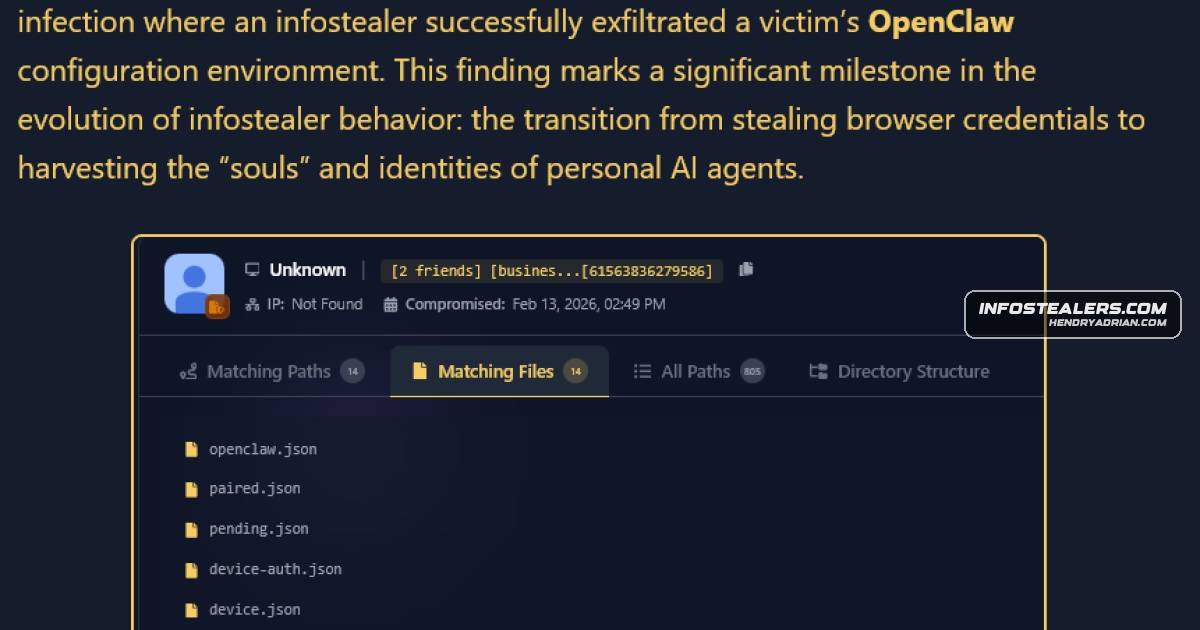
- The company reports increased infostealer targeting of OpenClaw authentication tokens and memory files.
- The article describes compromised employee credentials being used to turn legitimate business infrastructure into infostealer delivery channels.
- Hudson Rock says it linked credentials stolen by infostealers to Bitter APT activity against PTCL during the 2025 India-Pakistan conflict.
- The article says infostealer logs can make sextortion threats more credible by exposing victims’ browsing history, photos, and adult-site credentials.
- Hudson Rock says infostealer data has helped researchers identify threat actors and investigate a computer connected to the Bybit heist.
Article Details
- Topic
- Infostealer trends, including malicious AI skills, OpenClaw configuration theft, credential-enabled malware distribution, and links to APT activity
Threat Actors
Products
Countries
North Koreathe locations of FBI Most Wanted hackers, the identities of threat actors, and have even shed light on North Korea’s APT infrastructure after a computer connected to a Bybit heist was accidentally infected.PakistanDuring the 2025 India-Pakistan ‘Operation Sindoor’ conflict, Hudson Rock linked a Bitter APT attack on PTCL to credentials stolen via infostealers.