Security Roundup: CrowdStrike and Palo Alto Report Earnings as Mythos Expands and Microsoft Faces Researcher Dispute
Summary
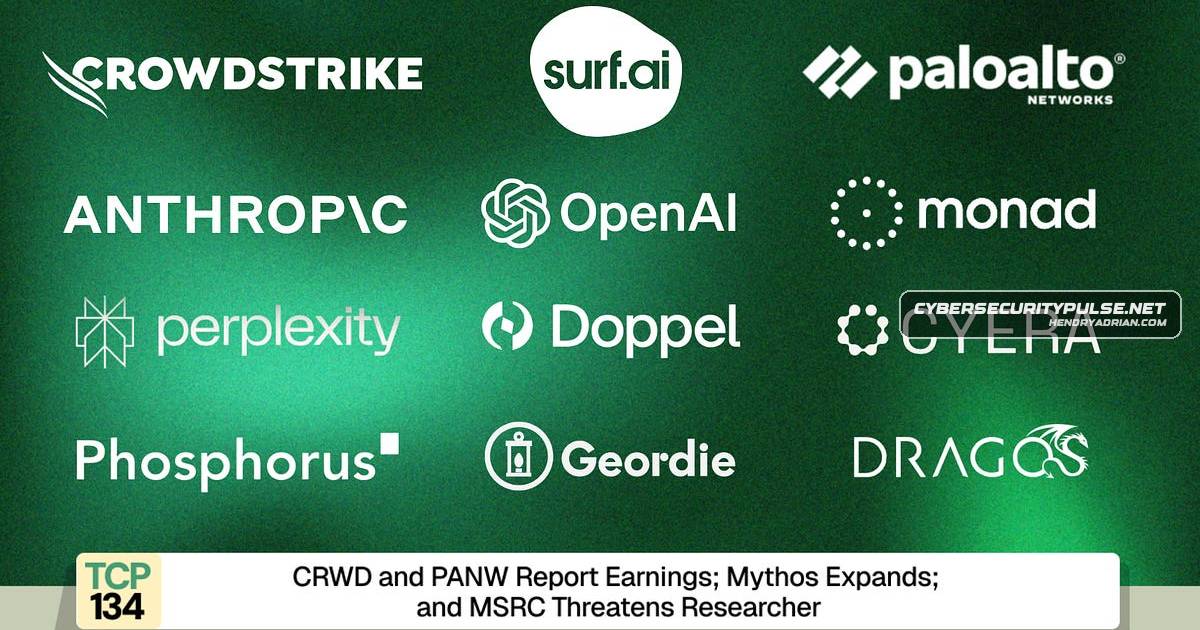
A cybersecurity industry roundup covers CrowdStrike and Palo Alto earnings, Microsoft’s dispute with a researcher over Windows zero-day disclosures, expanded access to Anthropic’s Mythos, and new security tools, funding and acquisitions.
Key points
- CrowdStrike reported fiscal Q1 revenue of $1.39 billion, up 26%; Palo Alto reported fiscal Q3 revenue of $3 billion, up 31%, and raised its guidance.
- Microsoft and researcher Nightmare Eclipse/Chaotic Eclipse clashed over public exploit code for several Windows zero-days, including issues tied to Defender and BitLocker; their accounts differ on the disclosure process.
- Anthropic is expanding Mythos access to about 150 organizations across more than 15 countries. ENISA is close to joining Project Glasswing, which targets critical infrastructure operators.
- Perplexity open-sourced Bumblebee, a read-only macOS and Linux scanner that checks developer machines for risky packages, extensions, AI tool configurations and other metadata.
- Doppel launched an email-security product that traces phishing campaigns to attacker infrastructure and coordinates takedowns across related domains, profiles and kits.
- Dragos acquired xIoT security company Phosphorus to add device discovery and remediation capabilities for OT and critical infrastructure environments.
Article Details
- Event Type
- Security industry news covering quarterly earnings, vulnerability disclosure, product launches, funding, acquisitions, and expanded AI security access.
- Impact
- Microsoft's dispute with a researcher over public Windows zero-day exploit code highlights risks to coordinated disclosure and customer security; the article also reports security-sector business developments and new security products. No specific exploitation impact or customer compromise is reported.
People
Chaotic EclipseAlternative name given for researcher Nightmare Eclipse, who published exploit code for several Windows zero-days.Darwin SalazarAuthor of The Cybersecurity Pulse newsletter.George KurtzQuoted on the intersection of cybersecurity and frontier AI.Nightmare EclipseResearcher who published exploit code for several Windows zero-days; the article also names this researcher as Chaotic Eclipse.
Vendors
Anthropic🪽 Anthropic expands Mythos access — ENISA nears Project Glasswing access as Anthropic expands Mythos to 150 orgs across 15+ countries.CrowdStrike🧠 CrowdStrike and Palo Alto blowout the AI quarter — Both anchored strong quarters to frontier AI, but Palo Alto’s faster growth and raised guidance made the cleaner case.Doppel📧 Doppel launches agentic email security — Product traces phishing campaigns to attacker infrastructure and coordinates takedowns across domains, profiles, and kits.Dragos🛡️ Dragos acquires Phosphorus — Dragos adds xIoT discovery and remediation depth for OT and critical infrastructure environments.Microsoft🪟 Microsoft’s disclosure problem gets messy — Windows zero-day PoCs turn into a broader fight over trust, researcher access, and coordinated disclosure.NvidiaCrowdStrike Brings Enterprise-Grade Security to the AI Factory with NVIDIA Vera BlueField-4 STXPalo Alto Networksat $5.51B, and beat on earnings. Shares still dropped more than 9%, after climbing ~60% this year. Palo Alto Networks posted fiscal Q3 revenue of $3B, up 31%, NGS ARR of $8.13B, up 60% (28% if you strip out thePerplexity🐝 Perplexity open sources Bumblebee — Read-only dev-machine scanner checks risky packages, extensions, AI configs, and local tool metadata.Phosphorus🛡️ Dragos acquires Phosphorus — Dragos adds xIoT discovery and remediation depth for OT and critical infrastructure environments.
Products
BitLockerwho published exploit code for several Windows zero-days tied to products including Defender and BitLocker. Microsoft says the disclosures were not coordinated and put customers at risk. The researcher claimsBumblebee🐝 Perplexity open sources Bumblebee — Read-only dev-machine scanner checks risky packages, extensions, AI configs, and local tool metadata.Claude MythosENISA, the European Union’s cybersecurity agency, is close to getting access to Anthropic’s Claude Mythos through Project Glasswing. That would make it the first European entity in the program, while Anthropic is alsoDefender/ Chaotic Eclipse, who published exploit code for several Windows zero-days tied to products including Defender and BitLocker. Microsoft says the disclosures were not coordinated and put customers at risk. TheFalcon Exposure ManagementCrowdStrike and NVIDIA are working to scale AI-native agents inside Falcon Exposure Management using NVIDIA Nemotron 3 Super models, NeMo Data Designer, and the NeMo Framework.Microsoft Windows🪟 Microsoft’s disclosure problem gets messy — Windows zero-day PoCs turn into a broader fight over trust, researcher access, and coordinated disclosure.NeMo Data DesignerCrowdStrike and NVIDIA are working to scale AI-native agents inside Falcon Exposure Management using NVIDIA Nemotron 3 Super models, NeMo Data Designer, and the NeMo Framework.NeMo FrameworkCrowdStrike and NVIDIA are working to scale AI-native agents inside Falcon Exposure Management using NVIDIA Nemotron 3 Super models, NeMo Data Designer, and the NeMo Framework.NVIDIA Nemotron 3 SuperCrowdStrike and NVIDIA are working to scale AI-native agents inside Falcon Exposure Management using NVIDIA Nemotron 3 Super models, NeMo Data Designer, and the NeMo Framework.Project Glasswing🪽 Anthropic expands Mythos access — ENISA nears Project Glasswing access as Anthropic expands Mythos to 150 orgs across 15+ countries.