
Microsoft Details OAuth Redirect Abuse in Phishing and Malware Campaigns
Summary
Microsoft researchers describe campaigns abusing silent OAuth flows and error redirects to send government and public-sector users to phishing or malware pages. One observed chain used a ZIP, LNK, PowerShell and DLL side-loading; Microsoft provides detection and mitig
Key points
- Attackers used OAuth authorization requests with parameters such as prompt=none and invalid scopes to trigger redirects to attacker-controlled landing pages.
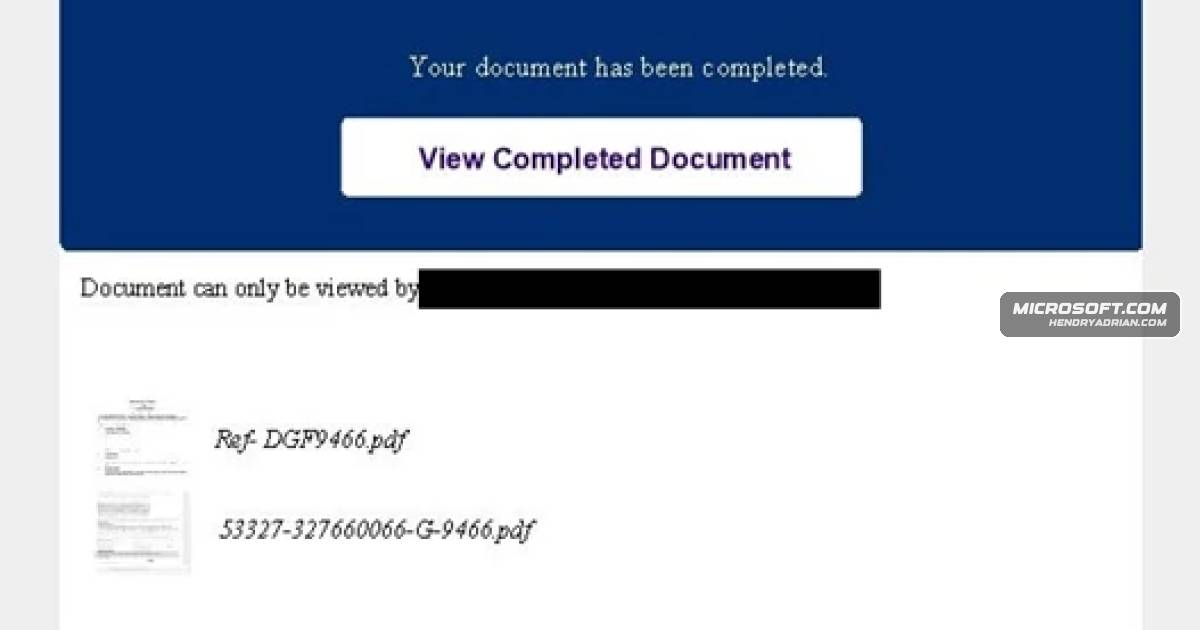
- Phishing lures arrived through email links, PDFs and fake calendar invites; attackers also used the OAuth state parameter to pass encoded target email addresses.
- Some redirects led to phishing frameworks such as EvilProxy; others delivered ZIP archives containing LNK files and HTML smuggling loaders.
- In one observed malware-delivery chain, a LNK launched PowerShell, which extracted steam_monitor.exe, crashhandler.dll and crashlog.dat; the DLL decrypted and executed a payload in memory.
- Microsoft says the silent OAuth flow did not yield access tokens, and Microsoft Entra disabled the observed malicious OAuth applications; related redirect activity continued.
- Microsoft recommends governing OAuth apps and consent, using Conditional Access and cross-domain detection, and provides Defender hunting queries for related activity.
Article Details
- Attack Vectors
- Phishing emails and PDF attachments carried crafted OAuth authorization URLs that used prompt=none and invalid scopes to trigger redirects to attacker-controlled landing pages.
- Fake .ics calendar invitations and social-engineering lures involving document sharing, payroll, Social Security, Teams meetings, and password resets encouraged user interaction.
- Attackers repurposed OAuth state parameters to pass target email addresses, including in plaintext or encoded forms, for automatic population on phishing pages.
- Some redirects led to EvilProxy phishing infrastructure; another campaign delivered ZIP archives containing LNK shortcuts and HTML smuggling loaders.
- Opening a malicious LNK executed PowerShell for host reconnaissance and archive extraction. The legitimate steam_monitor.exe then side-loaded crashhandler.dll, which decrypted and executed crashlog.dat in memory before connecting to an external C2 endpoint.
- Defensive Notes
- Govern OAuth applications: limit user consent, review application permissions regularly, and remove unused or overprivileged applications.
- Use Conditional Access and identity protection, and correlate detections across email, identity, and endpoint signals.
- Block known IOCs and monitor email and authentication URLs for prompt=none, invalid scopes, encoded email addresses in state parameters, and unexpected post-authentication redirects.
- Hunt for the reported PowerShell, archive extraction, steam_monitor.exe, and crashhandler.dll activity using the article's provided Microsoft Defender XDR queries.
Indicators of compromise
| Type | Indicator | Context |
|---|---|---|
| URL | hxxps[:]//abv-abc3[.]top/abv2/css/red[.]html | Attacker-controlled redirect landing URL listed among initial redirection indicators. |
| URL | hxxps[:]//calltask[.]im/cpcounting/via-secureplatform/quick/ | Attacker-controlled redirect landing URL identified in the campaign's indicators. |
| URL | hxxps[:]//dynamic-entry[.]powerappsportals[.]com/dynamics/ | Attacker-controlled OAuth redirect landing URL listed among initial redirection indicators. |
| URL | hxxps[:]//email-services[.]powerappsportals[.]com/divisor/ | Attacker-controlled OAuth redirect landing URL listed among initial redirection indicators. |
| URL | hxxps[:]//gbm234[.]powerappsportals[.]com/auth/ | Attacker-controlled OAuth redirect landing URL listed among initial redirection indicators. |
| URL | hxxps[:]//login-web-auth[.]github[.]io/red-auth/ | Specific attacker-controlled phishing redirect URL listed among initial redirection indicators. |
| URL | hxxps[:]//memointernals[.]powerappsportals[.]com/auth/ | Attacker-controlled OAuth redirect landing URL listed among initial redirection indicators. |
| URL | hxxps[:]//mweb-ssm[.]surge[.]sh | Specific attacker-controlled landing host listed among initial redirection indicators. |
| URL | hxxps[:]//ouviraparelhosauditivos[.]com[.]br/auth/entry[.]php | Attacker-controlled redirect landing URL listed among initial redirection indicators. |
| URL | hxxps[:]//ssmapp[.]github[.]io/web | Specific attacker-controlled landing URL listed among initial redirection indicators. |
| URL | hxxps[:]//ssmview-group[.]gitlab[.]io/ssmview | Specific attacker-controlled landing URL listed among initial redirection indicators. |
| URL | hxxps[:]//weds101[.]siriusmarine-sg[.]com/minerwebmailsecure101/ | Attacker-controlled redirect landing URL listed among initial redirection indicators. |
| URL | hxxps[:]//westsecure[.]powerappsportals[.]com/security/ | Attacker-controlled OAuth redirect landing URL listed among initial redirection indicators. |
MITRE ATT&CK
T1016 · System Network Configuration DiscoveryThe PowerShell script ran ipconfig /all during host reconnaissance.T1027.006 · HTML SmugglingThe downloaded ZIP archives included HTML smuggling loaders.T1056.003 · Web Portal CaptureThe article describes EvilProxy and similar phishing frameworks intercepting credentials and session cookies through proxy-based login pages.T1057 · Process DiscoveryThe PowerShell script ran tasklist during host reconnaissance.T1059.001 · PowerShellA malicious LNK executed PowerShell commands for host reconnaissance and payload extraction.T1105 · Ingress Tool TransferA ZIP archive containing the LNK and loader was downloaded after the OAuth redirect.T1189 · Drive-by CompromiseThe article describes redirected victims receiving an automatically downloaded ZIP archive from a /download/ path.T1204.001 · Malicious LinkRecipients were induced to click phishing links that initiated the OAuth redirect chain.T1204.002 · Malicious FileOpening the downloaded LNK shortcut launched the PowerShell-based payload chain.T1566.001 · Spearphishing AttachmentSome phishing emails carried PDF attachments containing the lure and OAuth URL.T1566.002 · Spearphishing LinkPhishing emails embedded crafted OAuth authorization links that redirected recipients to attacker-controlled landing pages.T1574.001 · DLLThe legitimate steam_monitor.exe was used to side-load the malicious crashhandler.dll.
Malware
Trojan:Win32/GreedyRobin.B!dha[Malware / Detections ] Defender detection names for components of this campaign – Trojan:Win32/Malgent, Trojan:Win32/Korplug, and others such as Trojan:Win32/Znyonm and Trojan:Win32/GreedyRobin.B!dha.Trojan:Win32/Korplug[Malware / Detections ] Defender detection names for components of this campaign – Trojan:Win32/Malgent, Trojan:Win32/Korplug, and others such as Trojan:Win32/Znyonm and Trojan:Win32/GreedyRobin.B!dha.Trojan:Win32/Malgent[Malware / Detections ] Defender detection names for components of this campaign – Trojan:Win32/Malgent, Trojan:Win32/Korplug, and others such as Trojan:Win32/Znyonm and Trojan:Win32/GreedyRobin.B!dha.Trojan:Win32/Znyonm[Malware / Detections ] Defender detection names for components of this campaign – Trojan:Win32/Malgent, Trojan:Win32/Korplug, and others such as Trojan:Win32/Znyonm and Trojan:Win32/GreedyRobin.B!dha.
Vendors
Googlepatterns used to trigger error redirects – examples include ‘prompt=none’ with ‘scope=‘ in Entra ID and Google URLs (e.g., login.microsoftonline.com … ?prompt=none&scope=, accounts.google.com … ?prompt=none … &state=MicrosoftMicrosoft Defender researchers observed phishing campaigns that abuse OAuth’s built-in redirection and silent authentication behavior (e.g., prompt=none and invalid scope) to redirect government and public-sector users
Products
Google Workspacethis native functionality by crafting URLs with popular identity providers, such as Entra ID or Google Workspace, that use manipulated parameters or associated malicious applications to redirect users toMicrosoft Defender AntivirusMicrosoft Defender Antivirus detects components of this threat as the following:Microsoft Defender for EndpointThe following Microsoft Defender for Endpoint alerts may indicate threat activity related to this threat.Microsoft Defender XDRMicrosoft Defender XDR customers can run the following query to find related activity in their networks:Microsoft Entra IDMicrosoft Entra ID example