
Microsoft Details How Threat Actors Use AI Across the Attack Lifecycle
Summary
Microsoft Threat Intelligence describes North Korean-linked actors’ use of AI for reconnaissance, personas, infrastructure, phishing, malware development and post-compromise work. It says large-scale agentic use remains unobserved and offers defensive guidance.
Key points
- Microsoft reports that North Korean-linked groups including Jasper Sleet, Coral Sleet, Emerald Sleet and Sapphire Sleet have used AI in different stages of their operations.
- Observed activity includes using AI to research vulnerabilities, build convincing fraudulent work identities, tailor phishing, and create look-alike domains and covert infrastructure.
- Microsoft says Coral Sleet used AI coding tools to develop and refine malware; an OtterCookie payload showed code characteristics consistent with AI assistance.
- Jasper Sleet has used Faceswap for identity materials and voice-changing software during interviews, according to Microsoft.
- Microsoft describes AI-assisted post-compromise research and planning, while noting it has not observed large-scale use of agentic AI by threat actors.
- Defensive recommendations include stronger identity controls and MFA, monitoring behavioral signals, using AI security and data-governance controls, and hunting for suspicious activity.
Article Details
- Attack Vectors
- AI-generated multilingual spear-phishing and business-themed lures tailored using target information.
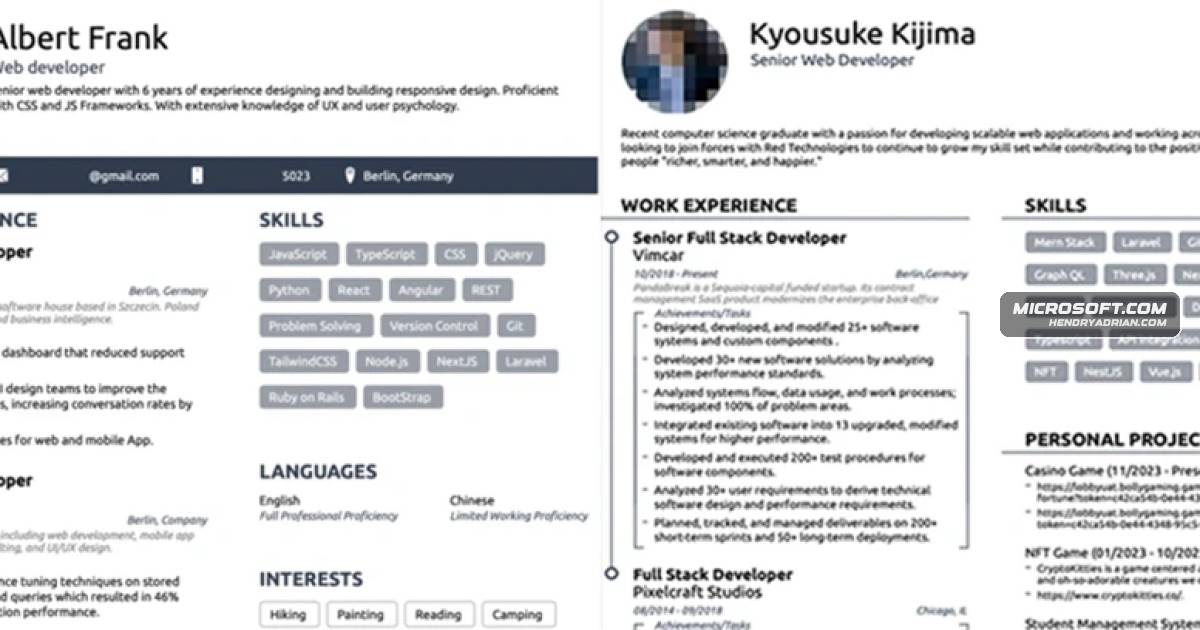
- Fraudulent IT-worker personas using job-tailored resumes, forged identity materials, AI-generated photos, and voice-changing software; Microsoft describes Jasper Sleet using these methods to obtain and sustain employment and misuse access.
- GAN-generated lookalike domains and impersonation sites described as supporting phishing, C2, and credential harvesting; no specific domains are provided.
- AI-assisted creation and maintenance of covert infrastructure, including reverse proxies, SOCKS5, OpenVPN configurations, and remote desktop tunneling.
- Coral Sleet's reported use of AI coding tools to develop and refine malware components and payloads, including the OtterCookie payload.
- Jailbreaking and prompt manipulation to bypass AI safety controls and generate restricted or malicious content.
- The article describes AI support for post-compromise discovery, lateral-movement planning, persistence, privilege escalation, collection, and exfiltration; many detailed examples are presented as general activity rather than actor-specific incidents.
- Defensive Notes
- Vet remote-worker identities and employment, enforce access controls, and monitor misuse of legitimate credentials, abnormal access patterns, and sustained low-and-slow activity.
- Require MFA on all accounts, devices, and locations, and remove accounts excluded from MFA.
- Detect phishing using behavior, delivery infrastructure, and message context in addition to static indicators or language patterns; enable protections such as Safe Links and Zero-hour auto purge.
- Enable cloud-delivered protection and network protection, and review Microsoft Defender and Exchange Online Protection settings.
- Use Microsoft Purview and AI security posture controls to discover and govern AI assets; maintain audit logging and configure retention policies for AI prompts and responses.
- Use Prompt Shields and Groundedness Detection for AI interactions, and enable threat protection for AI services in Microsoft Defender for Cloud.
- Analyze images and video for deepfake indicators such as temporal inconsistencies, occlusion failures, lighting anomalies, and audio-visual synchronization problems.
MITRE ATT&CK
T1078 · Valid AccountsThe article describes North Korean remote IT workers obtaining long-term trusted access and advises defenders to detect misuse of legitimate credentials.T1090 · ProxyThe article describes reverse proxies and SOCKS5 as components of covert C2 infrastructure.T1566 · PhishingThe article describes AI-generated multilingual spear-phishing emails and tailored business-themed lures; it also discusses voice-cloning use in vishing.T1572 · Protocol TunnelingThe described infrastructure includes OpenVPN configurations and remote desktop tunneling setups.T1583.001 · DomainsThreat actors are described using GAN-based methods to create and rotate lookalike domains for phishing, C2, and credential harvesting.T1585.001 · Social Media AccountsThe article describes creating fraudulent personas with social media handles and reusing them across job applications and platforms.T1587.001 · MalwareMicrosoft reports Coral Sleet using AI coding tools to generate, refine, and reimplement malware components, including work associated with the OtterCookie payload.T1656 · ImpersonationJasper Sleet is reported to use fabricated personas, AI-altered identity images, and voice-changing software to impersonate candidates during remote hiring.
CVE
Threat Actors
Coral SleetMicrosoft identifies Coral Sleet as a North Korean state actor and reports its use of AI-assisted malware development, including activity associated with the OtterCookie payload, and AI-enabled web infrastructure and C2 operations.Jasper SleetMicrosoft reports Jasper Sleet using AI to create fraudulent IT-worker personas, prepare identity materials, and support long-term employment used to obtain and misuse organizational access.KimsukyMicrosoft reports Emerald Sleet using LLMs to research publicly reported vulnerabilities, including CVE-2022-30190; the article does not claim that this research resulted in exploitation.Sapphire SleetMicrosoft identifies Sapphire Sleet among North Korean threat actors using persona development and financial-opportunity or interview-themed lures to seek initial access.
Malware
Vendors
MicrosoftMicrosoft Threat Intelligence details how North Korean-linked groups such as Jasper Sleet, Coral Sleet, Emerald Sleet, and Sapphire Sleet are operationalizing generative and agentic AI across the cyberattackOpenAIFor example, in collaboration with OpenAI, Microsoft Threat Intelligence observed the North Korean threat actor Emerald Sleet leveraging LLMs to research publicly reported vulnerabilities, such as the CVE-2022-30190
Products
Azure AI Content SafetyUse Prompt Shields in Azure AI Content Safety.Microsoft Defender Antimalware Platformimpersonation, promptâinjection and jailbreak techniques, and provides mitigation guidance using Microsoft Defender, Purview, Security Copilot, and related controls.Microsoft Defender AntivirusTurn on cloud-delivered protection in Microsoft Defender Antivirus or the equivalent for your antivirus product to cover rapidly evolving attack tools and techniques.Microsoft Defender for CloudEnable threat protection for AI services in Microsoft Defender for Cloud to identify threats to generative AI applications in real time and for assistance in responding to security issues.Microsoft Defender for EndpointEnable network protection in Microsoft Defender for Endpoint.Microsoft Defender for Office 365Review our recommended settings for Exchange Online Protection and Microsoft Defender for Office 365 to ensure your organization has established essential defenses and knows how to monitor and respond to threat activity.Microsoft EntraThe dashboard provides users with a unified view of AI security posture by aggregating security, identity, and data risk across Microsoft Defender, Microsoft Entra, and Microsoft Purview.Microsoft PurviewMicrosoft recommends layered mitigations and tooling—Security Dashboard for AI, Microsoft Purview, Defender protections, Prompt Shields, Groundedness Detection, MFA, ZAP, retention policies, and user training—to detectMicrosoft Security CopilotCustomers with provisioned access can also use Microsoft Security Copilot in Microsoft Defender to investigate and respond to incidents, hunt for threats, and protect their organization with relevant threat intelligence.Microsoft Security Dashboard for AITo learn more about the Microsoft Security Dashboard for AI see: Assess your organization’s AI risk with Microsoft Security Dashboard for AI (Preview).
Tools
FaceForensics++Perform analysis on account images using open-source tools such as FaceForensics++ to determine prevalence of AI-generated content.FaceswapAI significantly amplifies social engineering: multilingual, tailored phishing lures, deepfakes, voice cloning, Faceswap for identity photos, and AIâgenerated resumes and portfolios to gain and sustain access.