
Study Evaluates LLMs for Turning Cyber Threat Reports Into Knowledge Graphs
Summary
A preliminary evaluation finds LLM-based CTI extraction can cut report processing from 41 minutes to about 3.3 minutes, but accuracy and coverage vary with report structure, evidence ambiguity, prompts, and model choice.
Key points
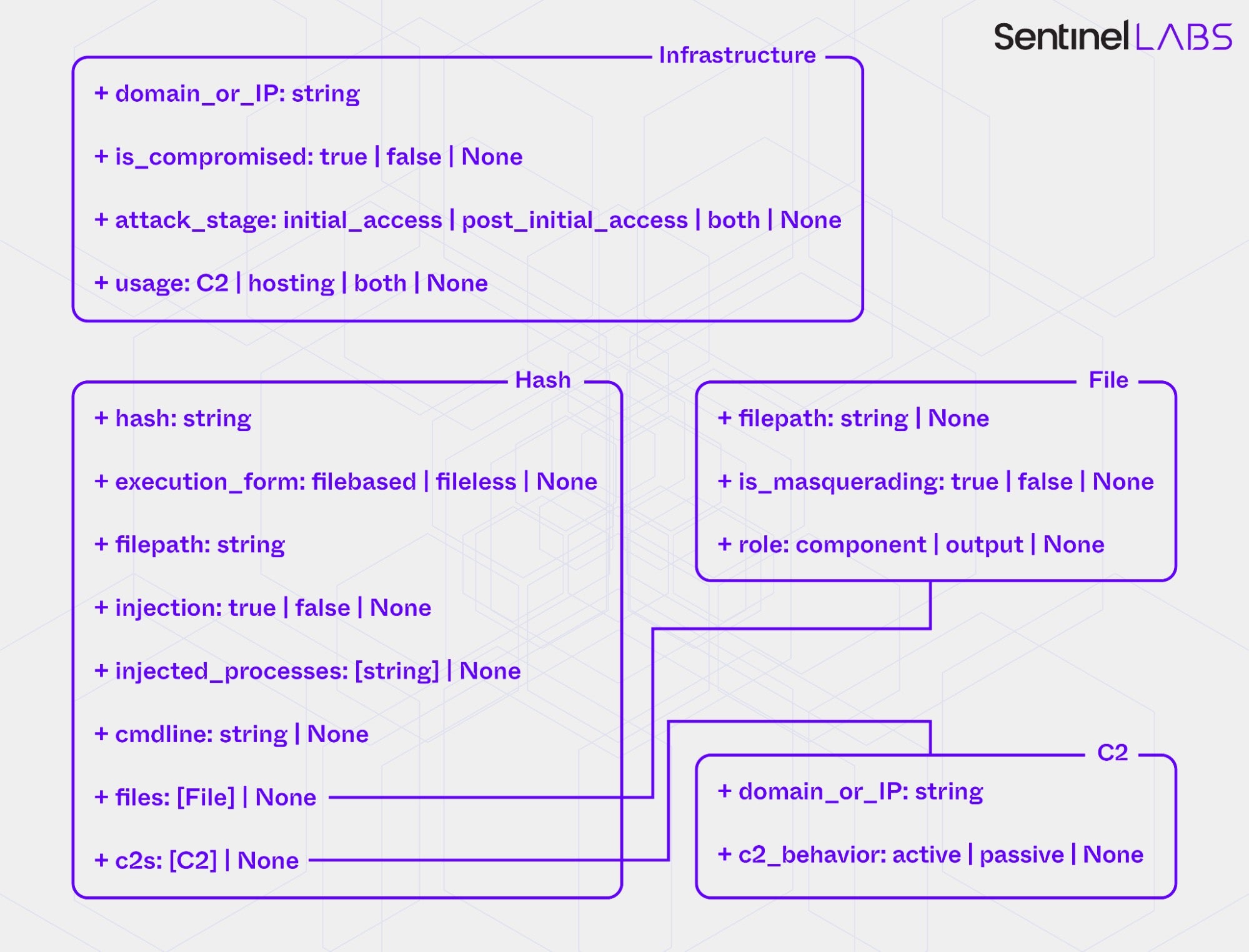
- The proposed pipeline sanitizes CTI reports, uses specialized LLM extractors for infrastructure, executables, and playbooks, then assembles linked information into a knowledge graph.
- The evaluation tested GPT-4.1, GPT-5, GPT-5.2, Claude Sonnet 4.5, and Claude Opus 4.5 on 343 atomic IOCs and 1,859 labeled IOC attribute instances; the authors describe the results as preliminary, not a definitive model ranking.
- LLM processing averaged about 3.3 minutes per report versus 41 minutes for human analysts, a reported speedup of more than 18 times, with trade-offs in completeness and correctness.
- Extraction quality varied with report formatting, contextual labels, OCR coverage, prompt-model fit, and data-model wording.
- The workflow uses evidence grades and an explicit abstention option; the authors recommend representative ground truth that can account for genuine ambiguity.
- Ensemble benefits differed by attribute, while errors and omissions in reconstructed playbooks and graphs could affect downstream analysis; the article recommends ongoing evaluation and safeguards.
Article Details
- Publisher
- SentinelOne
- Scope
- Preliminary evaluation of LLM-based extraction and knowledge-graph construction from cyber threat intelligence reports.
- Sample Size
- Ground truth of 343 atomic IOCs and 1,859 labeled IOC contextual attribute instances.
- Key Statistics
- Human analysts averaged 41 minutes per report; the LLM extractors averaged approximately 3.3 minutes per report, with a reported aggregate speed-up of more than 18 times.
- The slowest LLM-based setup was approximately six times faster than the human baseline; the fastest reduced average processing time by more than 97%.
- Playbook and knowledge-graph assembly was evaluated using 17 structural and semantic metrics.
- Recommendations
- Define evidence standards and output-quality thresholds appropriate to the intended downstream use, with stricter thresholds for mission-critical automation.
- Use representative ground truth that permits multiple defensible labels for genuinely ambiguous evidence.
- Monitor abstention and speculative-assignment rates as input data changes.
- Evaluate LLM ensembles for specific extraction tasks or attributes rather than applying them uniformly.
- Apply safeguards such as generation guardrails or automated consistency checks to critical knowledge-graph relationships.
Vendors
Anthropicof an evaluation study of several offâtheâshelf, generalâpurpose language models from OpenAI and Anthropic — GPTâ4.1, GPTâ5, GPTâ5.2, Claude Sonnet 4.5, and Claude Opus 4.5 — used within theOpenAIthe results of an evaluation study of several offâtheâshelf, generalâpurpose language models from OpenAI and Anthropic — GPTâ4.1, GPTâ5, GPTâ5.2, Claude Sonnet 4.5, and Claude Opus 4.5 — used within the
Products
Claude Opus 4.5Evaluates offâtheâshelf LLMs (GPTâ4.1, GPTâ5, GPTâ5.2, Claude Sonnet 4.5, Claude Opus 4.5) on a ground truth of 343 atomic IOCs and 1,859 labeled IOC attribute instances, emphasizing feasibility rather thanClaude Sonnet 4.5Evaluates offâtheâshelf LLMs (GPTâ4.1, GPTâ5, GPTâ5.2, Claude Sonnet 4.5, Claude Opus 4.5) on a ground truth of 343 atomic IOCs and 1,859 labeled IOC attribute instances, emphasizing feasibility rather than