AI Is Challenging Seat-Based Software Models—and Cybersecurity Vendors Face the Shift
Summary
The article examines how slowing SaaS growth and AI agents could disrupt seat-based software economics, while cybersecurity remains a distinct, growing market facing consolidation and questions about AI, bundling, and tool stacks.
Key points
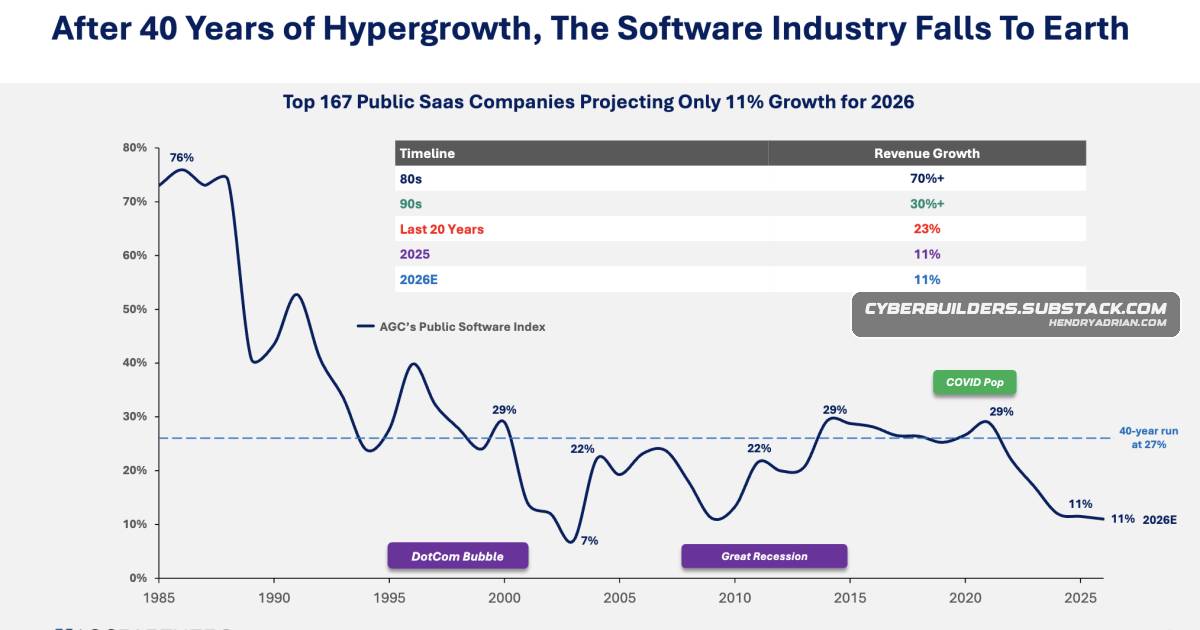
- The article cites AGC Partners’ projection of 11% revenue growth in 2026 for 167 public SaaS companies, alongside rising EBITDA margins.
- It argues that AI agents shift software value from helping human users coordinate work toward delegating tasks, challenging seat-based pricing.
- METR time-horizon estimates cited in the article show AI task-completion horizons have been doubling roughly every seven months, with faster growth in 2024–2025.
- Cybersecurity funding reached $25.1 billion in 2025, up 59% year over year, while M&A totaled $76.4 billion, according to figures cited in the article.
- The article raises questions about security-vendor bundling, whether AI security will be a standalone category or embedded in existing products, and how agents may change large security tool stacks.
Article Details
- Topic
- How AI-driven delegation and changing software economics are reshaping SaaS and the cybersecurity market.
People
Vendors
CrowdStrikeIs the Great Bundling a response to the SaaS slowdown? The biggest players — Palo Alto, CrowdStrike, Google — are acquiring aggressively. Are they building platforms because customers want consolidation? Or because theGooglebillion in funding — up 59% year over year. M&A hit $76.4 billion, the largest total in industry history. Google bought Wiz for $32 billion — the largest cybersecurity acquisition ever.Palo AltoIs the Great Bundling a response to the SaaS slowdown? The biggest players — Palo Alto, CrowdStrike, Google — are acquiring aggressively. Are they building platforms because customers want consolidation? Or because the