
Open VSX Flaw Let Malicious Extensions Bypass Pre-Publish Scanning
Summary
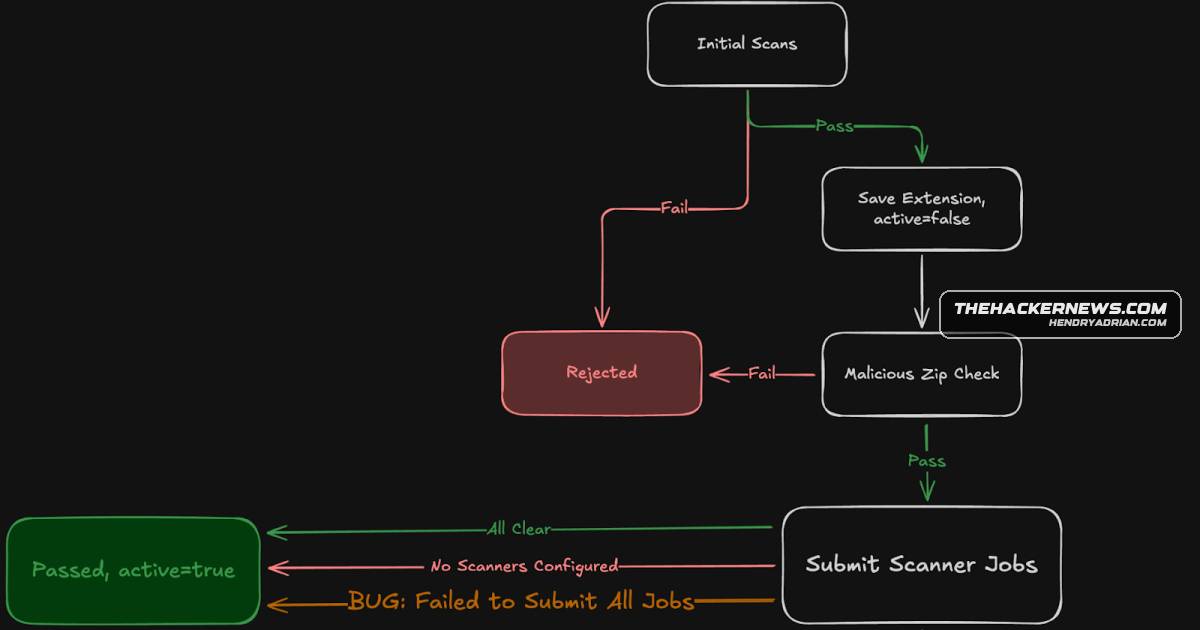
A flaw dubbed Open Sesame treated scanner-job failures as no scanners configured, allowing malicious VS Code extensions to bypass Open VSX checks. Flooding the publish endpoint could exhaust database connections; Open VSX fixed the flaw in version 0.32.0.
Key points
- Koi Security researchers said a single boolean result conflated “no scanners configured” with scanner failures, causing Open VSX to fail open.
- Flooding the publish endpoint with malicious .VSIX extensions could exhaust the database connection pool and prevent scan jobs from being enqueued.
- The recovery service for retrying failed scans had the same issue, potentially letting extensions skip scanning under certain conditions.
- A publisher with a free account could trigger the flaw; no special privileges were required.
- The issue affected Open VSX, which also serves as an extension marketplace for Cursor, Windsurf, and other VS Code forks.
- Open VSX fixed the flaw in version 0.32.0 after responsible disclosure on February 8, 2026.
Article Details
- Vulnerability Types
- Fail-open handling of pre-publish scanner failures
- Exploitation Status
- reported
- Exploit Availability
- unknown
- Patch Status
- available
- Workarounds
- Distinguish scan failures from cases where no scanners are configured; do not fail open when scanning fails.
MITRE ATT&CK
People
Vendors
Products
CursorThe flaw could be exploited by any publisher with a free account and affected marketplaces using Open VSX, including Cursor and Windsurf.Open VSXOpen VSX’s pre-publish scanning pipeline contained a bug that misinterpreted scanner failures as “no scanners configured,” allowing a malicious VS Code extension to pass vetting and go live.VSCodeThe vulnerability, named Open Sesame, enabled malicious Visual Studio Code extensions to be published and activated.WindsurfThe flaw could be exploited by any publisher with a free account and affected marketplaces using Open VSX, including Cursor and Windsurf.