
Biometric Authentication: False Acceptance, False Rejection, and CER
Summary
An explainer on physiological and behavioral biometrics, the trade-off between False Acceptance Rate and False Rejection Rate, and how the Crossover Error Rate compares systems. It also notes privacy, usability, and cost considerations.
Key points
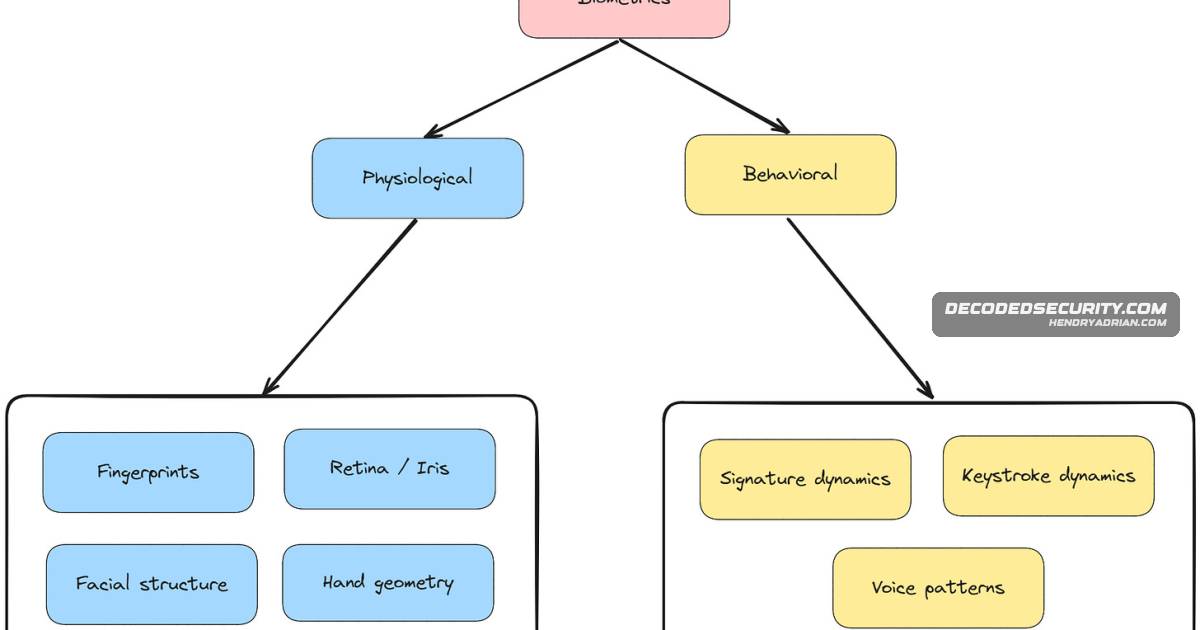
- Physiological methods include fingerprints, iris or retina scans, facial structure, and hand geometry; behavioral methods include signatures, keystrokes, and voice.
- Behavioral traits can vary over time, while biometric matching is probabilistic rather than an exact match.
- Threshold settings trade off False Acceptance Rate (FAR) against False Rejection Rate (FRR).
- The article describes FAR as a security risk and FRR as primarily a usability issue.
- Crossover Error Rate (CER) is the point where FAR and FRR are equal and is presented as a way to compare biometric systems.
- The article also notes privacy concerns, processing speed, and cost as considerations for biometric adoption.
Article Details
- Topic
- Biometric authentication methods, error rates, and system comparison using the Crossover Error Rate (CER).