Guide Compares 2026 Enterprise File-Scanning Tools for Malware Protection
Summary
A buyer’s guide compares six enterprise file-scanning platforms by analysis depth, throughput, file-type coverage, ingestion channels and deployment, and explains how to evaluate static scanning versus detonation-based detection.
Key points
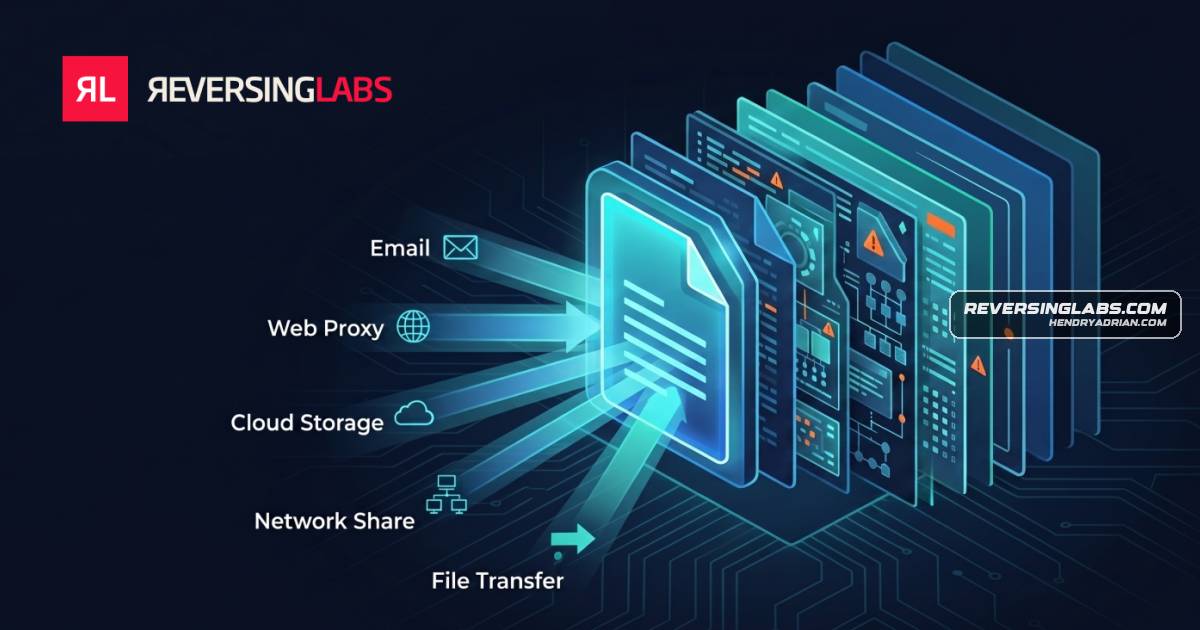
- Enterprise file scanning inspects files at ingestion points such as email, web proxies, cloud storage, managed file transfer systems and network shares, before they reach endpoints.
- The guide compares six static-analysis platforms, including their methods, connectors, file coverage, deployment options and intended use cases.
- It distinguishes signature scanning and machine-learning classification from deep static decomposition, which can unpack files and inspect their contents without executing them.
- The guide warns that file-size, archive-depth and format limits can leave some files uninspected, while limited channel support can create coverage gaps.
- It recommends evaluating native connector breadth, sustained throughput, full-decomposition size limits, file-type coverage, downstream integrations and data-residency options.
- Detonation-based platforms are treated separately because behavioral analysis offers different capabilities but processes far fewer samples than static scanning.
Article Details
- Topic
- Comparison of enterprise file-scanning platforms, focusing on static analysis, ingestion-channel coverage, throughput, and file-format depth.
Threat Actors
Vendors
Products
Deep InstinctDeep InstinctOPSWAT MetaDefender CoreOPSWAT MetaDefender CoreSpectra DetectSpectra DetectSymantec Protection Engine for NASSymantec Protection Engine for NASTrellix Endpoint Security Storage Protection (ENSSP)4. Trellix Endpoint Security Storage Protection (ENSSP)Trellix Security PlatformTrellix Security PlatformTrend Micro ServerProtect for StorageTrend Micro ServerProtect for Storage