Researchers Detail Dialogflow CX Flaws That Enabled Persistent Code Injection and Data Theft
Summary
Varonis researchers describe Dialogflow CX flaws that let an attacker with playbook update permission inject persistent code, access conversations, and bypass VPC Service Controls. Google fully patched the issues by June 2026; no in-the-wild exploitation was known.
Key points
- A single dialogflow.playbooks.update permission on an agent could allow arbitrary Python execution through Playbook Code Blocks.
- Agents using Code Blocks in the same GCP project shared a Google-managed Cloud Run environment, where researchers found writable system files and access to conversation history and session parameters.
- Malicious code could persist in the execution environment after the visible Code Block was restored, intercept conversations, exfiltrate data, and impersonate the agent to solicit credentials.
- The Cloud Run environment's outbound internet access could be used to bypass VPC Service Controls and establish external command-and-control communication.
- Researchers also found that the environment could access IMDS and retrieve tokens for a Google-managed service account.
- Google issued an initial update in April 2026 and fully resolved the issues in June 2026; Varonis said it knew of no exploitation before the patch.
- Organizations are advised to review Dialogflow playbook update audit logs, investigate unusual activity and failed requests, and check Playbook Code Blocks for unauthorized code.
Article Details
- Attack Vectors
- A user with dialogflow.playbooks.update permission could configure a Playbook Code Block to execute arbitrary Python code in the shared Cloud Run execution environment.
- The reported exploit overwrote code_execution_env.py with a modified version downloaded from an attacker-controlled public GCS bucket, enabling malicious logic to persist across user utterances and affect agents in the same GCP project.
- Injected code could access conversation history and session parameters, exfiltrate data over outbound internet access, and use respond() to present phishing or credential-collection prompts.
- The researchers demonstrated that outbound requests from Code Blocks could bypass VPC Service Controls and support bidirectional command-and-control communication.
- The exposed Instance Metadata Service could return access tokens belonging to a Google-managed service account.
- Defensive Notes
- Google issued an initial security update in April 2026 and fully resolved the issue in June 2026; the article reports that affected components have been remediated.
- Audit Dialogflow API DATA_WRITE logs for successful past Playbook updates and correlate them with rare API access, unusual IP addresses, and atypical access times.
- Review failed user requests and protoPayload.status.message for exceptions potentially triggered by malicious Code Blocks.
- Manually review each agent’s Playbook Code Block configuration and confirm that configured blocks are approved and whitelisted.
- The article says Varonis was not aware of exploitation in the wild before Google’s patch release.
Vendors
Products
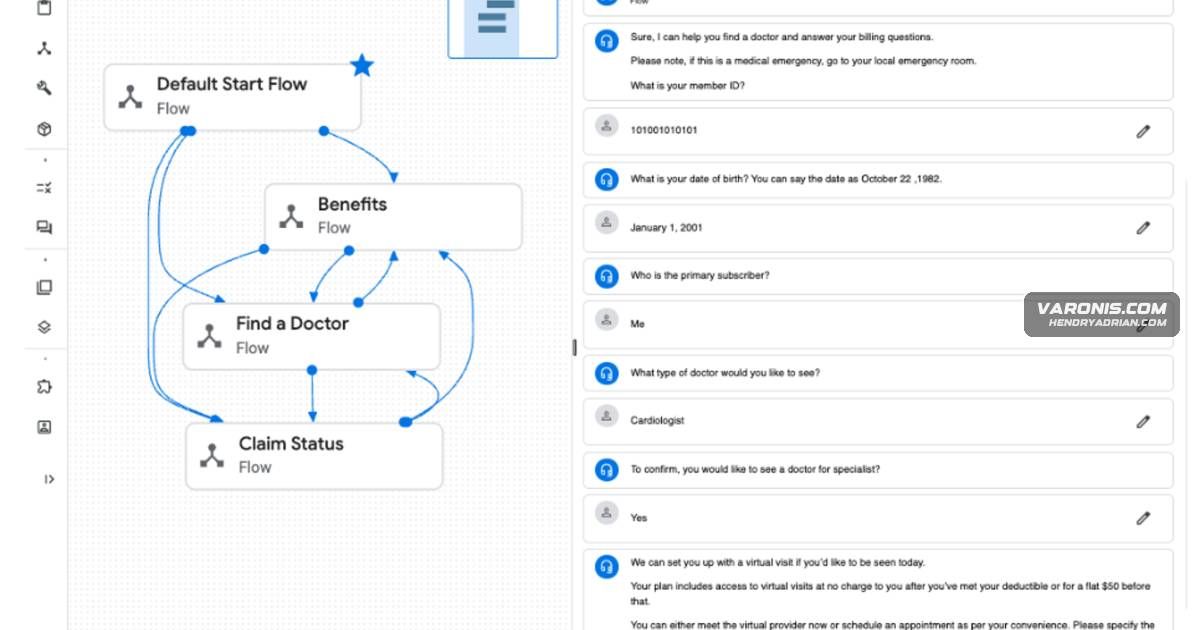
Cloud RunCode Blocks execute inside a Google-managed Cloud Run service, a fully managed serverless platform for running containerized applications.Dialogflow CXVaronis Threat Labs discovered a critical vulnerability in Google Cloud Platform’s (GCP) Dialogflow CX service, Google’s flagship conversational AI platform for building interactive experiences across voice and textVPC Service ControlsGCP enforces data perimeters using VPC Service Controls (VPC-SC), which prevents data exfiltration by enforcing strict access boundaries around resources. Organizations rely on VPC-SC to keep sensitive data inside
Tools
Industries
Financial ServicesDialogflow agents power customer support systems, financial services bots, healthcare assistants, and enterprise workflows that handle sensitive data, including personally identifiable information (PII), paymentHealthcareDialogflow agents power customer support systems, financial services bots, healthcare assistants, and enterprise workflows that handle sensitive data, including personally identifiable information (PII), payment