
AI Hacking Tools Evolve From Crimeware Services to Attack Orchestration and Self-Modifying Malware
Summary
AhnLab describes AI hacking tools moving from paid and open-source services into attack orchestration and self-modifying malware, citing Bissa Scanner, Promptflux and Promptspy. It recommends stronger authentication, AI governance and supply-chain controls.
Key points
- AI hacking tools are distributed through paid services, open-source releases and locally run models, making them difficult to contain.
- AhnLab says Bissa Scanner combined Claude Code and OpenClaw to automate scanning and exploitation of CVE-2025-55182; stolen credentials and files were reportedly triaged for valuable information.
- Promptflux reportedly uses the Gemini API to rewrite its source code, while Honestcue requests real-time VBScript obfuscation.
- Promptspy, an Android backdoor, reportedly uses the Gemini API to analyze device interfaces and manipulate them, including intercepting attempts to delete the app.
- The article describes AI use by China-linked actors and North Korea-linked APT45 for vulnerability analysis, exploit validation or infrastructure development.
- AhnLab recommends AI-assisted active defense, hardened MFA, governance over AI model use, and stronger protection of AI credentials and software supply chains.
Article Details
- Event Type
- Threat intelligence report on the proliferation of AI-powered hacking tools and their use in cybercrime and reported threat-actor operations.
- Impact
- The article reports that AI is being used to automate attack operations, vulnerability analysis, credential theft, and malware modification. In the Bissa Scanner case, the report says attackers stole 65,000 credentials; it also reports a leak of email and payment information belonging to more than 19,000 WormGPT users.
MITRE ATT&CK
T1027 · Obfuscated Files or InformationPromptflux reportedly rewrites its source code, and Honestcue requests obfuscation to evade detection.T1027.016 · Junk Code InsertionCanfail – Longstream reportedly used tens of thousands of lines of LLM-generated decoy code to mask malicious behavior.T1059.005 · Visual BasicHonestcue reportedly requested real-time VBScript obfuscation through the Gemini API.T1059.006 · PythonThe article describes a Python-based exploit script that bypassed 2FA and Python automation in the Bissa Scanner workflow.T1082 · System Information DiscoveryCanfail – Longstream reportedly queried the system’s daylight saving time status 32 times.T1588.002 · ToolThe article describes threat actors obtaining AI hacking tools through paid services and free distributions.T1595 · Active ScanningBissa Scanner reportedly automated large-scale scanning and exploit validation.
CVE
Threat Actors
Malware
Canfail – Longstream[T1027 ] Obfuscated Files or Information – Promptflux rewrites its source code, Canfail – Longstream uses decoy code, and Honestcue requests obfuscation to hide malicious behavior (‘periodically rewrite its own sourceHonestcueNew malware families such as Promptflux, Honestcue, and Promptspy use AI to self-modify, evade detection, or autonomously manipulate devices.PROMPTFLUXorchestration, credential theft, and self-modifying malware, with examples including Bissa Scanner, Promptflux, Promptspy, and APT activity involving APT45 and APT27.PromptSpycredential theft, and self-modifying malware, with examples including Bissa Scanner, Promptflux, Promptspy, and APT activity involving APT45 and APT27.PROMPTSTEALPromptflux, Promptsteal, Honestcue
Vendors
Amazon Web Services[Framework / Product Names ] AI services and models leveraged or targeted – Claude Code, Gemini API, OpenClaw, OpenAI, Anthropic, Google, AWS, Stripe, PayPalAnthropic[Framework / Product Names ] AI services and models leveraged or targeted – Claude Code, Gemini API, OpenClaw, OpenAI, Anthropic, Google, AWS, Stripe, PayPalGoogle[Framework / Product Names ] AI services and models leveraged or targeted – Claude Code, Gemini API, OpenClaw, OpenAI, Anthropic, Google, AWS, Stripe, PayPalOpenAI[Framework / Product Names ] AI services and models leveraged or targeted – Claude Code, Gemini API, OpenClaw, OpenAI, Anthropic, Google, AWS, Stripe, PayPalPayPal[Framework / Product Names ] AI services and models leveraged or targeted – Claude Code, Gemini API, OpenClaw, OpenAI, Anthropic, Google, AWS, Stripe, PayPalStripe[Framework / Product Names ] AI services and models leveraged or targeted – Claude Code, Gemini API, OpenClaw, OpenAI, Anthropic, Google, AWS, Stripe, PayPal
Tools
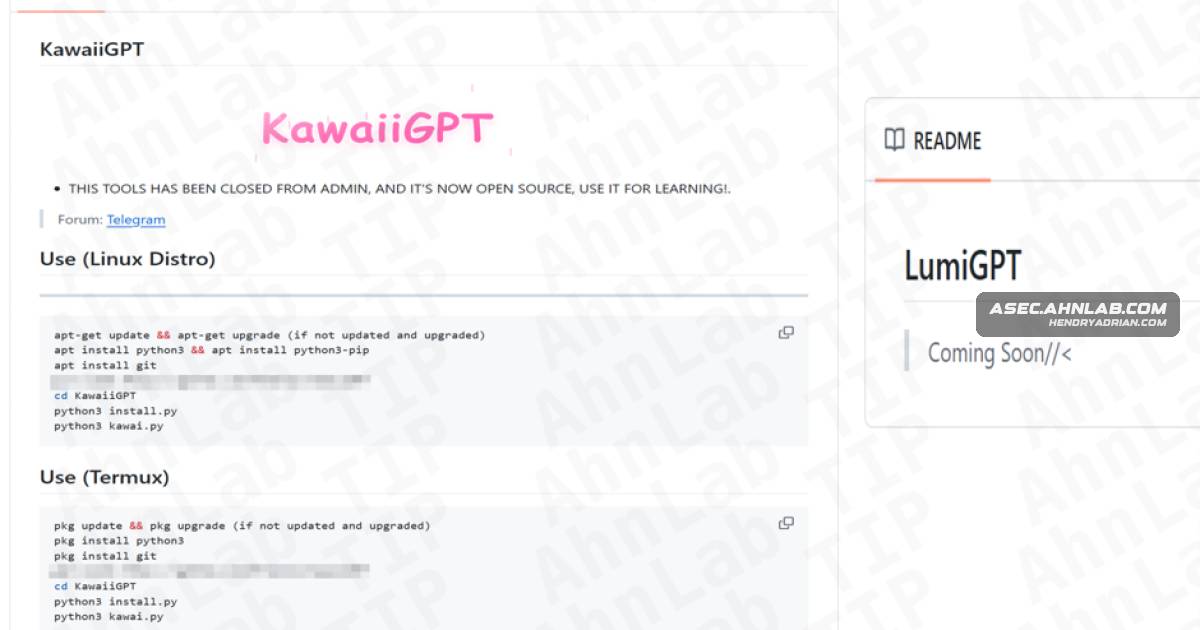
Bissa scannerroles into orchestration, credential theft, and self-modifying malware, with examples including Bissa Scanner, Promptflux, Promptspy, and APT activity involving APT45 and APT27.Claude Codewas a Python-based script that bypassed the two-factor authentication (2FA)…’ ; ‘used a combination of Claude Code and OpenClaw as an attack orchestration tool’).Evil-GPT[Malware / Tool Names ] AI hacking tools and malware families discussed in the article – WormGPT, FraudGPT, Promptflux, Promptspy, Honestcue, Evil-GPTFraudGPT[Malware / Tool Names ] AI hacking tools and malware families discussed in the article – WormGPT, FraudGPT, Promptflux, Promptspy, Honestcue, Evil-GPTKawaiiGPT[File / Artifact Names ] Named malware or ecosystem projects – canfail – Longstream, wooyun-legacy, Bissa Scanner, KawaiiGPTOpenClawscript that bypassed the two-factor authentication (2FA)…’ ; ‘used a combination of Claude Code and OpenClaw as an attack orchestration tool’).wooyun-legacy[File / Artifact Names ] Named malware or ecosystem projects – canfail – Longstream, wooyun-legacy, Bissa Scanner, KawaiiGPTWormGPTWormGPT’s emergence in June 2023 marked a turning point as AI-powered hacking tools rapidly spread across paid SaaS, open-source releases, and locally run models, lowering the barrier to cybercrime and enabling new
Countries
ChinaState-linked actors, including China-linked groups and North Korea-linked APT45, are using AI to accelerate exploit analysis and infrastructure development.North KoreaState-linked actors, including China-linked groups and North Korea-linked APT45, are using AI to accelerate exploit analysis and infrastructure development.RussiaCanfail – Longstream: Malware used by Russia-linked actors against Ukrainian targets, characterized by tens of thousands of lines of decoy code generated by LLM to mask its malicious behavior.
Industries
Digital asset settlementas well as cloud, payment, and database files, and victims included tax, financial advisory, digital asset settlement, payroll, and HR platforms.Financial advisoryPayPal, and others, as well as cloud, payment, and database files, and victims included tax, financial advisory, digital asset settlement, payroll, and HR platforms.Payrollpayment, and database files, and victims included tax, financial advisory, digital asset settlement, payroll, and HR platforms.TaxAWS, Stripe, PayPal, and others, as well as cloud, payment, and database files, and victims included tax, financial advisory, digital asset settlement, payroll, and HR platforms.