
Why SOCs Need Strong Foundations Before Deploying Agentic Threat Hunting
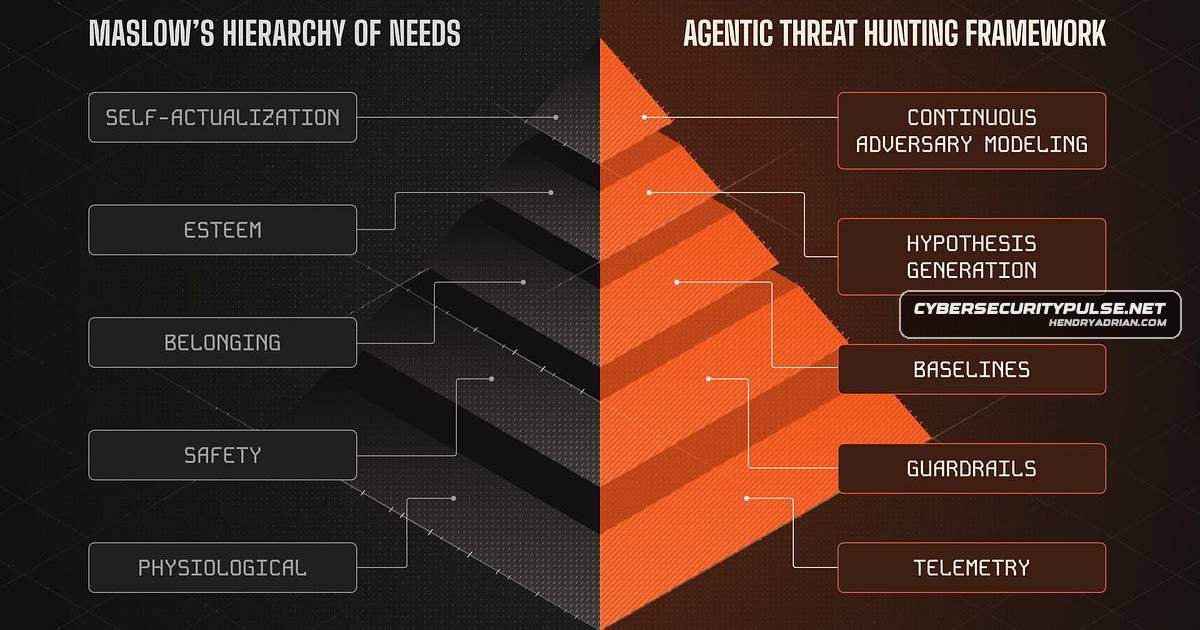
Summary
The article argues that AI agents amplify gaps in SOC telemetry, context, baselines, and safeguards. It outlines a staged approach to agentic threat hunting, emphasizing reliable data and bounded actions before increasing autonomy.
Key points
- Agents rely on recorded telemetry and context; they cannot reliably compensate for missing identity links, inconsistent logs, or uncollected signals.
- Normalize identity, timestamps, schemas, and host naming, and ensure key process, network, authentication, and file-access signals are available.
- Set clear limits on agent actions: querying may be unrestricted, while quarantines should require human approval and destructive actions may be forbidden.
- Build behavioral baselines so hunts can identify meaningful deviations, such as unusual process activity or access outside an account’s normal pattern.
- The proposed maturity path progresses from trustworthy telemetry and safeguards to baselines, agent-generated hunting hypotheses, and evolving adversary models.
- The author advises teams to validate that they can answer basic operational questions with data before introducing autonomous hunting.
Article Details
- Topic
- SOC readiness foundations for agentic threat hunting, including telemetry, guardrails, behavioral baselines, and progressive autonomy.