
Why AI Guardrails Confuse Red-Team Research With Attacks
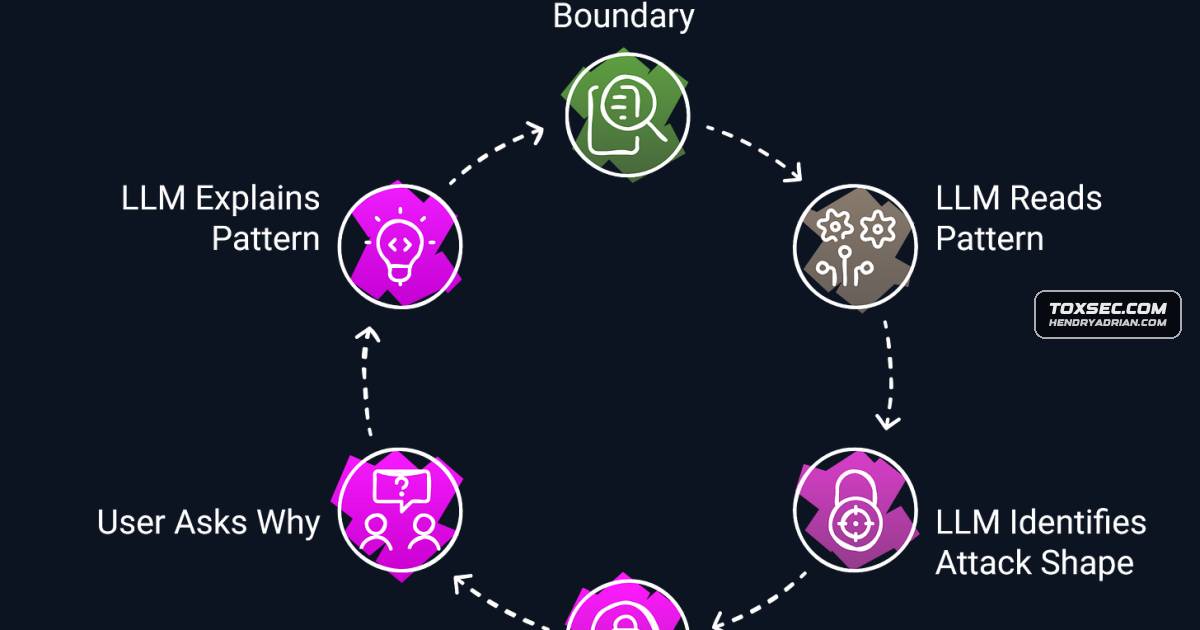
Summary
The article explains how AI guardrails judge conversational patterns rather than intent, so persistent red-team probing can resemble an attack. It discusses inconsistent outputs and refusal reinforcement, advising defenders not to trust a control’s loosest observed run.
Key points
- The article argues that models cannot verify user intent or credentials from conversation text alone, so legitimate research and attack attempts may look alike.
- Repeatedly probing a boundary can resemble an attack pattern, while assurances of legitimate intent provide no independent proof.
- The article says the same prompt may produce different results across runs near a decision boundary; output frequency alone does not show which result is correct.
- Prior refusals can shape later responses, reinforcing a refusal even when the conversation changes.
- The article compares this consistency trap with multi-turn injection, where successive turns can gradually shift a model toward compliance.
- For defenders, the article warns against judging a guardrail by its most permissive observed behavior; a single bypass may reveal a control weakness.
Article Details
- Topic
- Why AI guardrails can confuse legitimate security research with attacks